578 citations
,
April 1993 in “Cell” TGFα gene mutation in mice causes abnormal skin, wavy hair, curly whiskers, and sometimes eye inflammation.
The curly mutation in SELH/Bc mice affects hair and may help study human genetic disorders.
86 citations
,
May 2002 in “Journal of comparative neurology” Nerve growth in mouse skin and hair follicles happens in stages and is closely linked to hair development.
 22 citations
,
February 2017 in “Clinical and Experimental Dermatology”
22 citations
,
February 2017 in “Clinical and Experimental Dermatology” Icariin helps mouse hair grow by boosting a growth factor in skin cells.
57 citations
,
April 2009 in “Differentiation” SDF-1/CXCL12 and its receptor CXCR4 are crucial for melanocyte movement in mouse hair follicles.

CaBP1 and CaBP2 are important for maintaining hearing by supporting continuous calcium currents and nerve signaling in the ear.
81 citations
,
September 2009 in “Birth defects research” Different body areas in mice produce different hair types due to interactions between skin layers.
18 citations
,
February 2006 in “Genomics” A new genetic mutation in mice causes permanent hair loss and skin wrinkling.
July 2026 in “Journal of Investigative Dermatology” Tanshinone Capsule may help regrow hair by boosting specific cell signals.
 25 citations
,
May 1994 in “Journal of Investigative Dermatology”
25 citations
,
May 1994 in “Journal of Investigative Dermatology” Researchers found a new gene, hacl-1, that is active in mouse hair follicles during hair growth and may be important for hair biology.
 1 citations
,
July 2023 in “Communications biology”
1 citations
,
July 2023 in “Communications biology” Removing Mediator 1 from certain mouse cells causes teeth to grow hair instead of enamel.
 6 citations
,
January 1998 in “Journal of Investigative Dermatology”
6 citations
,
January 1998 in “Journal of Investigative Dermatology” Estrogen receptors may not affect mouse hair growth as previously thought, and oxybenzone in sunscreen is stable in sunlight.
 7 citations
,
April 2013 in “Clinical and Experimental Dermatology”
7 citations
,
April 2013 in “Clinical and Experimental Dermatology” Tianeptine, an antidepressant, may prevent stress-induced hair loss in mice.
 75 citations
,
March 2014 in “Journal of Investigative Dermatology”
75 citations
,
March 2014 in “Journal of Investigative Dermatology” Aging mice have slower hair regeneration due to changes in signal balance, but the environment, not stem cell loss, controls this, suggesting treatments could focus on environmental factors.
 2 citations
,
October 2010 in “Journal of dermatological treatment”
2 citations
,
October 2010 in “Journal of dermatological treatment” External treatments can change hair growth patterns in nude mice.
 67 citations
,
November 2019 in “Nature Communications”
67 citations
,
November 2019 in “Nature Communications” Oncogenic melanocyte stem cells can develop into melanoma similar to human cases.
 11 citations
,
June 2018 in “Sexual medicine reviews”
11 citations
,
June 2018 in “Sexual medicine reviews” Stromal Vascular Fraction might help with male sexual dysfunction, but more research is needed to confirm its safety and effectiveness.
 236 citations
,
January 1951 in “Physiological zoology”
236 citations
,
January 1951 in “Physiological zoology” Hair growth and pigmentation in mice involve specific stages crucial for research.
 35 citations
,
October 2017 in “Trends in Molecular Medicine”
35 citations
,
October 2017 in “Trends in Molecular Medicine” Mice with enhanced regeneration abilities may help develop new regenerative medicine therapies.
 60 citations
,
July 2011 in “Stem Cells and Development”
60 citations
,
July 2011 in “Stem Cells and Development” Certain signals and genes play a key role in hair growth and regeneration, and understanding these could lead to new treatments for skin regeneration.
 16 citations
,
January 2023 in “Molecular Biomedicine”
16 citations
,
January 2023 in “Molecular Biomedicine” 3D-printed microneedles can precisely regrow hair in targeted areas.
 July 2023 in “bioRxiv (Cold Spring Harbor Laboratory)”
 The mesenchyme can start hair growth, but the exact signal that causes this is still unknown.
 December 2025 in “Bolu Abant Izzet Baysal Universitesi Tip Fakultesi Abant Tip Dergisi”
 Minoxidil did not significantly affect epilepsy in rats.
ERK activation spreads between cells in mouse skin, linked to cell division and influenced by TPA and EGF receptors.
 36 citations
,
February 2017 in “BMC Complementary and Alternative Medicine”
36 citations
,
February 2017 in “BMC Complementary and Alternative Medicine” Geranium sibiricum extract helps hair grow and is more effective than minoxidil but can be toxic in high concentrations.
 25 citations
,
September 2018 in “Molecular Biology of the Cell”
25 citations
,
September 2018 in “Molecular Biology of the Cell” Blocking Wnt/β-catenin signaling with EGF receptor is necessary for proper hair growth.
1 citations
,
January 2015 ERK activation spreads between cells, influencing cell division and wound healing.
1 citations
,
September 2023 in “Genes” DNA methylation likely doesn't cause different lambskin patterns in Hu sheep.
 31 citations
,
November 2016 in “Cell Reports”
31 citations
,
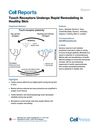
November 2016 in “Cell Reports” Touch sensitivity in mouse skin decreases during hair growth due to changes in touch receptors.
Different types of sun exposure can damage skin cells and affect healing, with chronic exposure being more harmful, and certain immune cells help in the repair process.