4 citations
,
July 2020 in “Journal of proteomics” Hair protein composition is similar across different races and shapes.
4 citations
,
November 2017 in “PubMed” Miracle fruit seed oil significantly reduces hair breakage in women with damaged hair.
2 citations
,
June 2024 in “Journal of Plastic Reconstructive & Aesthetic Surgery” Hair transplantation effectively improves unnatural hairlines from laser hair removal.
1 citations
,
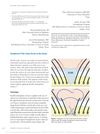
December 2023 Hair grows in cycles and changes with age, starting from fetal development.
 1 citations
,
December 2015 in “Dermatologic Surgery”
1 citations
,
December 2015 in “Dermatologic Surgery” Double trichophytic closure effectively treats thin scalp scars and reduces patient costs.
 April 2026 in “Research Square”
 Trichoscopy is reliable for diagnosing different types of frontal non-scarring hair loss.
January 2026 in “Health Science Reports” Personalized hair care can help manage hair-focused repetitive behaviors.
October 2025 in “International Journal of Cosmetic Science” Hair properties vary by ethnicity and environment, affecting surface charge and particle deposition.
A runner developed tangled armpit hairs from shirt friction, preventable by shaving or wearing smooth shirts.
 January 2025 in “International journal of Indian medicine”
 Certain herbs in Ayurveda are effective for hair growth, darkening, and health.
 November 2024 in “Journal of Cosmetic Dermatology”
 The hair serum reduced hair loss and improved hair quality in women.
October 2024 in “Cosmetics” ATG effectively reduces hair frizz without damaging hair strength.
 April 2024 in “Current research in nutrition and food science”
 Taking an amino acid supplement improved skin, hair, and nail health in women.
 January 2024 in “International Ayurvedic medical journal”
 Certain Prakruti types are more prone to early male pattern baldness.
 June 2023 in “Frontiers in Genetics”
 Genes related to calcium signaling and lipid metabolism are important for curly hair in Mangalitza pigs.
 April 2021 in “Journal of Investigative Dermatology”
 Stem cells control their future role by changing ERK signal timing, affecting tissue regeneration and cancer.
January 2020 in “Revista Dermatológica Centro Uraga” Recognizing trichoscopic features is crucial for diagnosing various hair loss conditions.
 September 2017 in “Springer eBooks”
 FUE hair transplants have improved to give more natural results with less scarring and pain.
 May 2017 in “bioRxiv (Cold Spring Harbor Laboratory)”
 The peach gene pCTG134 helps control the interaction between auxin and ethylene hormones during fruit ripening.
 April 2021 in “Journal of Investigative Dermatology”
 Cyclooxygenase-2 overexpression in mice skin causes hair loss like human androgenetic alopecia.
 December 2015 in “Dermatologic Surgery”
 Double trichophytic closure effectively repairs thin scalp scars, reducing financial burden.
949 citations
,
January 2001 in “Cell” Adult mouse skin contains stem cells that can create new hair, skin, and oil glands.
 243 citations
,
September 2016 in “Dermatology and Therapy”
243 citations
,
September 2016 in “Dermatology and Therapy” Dermoscopy is a useful tool for identifying features of skin conditions, but more research is needed to define its role in dermatology.
161 citations
,
August 2012 in “Seminars in cell & developmental biology” Hair growth and development are controlled by specific signaling pathways.
154 citations
,
October 1996 in “Proceedings of the National Academy of Sciences of the United States of America” Estrogen affects hair growth and skin cell multiplication.
 117 citations
,
November 2006 in “Experimental Dermatology”
117 citations
,
November 2006 in “Experimental Dermatology” The article concludes that the wool follicle is a valuable model for studying tissue interactions and has potential for genetic improvements in wool production.
93 citations
,
July 2006 in “Journal of Investigative Dermatology” K25, K27, and K28 are found in all inner root sheath layers of hair, while K26 is only in the cuticle.
 82 citations
,
March 2012 in “Development”
82 citations
,
March 2012 in “Development” Drosha and Dicer are essential for hair follicle health and preventing DNA damage in skin cells.
 69 citations
,
August 1999 in “Developmental biology”
69 citations
,
August 1999 in “Developmental biology” The nude gene causes skin cell overgrowth and improper development, leading to hair and urinary issues.
36 citations
,
October 2007 in “Journal of Investigative Dermatology” Betacellulin helps blood vessel growth in wounds but delays hair growth.