82 citations
,
March 2013 in “PLoS ONE” Vemurafenib causes skin side effects similar to RASopathies, requiring regular skin checks and UVA protection.
 74 citations
,
January 2013 in “Journal of Investigative Dermatology”
74 citations
,
January 2013 in “Journal of Investigative Dermatology” Four genetic risk spots found for hair loss, with WNT signaling involved and a link to curly hair.
126 citations
,
October 1998 in “Experimental Dermatology” The hr gene is crucial for skin and hair health, with mutations causing hair disorders.
3 citations
,
June 2017 in “Journal of Physiology & Pathology in Korean Medicine” Puerariae Radix extract may help hair growth by increasing cell activity.
July 2022 in “British Journal of Dermatology” January 2025 in “Reactions Weekly” November 2024 in “Reactions Weekly” May 2023 in “Reactions Weekly”  January 2008 in “Hair transplant forum international”
 The document's conclusion cannot be provided as the content is not available.
3 citations
,
January 2011 in “生物医学研究杂志:英文版” A new mutation in the KRT86 gene causes monilethrix in a Han family.

Proretinal nanoparticles are a safe and effective way to deliver retinal to the skin.
 March 2026 in “Folia Histochemica et Cytobiologica”
 LTBP1 is a key regulator in diseases and a potential target for new treatments.
 1 citations
,
January 2014 in “International Journal of Trichology”
1 citations
,
January 2014 in “International Journal of Trichology” A patient with a rare hair condition and skin disorder showed hair improvement after treatment.
9 citations
,
May 2014 in “BMC medical genetics” A woman with a unique syndrome similar to TRPS has a genetic change near the TRPS1 gene, affecting its regulation.
 April 2025 in “Journal of Pharmaceutical Investigation”
 Low-dose rapamycin microdepots can help regrow hair by activating certain cell processes.
1 citations
,
January 2025 in “Dermatologic Therapy” Monopolar radiofrequency effectively reduces facial wrinkles with minimal side effects.
 3 citations
,
February 2014 in “Asian Pacific journal of tropical medicine”
3 citations
,
February 2014 in “Asian Pacific journal of tropical medicine” Wnt5a may slow down hair growth in mice.
 April 2016 in “Journal of Investigative Dermatology”
 MEK and BRAF inhibitors increase sebum production and accumulation, which could cause acne-like side effects.
150 citations
,
June 1999 in “Oncogene” May 2010 in “Europe PMC (PubMed Central)” Near-infrared probes can safely and effectively image cysteine protease activity for disease diagnosis.
 December 2022 in “Acta Ophthalmologica”
 Dutasteride potentially improves cell survival and reduces retinal damage in retinitis pigmentosa.
 6 citations
,
August 2020 in “JCRPE”
6 citations
,
August 2020 in “JCRPE” A boy with a rare form of early puberty caused by a new gene mutation responded well to treatment aimed at reducing testosterone and preserving adult height.
5 citations
,
November 2021 in “The journal of investigative dermatology/Journal of investigative dermatology” Wnt/β-catenin signaling is important for keeping skin cell attachment structures stable.
10 citations
,
November 2023 in “European Journal of Lipid Science and Technology” Walnut extract may help lower cholesterol and inflammation.
 February 2025 in “Journal of Clinical Investigation”
 RNase L hinders hair growth by altering immune signals.
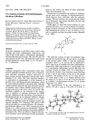 December 1998 in “Acta Crystallographica Section C-crystal Structure Communications”
 A new compound with strong antiandrogenic effects was found, potentially useful for treating conditions like acne and prostate cancer.
January 2022 in “Buletin penelitian tanaman rempah dan obat/Bulletin komunikasi penelitian tanaman rempah dan obat” The 3% bidara leaf extract hair tonic was most effective for hair growth.
26 citations
,
September 2012 in “Cell Reports” B-Raf and C-Raf are essential for maintaining melanocyte stem cells to prevent hair graying.
89 citations
,
January 2020 in “PubMed” Early detection and biotin treatment improve outcomes for biotinidase deficiency.
 September 2025 in “Arthritis Research & Therapy”
 BMS-470539 reduces skin fibrosis and inflammation.