3 citations
,
June 2008 in “Springer eBooks” Hair care products clean, protect, style, color, and change hair structure.
 3 citations
,
January 2007 in “Journal of health science”
3 citations
,
January 2007 in “Journal of health science” The enzymatic method can effectively identify chemical treatments on hair.
3 citations
,
October 2006 in “Journal of dermatology” X-ray microscopy can non-invasively show hair structure changes after treatments, but it's less detailed than TEM and needs improvement.
1 citations
,
January 2006 High temperatures and cosmetic processes can damage hair keratin, affecting its structure and strength.
1 citations
,
February 1989 in “PubMed” Electrophoresis can effectively analyze hair proteins for forensic use, even after cosmetic treatments and up to 2 years of weathering.
 September 2022 in “Acta Medica”
 The pandemic caused new skin problems in children, mainly due to mask-wearing and stress.
 January 2013 in “Transactions of the Materials Research Society of Japan”
 CMADK reduces hair damage from bleaching and permanent waving.
January 2013 in “프로그램북(구 초록집)” Hair perms or treatments seem safe to use up to 3 to 4 times during pregnancy.
Chemical treatments weaken hair's thermal stability and structure.
 January 1991 in “Journal of Society of Cosmetic Chemists of Japan”
 Hair treatments can damage hair by changing its chemical content.

Lightly perming scalp hair can lead to new hair growth, potentially treating baldness.
 16 citations
,
September 2008 in “American Journal of Orthodontics and Dentofacial Orthopedics”
16 citations
,
September 2008 in “American Journal of Orthodontics and Dentofacial Orthopedics” Wearing orthodontic headgear can cause reversible hair loss if detected early.
 9 citations
,
December 2012 in “The Journal of Dermatology”
9 citations
,
December 2012 in “The Journal of Dermatology” Wearing wigs or hairpieces improves self-esteem, adaptability, and competence in women with alopecia areata.
 7 citations
,
January 2018 in “International Journal of Trichology”
7 citations
,
January 2018 in “International Journal of Trichology” Wearing a wig caused a skin condition to develop in a woman with hair loss.
 6 citations
,
November 2018 in “Dermatologic Therapy”
6 citations
,
November 2018 in “Dermatologic Therapy” Wearing a ponytail often is linked to hair loss at the front of the scalp in Chinese women.
3 citations
,
August 2023 in “Archives of Dermatological Research” Wearing a hijab may lead to earlier hair loss due to vitamin D deficiency and seborrheic dermatitis.
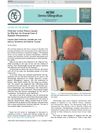 1 citations
,
April 2016 in “Actas Dermo-Sifiliográficas”
1 citations
,
April 2016 in “Actas Dermo-Sifiliográficas” Wearing a wig caused a woman's skin condition to worsen due to pressure from the wig's fasteners.
1 citations
,
April 2013 in “Journal of dermatological treatment” Wearing a cast for four weeks makes hair grow longer, thicker, and denser.
 1 citations
,
September 2005 in “Oncology times”
1 citations
,
September 2005 in “Oncology times” Wearing a frozen glove during chemotherapy can reduce nail and skin problems but may not be comfortable for everyone.
 March 2026 in “Berkala Ilmu Kesehatan Kulit dan Kelamin”
 Wearing headscarves does not cause hair loss.
 January 2026 in “Bandung Conference Series Medical Science”
 Wearing a hijab does not cause hair loss.
July 2025 in “Journal of Investigative Dermatology” Wearing a hijab doesn't cause hair loss, but how it's worn can lead to hair issues, and many affected women don't seek medical help.
 July 2025 in “JUNIOR RESEARCHERS”
 Wearing masks has increased skin issues like acne and eczema, especially in women and young people.
April 2024 in “JAAD Case Reports” Wearing fire helmets may worsen lichen planopilaris in firefighters.

Wearing a toupee makes men seem more attractive and slightly healthier, but doesn't change how confident they appear.
 August 2023 in “International Journal of Women's Dermatology”
 Wearing a high-quality wig improved a woman's mood and life quality, and the authors suggest insurance should cover the cost of wigs.
 May 2023 in “Research Square (Research Square)”
 Wearing a hijab may lead to earlier hair loss due to vitamin D deficiency and scalp conditions.
July 2019 in “Journal of Dermatology and Dermatologic Surgery” Wearing headcovers doesn't affect male-pattern hair loss severity.
 45 citations
,
December 2006 in “Biopolymers”
45 citations
,
December 2006 in “Biopolymers” Permanent waving weakens hair by altering its protein structure.
20 citations
,
June 2010 in “Dermatology Online Journal” Zinc supplements and weaning cured a breast-fed baby's zinc deficiency caused by a gene mutation.