 29 citations
,
March 2023 in “European Journal of Human Genetics”
29 citations
,
March 2023 in “European Journal of Human Genetics” New genetic factors linked to acne risk were discovered, highlighting the role of certain pathways and genes.
28 citations
,
September 2021 in “EMBO reports” Osthole inhibits the TRPV3 channel by binding to specific sites, potentially aiding drug development for skin diseases and cancers.
 25 citations
,
September 2010 in “Journal of Cutaneous Medicine and Surgery”
25 citations
,
September 2010 in “Journal of Cutaneous Medicine and Surgery” The study found that Central Centrifugal Cicatricial Alopecia mainly affects middle-aged African descent women, is linked to certain hair care practices and genetics, and often goes undiagnosed for years.
 14 citations
,
March 1995 in “Journal of cell science”
14 citations
,
March 1995 in “Journal of cell science” SV40 T antigen in hair follicles causes abnormal hair and health issues in mice.
 11 citations
,
September 2010 in “American Journal of Medical Genetics - Part A”
11 citations
,
September 2010 in “American Journal of Medical Genetics - Part A” A Turkish family with sparse hair and eyebrow loss has a mutation in the U2HR gene linked to Marie Unna hereditary hypotrichosis.
10 citations
,
August 2021 in “Frontiers in cell and developmental biology” Scientists made structures that look like human hair follicles using stem cells, which could help grow hair without using actual human tissue.
8 citations
,
December 2022 in “BMC Genomics” The research improved understanding of yak hair growth to help use yak wool better.
8 citations
,
March 2020 in “Colloids and surfaces. B, Biointerfaces” Heating hair proteins changes their structure and may improve their blood clotting ability.
 7 citations
,
November 2014 in “Histochemistry and Cell Biology”
7 citations
,
November 2014 in “Histochemistry and Cell Biology” The we/we wal/wal mice have defects in hair growth and skin layer formation, causing hair loss, useful for understanding alopecia.
5 citations
,
December 2020 in “International journal of biological macromolecules” Treatments improved hair surface and scale structure but didn't increase certain bonds in the hair cortex.
4 citations
,
November 2024 in “Materials” The film creates vibrant colors and can be used in food sensors and cosmetics.
 3 citations
,
September 2016 in “Natural Product Communications”
3 citations
,
September 2016 in “Natural Product Communications” Germacrene analogs, especially 8-Hydroxy germacrene B, are more effective than germacrone at blocking a hormone-related enzyme and could help treat hair loss.
 2 citations
,
June 2012 in “Journal of Dermatological Science”
2 citations
,
June 2012 in “Journal of Dermatological Science” The gene HDC is important for the development of hair follicles in newborn mice.
Compound 6 is a promising candidate for better wound healing.
 July 2026 in “Preprints.org”
 Combining fat grafting, hair transplantation, and scalp micropigmentation effectively restores appearance and improves life for burn survivors.
 June 2026 in “Frontiers in Aging”
 Homeodynamic Rejuvenation aims to improve skin's stress management and recovery to combat aging.
January 2026 in “SSRN Electronic Journal” October 2024 in “Cosmetics” ATG effectively reduces hair frizz without damaging hair strength.

Removing SIX1 in fat cells reduces skin fibrosis.
 October 2022 in “BMC genomics”
 RNA editing significantly affects hair growth and follicle cycling in the Tianzhu white yak.
June 2021 in “Faculty Opinions – Post-Publication Peer Review of the Biomedical Literature” The skin basement membrane is specialized for different tissue interactions, important for hair growth and attachment.
 April 2018 in “Journal of Investigative Dermatology”
 Aging reduces skin cell renewal and defense against germs due to TGFbeta, but blocking TGFbeta could help restore these functions.
65 citations
,
May 2006 in “Journal of Structural Biology” Hair curliness is due to uneven distribution of different cortices within the hair fiber.
 23 citations
,
June 2012 in “Molecular Biology Reports”
23 citations
,
June 2012 in “Molecular Biology Reports” VEGF stimulates hair cell growth and increases growth receptor levels through a specific signaling pathway.
 12 citations
,
August 1984 in “Genetics Research”
12 citations
,
August 1984 in “Genetics Research” The N gene affects the protein makeup of mouse hair.
 3 citations
,
January 2019 in “Jikken doubutsu ihou/Jikken doubutsu/Experimental animals/Jikken Dobutsu”
3 citations
,
January 2019 in “Jikken doubutsu ihou/Jikken doubutsu/Experimental animals/Jikken Dobutsu” Pigs without the Hairless gene showed skin and thymus changes, useful for studying human hair disorders.
The transporter protein SH1446 in Staphylococcus hominis is key to underarm odor production.
The study identified a key protein involved in producing underarm odor and found ways to inhibit it.
 January 2014 in “Journal of the Korean Society of Design Culture”
 The study confirmed that changes in hair structure in women with hair loss conditions matched what is taught in beauty college trichology courses.
 May 2014 in “JAMA Dermatology”
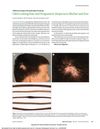
 Mother and son diagnosed with a rare genetic hair loss condition with no effective treatment.