35 citations
,
January 2001 in “Journal of Animal Science” High dietary selenium, especially inorganic, causes weight loss and selenosis in pigs, with effects varying by hair color.
2 citations
,
December 2017 in “PubMed” A long-term pubic rash was finally diagnosed as white piedra and cured with ketoconazole.
7 citations
,
October 2012 in “Anais Brasileiros de Dermatologia” A patient had both white piedra and head lice, showing their differences.
 12 citations
,
November 1945 in “Archives of dermatology”
12 citations
,
November 1945 in “Archives of dermatology” Transplanted skin on hooded rats often grows white hair instead of black.
 November 2023 in “Curēus”
 Topical tretinoin effectively treated sebaceous filaments, improving skin appearance.
 March 2019 in “Our Dermatology Online”
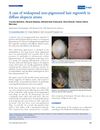
 A woman with severe hair loss regrew mostly white hair after treatment.
5 citations
,
July 2010 in “Journal of life sciences” Gray hair has more continuous medullation and a higher medullary diameter than black hair.
 6 citations
,
January 2016 in “JAMA Dermatology”
6 citations
,
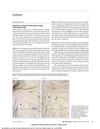
January 2016 in “JAMA Dermatology” Dirty dots are a common scalp finding in elderly women and can be washed away with shampoo.
 June 2023 in “Pediatric investigation”
 A boy's scalp infection, usually found on the body, was effectively treated with antifungal cream.
2 citations
,
January 2002 in “Clinics in Dermatology” Vitiligo causes white skin patches, often starts before age 20, and is linked to other health issues.
 30 citations
,
March 2015 in “Journal of Dermatology”
30 citations
,
March 2015 in “Journal of Dermatology” Hair thickness differences help diagnose hair loss severity.
 16 citations
,
January 2013 in “Internal Medicine”
16 citations
,
January 2013 in “Internal Medicine” Early hair whitening may indicate a higher risk of heart disease in young and middle-aged men.
January 2022 in “SSRN Electronic Journal” Mouse hair follicles age, causing more white hairs due to fewer pigment stem cells.
207 citations
,
September 1973 in “Entomologia Experimentalis et Applicata” B-type hairs on female butterfly legs help them choose where to lay eggs.
 February 2009 in “Journal of The American Academy of Dermatology”
 Yellow dots look different in various hair loss conditions and can help diagnose them.
8 citations
,
July 2004 in “Journal of morphology” Marsupial hair structure and keratin distribution are similar to placental mammals.
June 2025 in “Australasian Journal of Dermatology” Pigmented rings with central clearing help diagnose melasma more accurately.
 4 citations
,
January 1992 in “The Tohoku Journal of Experimental Medicine”
4 citations
,
January 1992 in “The Tohoku Journal of Experimental Medicine” Zinc made mice's coarse hair turn into fine hair without affecting skin structure.
3 citations
,
January 2014 in “Indian dermatology online journal” Hair casts can be mistaken for lice, so correct identification is important.
2 citations
,
January 2017 in “International Journal of Trichology” Trichoscopy can reveal specific hair and scalp changes in linear morphea.
9 citations
,
January 1989 in “Journal of Small Animal Practice” Abyssinian cats can have a hair abnormality that makes their coat look rough and dull.
13 citations
,
January 2001 in “Pediatric dermatology” A dark-haired Chinese girl had hair that looked banded under certain light but was normal under a microscope.
21 citations
,
November 1980 in “PubMed” A new mite species was found in California sea lions, causing skin issues.
9 citations
,
April 1985 in “Archives of Dermatology” Recognizing the "bamboo hair defect" is crucial for diagnosing Netherton's syndrome.
 July 2023 in “Veterinary pathology”
 White-tailed deer can get a hair loss condition that might make them more vulnerable to environmental threats.
 36 citations
,
October 2014 in “Langmuir”
36 citations
,
October 2014 in “Langmuir” Bleaching hair removes its protective top layer and exposes more hydrophilic groups, changing its chemical surface and affecting how it interacts with products.
 17 citations
,
June 2012 in “Journal of experimental zoology. Part B, Molecular and developmental evolution”
17 citations
,
June 2012 in “Journal of experimental zoology. Part B, Molecular and developmental evolution” Hair in mammals likely evolved from glandular structures, not scales.
September 1973 in “Primates” October 2021 in “DOAJ (DOAJ: Directory of Open Access Journals)” Trichoscopy effectively distinguishes between severe and mild male pattern hair loss.
28 citations
,
June 1995 in “The Journal of Dermatology” The flaky skin mouse mutation is a natural model for studying human psoriasis.