 27 citations
,
July 2017 in “Scientific Reports”
27 citations
,
July 2017 in “Scientific Reports” N-WASP is essential for healthy skin and preventing inflammation.
18 citations
,
May 2011 in “Journal of Investigative Dermatology” Wnt signaling affects the development and growth of Langerhans cells in mice.
 8 citations
,
September 2017 in “Journal of Investigative Dermatology”
8 citations
,
September 2017 in “Journal of Investigative Dermatology” CXXC5 is a protein that prevents hair growth and could be a target for hair loss treatment.
 1 citations
,
December 2023 in “The journal of investigative dermatology/Journal of investigative dermatology”
1 citations
,
December 2023 in “The journal of investigative dermatology/Journal of investigative dermatology” Keeping β-catenin levels high in mammary cells disrupts their development and branching.
ISX9 helps regrow hair by activating a specific cell signaling pathway.
32 citations
,
November 1998 in “Journal of Biological Chemistry” Mouse and human keratin 16 can both form filaments, with differences likely due to the tail domain, not the helical domain.
18 citations
,
July 2023 in “International Journal of Molecular Sciences” KY19382 speeds up wound healing by activating a specific cell signaling pathway.
 October 2021 in “Journal of Investigative Dermatology”
 Dkk4 protein is necessary for the proper development and arrangement of hair follicles.
 23 citations
,
May 2013 in “Virology”
23 citations
,
May 2013 in “Virology” HPV16 oncogenes disrupt the normal activity of hair follicle stem cells.
2 citations
,
June 2024 in “Skin Research and Technology” Low-level laser therapy can boost hair growth and speed up wound healing.
 February 2023 in “PubMed”
 The Wnt/β-catenin signaling pathway is important for skin wound healing and affects inflammation, cell growth, and other healing processes.
October 2022 in “British Journal of Dermatology” October 2020 in “Research Square (Research Square)” Aging-related changes in hair follicle stem cells can be partially reversed with a specific treatment.
22 citations
,
March 2019 in “The Journal of Cell Biology” The Wave complex controls skin growth by suppressing certain signals.
April 2010 in “Cancer Research” Mcl-1 can activate Wnt signaling in skin cells, promoting growth and possibly cancer.
 August 2012 in “Nature Cell Biology”
 A pathway helps maintain long telomeres in both stem and cancer cells.
91 citations
,
December 2019 in “The EMBO Journal” NEDD4 and NEDD4L help control intestinal stem cells and prevent tumors by breaking down the LGR5 receptor.
1 citations
,
October 2024 in “World Journal of Gastroenterology” Inhibiting the Wnt pathway may help stop liver cancer growth.
May 2006 in “The Journal of Cell Biology” Keratin 17 is crucial for cell growth in wound healing by aiding protein synthesis.

Donkeys have 19 Wnt genes, similar to horses, with specific roles in reproduction and tissue maintenance.
 July 2022 in “Journal of Investigative Dermatology”
 Dkk4 is necessary for the initial development and arrangement of hair follicles.
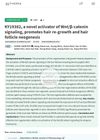
KY19382 helps to regrow hair and create new hair follicles.
January 2010 in “DukeSpace (Duke University)” Wnt and Notch pathways are crucial for repairing blood stem cells after damage.
74 citations
,
April 2024 in “Cell Communication and Signaling” Targeting Wnt/β-catenin signaling can improve healing in chronic wounds.
 4 citations
,
December 2021 in “The journal of investigative dermatology/Journal of investigative dermatology”
4 citations
,
December 2021 in “The journal of investigative dermatology/Journal of investigative dermatology” Overactive Wnt signaling in mouse skin stem cells causes acne-like cysts and shrinking oil glands, which some treatments can partially fix.
 57 citations
,
December 2021 in “Nature Communications”
57 citations
,
December 2021 in “Nature Communications” Non-canonical Wnt signaling helps intestinal stem cells move to injury sites for tissue repair.
 9 citations
,
November 2021 in “Current Opinion in Genetics & Development”
9 citations
,
November 2021 in “Current Opinion in Genetics & Development” Wounds can cause new hair growth in adult mice, influenced by Wnt signaling.
33 citations
,
October 2020 in “Frontiers in Cell and Developmental Biology” Wnt/β-catenin signaling is crucial for early zebrafish brain regeneration.
 January 2025 in “Cell Communication and Signaling”
 CXXC5 can both suppress and promote cancer, making it a complex target for treatment.
 22 citations
,
October 2012 in “Cell Transplantation”
22 citations
,
October 2012 in “Cell Transplantation” Cells treated with Wnt-10b can grow hair after being transplanted into mice.