Search
for
Sort by
Research
150-180 / 1000+ results
research Molecular principles of hair follicle induction and morphogenesis
Hair follicle development is controlled by interactions between skin tissues and specific molecular signals.

research Extracellular vesicles derived from MSCs activates dermal papilla cell in vitro and promotes hair follicle conversion from telogen to anagen in mice
Tiny particles from stem cells help activate hair growth cells and encourage hair growth in mice without being toxic.
research Sphere Formation Increases the Ability of Cultured Human Dermal Papilla Cells to Induce Hair Follicles from Mouse Epidermal Cells in a Reconstitution Assay
Forming spheres boosts the ability of certain human cells to create hair follicles when mixed with mouse skin cells.

research Repeated Microneedle Stimulation Induces Enhanced Hair Growth in a Murine Model
Microneedle stimulation can increase hair growth in mice.

research The balance of Bmp6 and Wnt10b regulates the telogen-anagen transition of hair follicles
BMP6 and Wnt10b control whether hair follicles are resting or growing.
research Various Wavelengths of Light-Emitting Diode Light Regulate the Proliferation of Human Dermal Papilla Cells and Hair Follicles via Wnt/β-Catenin and the Extracellular Signal-Regulated Kinase Pathways
LED light can help hair growth by activating specific cell pathways.

research Lactoferrin promotes hair growth in mice and increases dermal papilla cell proliferation through Erk/Akt and Wnt signaling pathways
Lactoferrin helps mice grow hair by increasing cell growth and hair follicle development.

research Establishment and characterization of five immortalized human scalp dermal papilla cell lines
Researchers created five new human scalp cell lines that could be useful for hair growth and loss research.
research Transgenic Flash Mice for In Vivo Quantitative Monitoring of Canonical Wnt Signaling to Track Hair Follicle Cycle Dynamics
Researchers developed a mouse model that tracks hair growth using bioluminescence, improving accuracy in studying hair cycles.

research Expression of Hex during feather bud development
Hex gene plays a crucial role in starting feather development in chick embryos.

research Transcriptional activation of CCN1 and CCN2, targets of canonical Wnt signal, by ascorbic acid 2-phosphate in human dermal papilla cells
Vitamin C derivative may promote hair growth by activating specific genes.

research Clonal analysis of stem cells in differentiation and disease
New techniques have enhanced our understanding of how stem cells function and the role of mutations in aging tissues, which may influence future cancer therapies.
research Expression ofWise in chick embryos
The molecule Wise is involved in the development of various structures in chick embryos.

research Can an in vitro hair drug model be developed using dermal papilla cells alone?
Dermal papilla microtissues could be useful for initial hair growth drug testing.

research Transcriptomic insights into the effects of tyrosine on sub-Columbian plumage in H line chickens
A 1.0% tyrosine diet increases melanin in chicken feathers.

research Dissolvable Microneedles Loaded Ginsenoside Rg3 liposome: A Transdermal Delivery Approach for Alopecia Treatment
Dissolvable microneedles with Ginsenoside Rg3 can help treat hair loss by improving drug delivery and stimulating hair growth.

research Evaluation of microneedling in the treatment of frontal fibrosing alopecia
Microneedling may improve quality of life and reduce inflammation in frontal fibrosing alopecia.

research Low Molecular Weight Collagen Peptide (LMWCP) Promotes Hair Growth by Activating the Wnt/GSK-3β/β-Catenin Signaling Pathway
A type of collagen helps hair grow by boosting cell growth and activating a specific hair growth pathway.

research WNT10A , dermatology and dentistry
Mutations in the WNT10A gene can cause skin, hair, teeth, and other disorders, and may also affect other areas like kidney and cancer, with potential for targeted treatments.

research Adenovirus-Mediated Wnt10b Overexpression Induces Hair Follicle Regeneration
Wnt10b overexpression can regenerate hair follicles, possibly helping treat hair loss and alopecia.

research Activating Wnt/β-catenin signaling pathway for disease therapy: Challenges and opportunities
Using drugs to activate the Wnt/β-catenin pathway has potential for treating diseases but also presents challenges.

research Identification of a link between Wnt/β-catenin signalling and the cell fusion pathway
Wnt/β-catenin signaling is crucial for cell fusion in placental development.
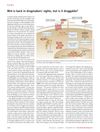
research Wnt is back in drugmakers' sights, but is it druggable?
Drugmakers are optimistic about targeting the Wnt pathway for new treatments despite past challenges.
research Mrp3, a Mitogen-Regulated Protein/Proliferin Gene Expressed in Wound Healing and in Hair Follicles*
Mrp3 helps in wound healing and hair growth.
research 612 Wnt signaling induces fibrotic fat loss via DPP4 in skin fibrosis
Blocking DPP4 can help prevent fat loss and skin fibrosis.

research 1392 Dkk4 regulates Wnt-dependent hair formation and pattern
Dkk4 protein helps control how hair grows and its arrangement.

research Wnt and Notch signaling pathway involved in wound healing by targeting c-Myc and Hes1 separately
Wnt and Notch signaling help wound healing by promoting cell growth and regulating cell differentiation.
research Neural Wiskott-Aldrich syndrome protein modulates Wnt signaling and is required for hair follicle cycling in mice
N-WASP is essential for normal hair growth in mice.

research 1338 Dermal Wnt/β-catenin activation tunably controls hair follicle initiation
Activating Wnt in skin cells controls the number of hair follicles by directing cell movement and fate.