 December 2023 in “Animal research and one health”
 Certain circular RNAs are crucial for wool growth and curvature in goats.
 23 citations
,
May 2020 in “Cell Death and Disease”
23 citations
,
May 2020 in “Cell Death and Disease” Blocking the FGF5 gene in sheep leads to more fine wool and active hair follicles due to changes in certain cell signaling pathways.
 2 citations
,
May 2023 in “Journal of Advanced Research”
2 citations
,
May 2023 in “Journal of Advanced Research” Two mutations in KRT74 and EDAR genes cause sheep to have finer wool.
 6 citations
,
April 2022 in “Frontiers in cell and developmental biology”
6 citations
,
April 2022 in “Frontiers in cell and developmental biology” The research identified key proteins and genes that may influence wool bending in goats.
 1 citations
,
May 2025 in “Scientific Reports”
1 citations
,
May 2025 in “Scientific Reports” The study identified key genes and pathways that influence goat wool quality and growth.
1 citations
,
January 2015 in “China Animal Husbandry & Veterinary Medicine” Four keratin genes are crucial for hair growth in Xinji fine wool sheep.
 March 2024 in “Research Square (Research Square)”
 The TT genotype of a specific SNP in sheep is linked to better wool quality.
 January 2023 in “Pesquisa Veterinária Brasileira”
 A KRT71 mutation in Hereford cattle in Uruguay causes thin, curly hair and scaly skin.
 109 citations
,
September 2011 in “Human molecular genetics online/Human molecular genetics”
109 citations
,
September 2011 in “Human molecular genetics online/Human molecular genetics” New treatments targeting specific genes show promise for treating keratin disorders.
32 citations
,
August 2016 in “Journal of the American Academy of Dermatology” Temporal triangular alopecia is a non-scarring hair loss in children, often linked to other health conditions.
25 citations
,
November 2012 in “Thermochimica Acta” Internal lipids in keratin fibers, like wool and hair, reduce water absorption and release.
2 citations
,
July 2021 in “Actas dermo-sifiliográficas/Actas dermo-sifiliográficas” Hair shaft disorders are diagnosed through examination and history, with general care and some treatments offering improvement.
July 2012 in “International Journal of Trichology” Hair disorders are complex and varied, with diverse treatments available.
 August 2010 in “Journal of The American Academy of Dermatology”
 The document explains the diagnosis and characteristics of woolly hair nevus and alopecia neoplastica.
 October 2023 in “Cell & bioscience”
 A special gene region controls the re-emergence of a primitive wool type in Merino sheep, improving their wool yield and adaptability.
 June 2023 in “Historical records of Australian science/Historical Records of Australian Science”
 George Ernest Rogers was a notable scientist who made important discoveries about hair and wool proteins.
83 citations
,
May 2011 in “Experimental Dermatology” Sheep have 17 keratin genes, similar to humans, but with different expression patterns affecting wool and hair.
4 citations
,
September 2003 in “Livestock Production Science” Epidermal growth factor reduces hair growth, but cortisol does not.
25 citations
,
September 2014 in “SpringerPlus” Sheep have a unique gene, KAP8-2, that humans don't have, which may affect wool properties.
16 citations
,
January 2015 in “Genetics and Molecular Research” The research helps improve wool quality and aids human hair research.
1 citations
,
January 2021 in “Springer Proceedings in Materials” Researchers developed a new method to clearly see and label hair proteins with minimal errors using advanced freezing and microscopy techniques.
May 2025 in “Apollo Medicine” Trichoscopy is a useful tool for diagnosing and assessing the severity of alopecia areata.
March 2021 in “World rabbit science” Adding 0.2% taurine to Angora rabbits' diet improves wool production and overall health.
Sheep can lose wool quickly due to stress, but it doesn't cause itching or pain.
95 citations
,
March 2009 in “Differentiation” Gene expression in wool follicles changes with growth cycles, offering insights into wool and human hair growth.
91 citations
,
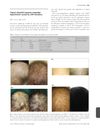
July 2020 in “JAMA Dermatology” Minoxidil can improve hair growth in some patients with woolly hair due to LIPH variants, with varying responses and mild side effects.
 7 citations
,
March 2015 in “British Journal of Dermatology”
7 citations
,
March 2015 in “British Journal of Dermatology” Applying minoxidil can help improve hair growth in people with hair loss caused by LIPH gene mutations.
2 citations
,
January 2025 in “Veterinary Dermatology” Male Pomeranians with woolly coats are more likely to develop alopecia X.
16 citations
,
January 2021 in “BMC Genomics” Higher hair follicle density leads to more wool in rabbits, influenced by specific genes and lncRNAs.
 January 2021 in “Research Square (Research Square)”
 Rabbits with high wool production have more hair follicles, influenced by specific long noncoding RNAs.