 September 2023 in “International journal of biological macromolecules”
 The chitosan/PDRN polyplex improved wound healing in diabetic rats.
 December 2022 in “KSBB Journal”
 Activating TLR3 boosts autophagy gene expression in skin cells.
 August 2022 in “International journal of research in pharmacy and chemistry”
 Teak is a durable, termite-resistant wood with medicinal benefits.
 July 2022 in “Dermatology practical & conceptual”
 Henna ointment may help reduce itching and improve wound healing in patients with epidermolysis bullosa.

COVID-19 may lead to severe skin necrosis without clear underlying causes, as seen in a diabetic patient who required leg amputation.

Human hair keratins can be turned into useful 3D biomedical scaffolds through a freeze-thaw process.
 October 2021 in “Austin journal of biomedical engineering”
 The material combining eggshell protein and scaffold helps wounds heal faster and regenerates tissue effectively.
 October 2021 in “The Egyptian Journal of Hospital Medicine ”
 Combination therapies work better than single treatments for atrophic acne scars.
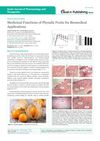 May 2021 in “Austin journal of pharmacology and therapeutics”
 Physalis fruits have medicinal properties that can help treat various diseases and have anti-inflammatory, antioxidant, antibacterial, and antitumor effects.
 June 2020 in “The journal of investigative dermatology/Journal of investigative dermatology”
 Pulsed red light boosts collagen and energy in cells faster than continuous red light.
Hedgehog signaling can create new hair follicles in adult skin but may increase cancer risk.
March 2019 in “Dermatologic Surgery” 
Skin stem cells in hair follicles are important for touch sensation.
 January 2018 in “Stem cell biology and regenerative medicine”
 ATP-dependent chromatin remodeling is crucial for skin development and stem cell function.
 August 2017 in “Journal of Investigative Dermatology”
 Activin increases skin tumor formation, skin Tregs help hair growth, lymph-node removal doesn't improve melanoma survival, cells can revert to stem cells in wound healing, and skin bacteria produce peptides that may treat infections.
 April 2017 in “Journal of Investigative Dermatology”
 SM04755 may be an effective topical treatment for psoriasis.
April 2017 in “Plastic & Reconstructive Surgery Global Open” Hyaluronan from Has2 is important for proper wound healing and hair follicle development.
 January 2008 in “Springer eBooks”
 Thyroid hormone may be useful for treating various skin conditions and needs more research.
June 2006 in “Experimental dermatology” Hair follicle bulge cells are important for hair survival and help heal the skin after injury, which might be relevant for understanding hidradenitis suppurativa.
 January 2026 in “BIO Web of Conferences”
 FGFs have evolved differently across species, affecting skin functions and wound healing.

RNase L hinders hair follicle regeneration by altering immune signals.

NIMO-CH hydrogel effectively heals wounds with minimal scarring and promotes hair growth.
 February 2004 in “Dermatologic Surgery”
 Deep Plane Fixation in scalp surgeries allows for more tissue removal with less tension and minimal scarring.

Ovol2 is crucial for hair growth and skin healing by controlling cell movement and growth.
 291 citations
,
April 2010 in “Gastroenterology”
291 citations
,
April 2010 in “Gastroenterology” Certain proteins, Lgr5 and Lgr6, are important markers of adult stem cells and are involved in tissue repair and cancer development.
118 citations
,
December 2003 in “Mechanisms of Ageing and Development” Thymosin β4 helps heal wounds, grow hair, and improve blood vessel formation.
89 citations
,
April 2015 in “Materials Science and Engineering C” Keratin-based hydrogels from human hair improve wound healing effectively.
 45 citations
,
March 2020 in “ACS Applied Materials & Interfaces”
45 citations
,
March 2020 in “ACS Applied Materials & Interfaces” The new biomaterial inspired by ancient Chinese medicine effectively promotes hair growth and heals wounds in burned skin.
 8 citations
,
April 2019 in “ACS Biomaterials Science & Engineering”
8 citations
,
April 2019 in “ACS Biomaterials Science & Engineering” The new SIS-PEG sponge is a promising material for skin regeneration and hair growth.
2 citations
,
August 2023 in “Experimental Dermatology” HEY2+ cells help regenerate skin during wound healing.