 15 citations
,
November 2016 in “Journal of The American Academy of Dermatology”
15 citations
,
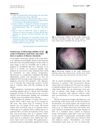
November 2016 in “Journal of The American Academy of Dermatology” Exclamation mark hairs suggest early scalp disease, while white dots indicate it's chronic.
 January 2025 in “International Journal of Dermatology Research”
 Higher MPV and CRP levels may indicate more severe alopecia areata.
14 citations
,
June 2022 in “British Journal of Dermatology” A SALT score of ≤ 20 indicates meaningful improvement in alopecia areata treatment.
26 citations
,
April 2010 in “The American journal of dermatopathology/American journal of dermatopathology” Researchers created a standard system to grade hair damage using microscopic images.
2 citations
,
July 2018 in “Chinese Journal of Dermatology” Sebaceous nevus changes with age, and dermoscopy and RCM are effective for diagnosis.
 April 2023 in “Journal of Investigative Dermatology”
 Protein analysis shows aging changes in scalp cell types from women.
March 2025 in “Journal of Investigative Dermatology” 13 citations
,
January 2019 in “Journal of the American Academy of Dermatology” Pityriasis rubra pilaris significantly worsens quality of life more than many other health conditions.
 13 citations
,
January 2012 in “International journal of trichology”
13 citations
,
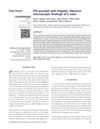
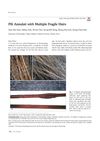
January 2012 in “International journal of trichology” The study found that hair fragility in Pili annulati may be caused by cavities and damage within the hair shafts.
The digital system for measuring melasma shows promise but needs more development for better accuracy and automation.
 4 citations
,
January 2017 in “Annals of Dermatology”
4 citations
,
January 2017 in “Annals of Dermatology” Frequent hairdryer use may worsen hair fragility in people with Pili Annulati.
 24 citations
,
April 2017 in “JAMA Facial Plastic Surgery”
24 citations
,
April 2017 in “JAMA Facial Plastic Surgery” Facial rejuvenation surgery makes people look younger, more attractive, successful, and healthy.
 4 citations
,
January 2023 in “Experimental dermatology”
4 citations
,
January 2023 in “Experimental dermatology” Skin thickness decreases and structural changes occur with both ageing and sun exposure in certain skin types.
 August 2020 in “Textile research journal”
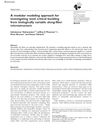
 The model helps understand how wool fiber structure affects its strength and flexibility.
Type XVII collagen helps control skin cell growth and may have anti-aging effects.
5 citations
,
April 2024 in “BMJ Open” Standardized ultrasound methods are needed for measuring scar thickness in clinical practice.
 January 2025 in “Scripta Medica”
 PDO, PLLA, and PCL threads increase collagen in ageing skin but don't change MMP1 gene expression.
18 citations
,
September 2024 in “Journal of the European Academy of Dermatology and Venereology” The DLQI is a key tool for measuring quality of life in dermatology.
Type XVII collagen may help prevent skin aging.
10 citations
,
January 2020 in “Royal Society Open Science” A new automated method accurately measures hair damage using microscopic images.
15 citations
,
July 2000 in “The journal of investigative dermatology/Journal of investigative dermatology” Fluorescence can effectively measure acne treatment progress.
 August 2010 in “Journal of The American Academy of Dermatology”
 The document explains the diagnosis and characteristics of woolly hair nevus and alopecia neoplastica.
 16 citations
,
February 2017 in “Dermatology and Therapy”
16 citations
,
February 2017 in “Dermatology and Therapy” The new visual scale is a quick and effective way to measure hair loss in women.
2 citations
,
August 2016 in “Journal of Investigative Dermatology” 13 citations
,
March 2022 in “Patient Preference and Adherence” Rosacea severely affects the quality of life for many patients in China, especially young adults and those with appearance-related jobs.
 45 citations
,
January 1999 in “Dermatology”
45 citations
,
January 1999 in “Dermatology” The VQ-Dermato is a reliable French questionnaire for measuring quality of life in chronic skin disorder patients.
81 citations
,
January 2003 in “Journal of cosmetic and laser therapy” New techniques have improved acne scar treatment, but multiple tailored sessions are often needed.
Excluding alopecia and mucous membrane components from the CLASI-A score reduces its effectiveness in capturing important disease activity.
 June 2019 in “Asian Journal of Medical Research”
 The dermaroller caused less hyperpigmentation and no itching compared to the fractional CO2 laser.
117 citations
,
August 2005 in “Ultramicroscopy” Human hair's strength and flexibility vary by ethnicity, damage, and treatment.