 1 citations
,
August 2023 in “Gels”
1 citations
,
August 2023 in “Gels” The hydrogel with silver and ibuprofen promotes wound healing and fights infection.
 June 2026 in “bioRxiv (Cold Spring Harbor Laboratory)”
 The ointment with copper improves wound healing and reduces scarring.
 February 2026 in “Materials”
 Hops can reduce skin irritation and are effective in cosmetics.
November 2025 in “Journal of Investigative Dermatology” Alpha-MSH affects mitochondrial function, and MC1R mutations may increase skin aging.
 December 2020 in “bioRxiv (Cold Spring Harbor Laboratory)”
 Stress can cause a type of hair loss in mice lacking the CCHCR1 gene.
January 2018 in “대한미용학회지” White hair is denser and more hydrophobic than black hair.
 April 2017 in “The journal of investigative dermatology/Journal of investigative dermatology”
 HSD11b1 affects skin nerves and increases non-histaminergic itch.
 August 1994 in “Molecular Endocrinology”
 Changing protein kinase levels in pituitary cells affects calcium flow and beta-endorphin release.
277 citations
,
October 1982 in “The Journal of Cell Biology” Basal-cell epitheliomas and the pilosebaceous tract share a unique keratin, distinguishing them from other skin areas.
71 citations
,
September 2013 in “Materials Science and Engineering C” Keratin-based hydrogels from human hair and wool are promising for wound dressings and are more eco-friendly.
 22 citations
,
October 2019 in “International Journal of Nanomedicine”
22 citations
,
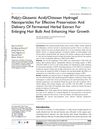
October 2019 in “International Journal of Nanomedicine” The nanoparticles improved hair growth and enlarged hair bulbs.
 22 citations
,
September 2019 in “ACS omega”
22 citations
,
September 2019 in “ACS omega” The new nanocomposite films are stronger, protect against UV, speed up wound healing, and are antibacterial without being toxic.
 17 citations
,
June 2011 in “The journal of investigative dermatology/Journal of investigative dermatology”
17 citations
,
June 2011 in “The journal of investigative dermatology/Journal of investigative dermatology” The G60S Connexin43 mutation causes hair growth issues and poor hair quality in mice, similar to human ODDD patients.
11 citations
,
February 2020 in “Journal of Biomaterials Science Polymer Edition” The new GelMet hydrogel can effectively support skin cell growth for tissue engineering.
 10 citations
,
May 2016 in “Polymer”
10 citations
,
May 2016 in “Polymer” New nanocarriers improve skin drug delivery with low toxicity at certain concentrations.
 7 citations
,
March 2022 in “Scientific reports”
7 citations
,
March 2022 in “Scientific reports” Removing anthrax toxin receptor 1 in pigs prevents Senecavirus A infection and causes a rare disease similar to GAPO syndrome.
 7 citations
,
January 2018 in “Materials Today: Proceedings”
7 citations
,
January 2018 in “Materials Today: Proceedings” Adding human hair fibers and glass micro-spheres to epoxy improves its wear resistance and strength.
 7 citations
,
May 2016 in “European Polymer Journal”
7 citations
,
May 2016 in “European Polymer Journal” The new nanocarriers improve how well water-insoluble drugs dissolve and allow for controlled drug release.
 May 2026 in “Scientific Reports”
 Sr and Cu ions in borosilicate glasses improve strength, bone integration, and fight bacteria, making them good for orthopedic implants.
January 2026 in “Molecules” A new perming method is less damaging to hair and works as well as traditional methods.
January 2026 in “Colloids and Surfaces B Biointerfaces” A silicone treatment makes damaged hair more water-resistant and stronger.
 January 2025 in “Nanoscale”
 Boron/nitrogen-doped carbon nano-onions improve targeted breast cancer treatment by enhancing drug delivery and reducing side effects.
November 2024 in “Journal of Investigative Dermatology” Serotonin helps wounds heal faster.
May 2024 in “The Journal of Immunology” Alopecia Areata can develop without perforin-mediated cytolysis.
 November 2022 in “The journal of investigative dermatology/Journal of investigative dermatology”
 Deleting the CD271 gene in mouse skin cells leads to disorganized skin and increased hair growth, suggesting CD271 is important for skin health.
June 2022 in “bioRxiv (Cold Spring Harbor Laboratory)” Male hormones and reduced plakoglobin can impair heart electrical function and increase arrhythmia risk in males.
The balance between cell renewal and differentiation controls the growth of cancerous cells in mouse skin.
 March 2010 in “International Journal of Cosmetic Science”
 Disulfide bonds affect the melting behavior of hair's crystalline structure, but hair retains some stability even after these bonds are broken.
June 2008 in “Wound Repair and Regeneration” Msx-2 gene removal speeds up skin wound healing in mice.
 December 2025 in “Nature Communications”
 Club-like receptors detect light touch but not whisking.