 November 2025 in “Journal of Nanobiotechnology”
 A new treatment using special nanovesicles with linoleic acid shows promise in improving hair growth and reducing irritation for hair loss.
 March 2024 in “Journal of Endocrinological Investigation”
 Finasteride treatment in rats changed the expression of genes related to psychiatric and neurological functions, and these changes persisted after stopping the drug.
 January 2024 in “Frontiers in plant science”
 The zinc finger protein 3 in Arabidopsis thaliana reduces plant growth and root hair development.
 May 2023 in “Endocrine, metabolic & immune disorders”
 Hibiscus rosa-sinensis is used in traditional medicine and is safe in high doses, with various health benefits.
 January 2023 in “International Journal of Molecular Sciences”
 Maxillariinae orchids contain 62 compounds with potential health benefits, including treating skin conditions and diseases like cancer and diabetes.
66 citations
,
June 2004 in “Biophysical Journal” Hard α-keratin in hair has a unique, nonordered structure, different from other fibers.
63 citations
,
December 1998 in “Biochimica et Biophysica Acta (BBA) - Protein Structure and Molecular Enzymology” The study improved understanding of keratin fiber structure by showing consistent microfibril diameter but varying distances and electron density profiles.
 52 citations
,
January 2005 in “International journal of experimental pathology”
52 citations
,
January 2005 in “International journal of experimental pathology” Melatonin may reduce skin damage caused by X-rays in rats.
23 citations
,
October 2007 in “International journal of cancer” X-ray diffraction of hair might help detect breast cancer non-invasively.
11 citations
,
March 2023 in “Frontiers in Nutrition” Hair analysis can detect small changes in dietary zinc intake.
10 citations
,
January 1985 in “PubMed” Trace elements like calcium, iron, and zinc are unevenly distributed in hair, while sulfur is even, and increased phosphorus and potassium levels are linked to skin reactions.
9 citations
,
June 2020 in “European Radiology Experimental” 15-Gy x-ray irradiation temporarily alters rat calvaria skin without causing significant inflammation or fibrosis.
9 citations
,
January 2011 in “Journal of X-ray science and technology” Perming and bleaching damage hair differently, with bleached hair having more cysteic acid in the cuticle.
8 citations
,
September 2014 in “Journal of X-Ray Science and Technology” High calcium levels in hair may indicate early breast cancer.
8 citations
,
July 2002 in “X-Ray Spectrometry” Elemental composition of hair affects its x-ray diffraction patterns.
 7 citations
,
May 2010 in “British Journal of Dermatology”
7 citations
,
May 2010 in “British Journal of Dermatology” Women treated with X-ray for scalp fungus as children had a higher chance of hair loss, especially with higher radiation doses and severe fungus infections.
5 citations
,
August 2016 in “International Journal of Cosmetic Science” Shampoo coacervates can cause scalp irritation due to released surfactants.
5 citations
,
July 2014 in “Journal of X-Ray Science and Technology” Hair analysis can help diagnose cell ion channel activity and calcium deficiency.
5 citations
,
January 1997 in “Journal of Occupational Health” The method effectively maps lead and zinc in hair, aiding understanding of heavy metal exposure risks.
3 citations
,
October 2006 in “Journal of dermatology” X-ray microscopy can non-invasively show hair structure changes after treatments, but it's less detailed than TEM and needs improvement.
 1 citations
,
January 2017 in “PubMed”
1 citations
,
January 2017 in “PubMed” All five hair fiber products improved appearance but didn't stick to completely bald areas.
1 citations
,
January 2015 in “Bulletin of the Russian Academy of Sciences Physics” Hair tissue can help monitor environmental and public health risks.
November 2025 in “Journal of Investigative Dermatology” Radiation-induced hair loss may be caused by hair growth stopping and inflammation in blood vessels.
 October 2025 in “Journal of Molecular Structure”
 Hyaluronic acid microneedles help deliver minoxidil derivatives effectively for hair regrowth.
 January 2017 in “Nihon Keshouhin Gijutsushakaishi/Journal of S C C./Nihon Keshouhin Gijutsushakai kaishi”
 Sunlight and chemical treatments change hair's internal structure differently, needing specific care.
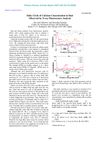
Hair can show daily calcium changes, linked to body calcium levels and influenced by hormones, and can help assess calcium metabolism issues.
January 1980 in “中国科学A辑(英文版)” The protein structures in the hair and tendon were preserved, but their molecular arrangements changed.
June 1958 in “Mycopathologia” Selective chemical epilation effectively treats tinea capitis without harmful side effects.
2 citations
,
January 2004 in “AIP conference proceedings” Hair analysis can help screen for serious diseases like cancer and osteoporosis.
1 citations
,
January 2007 in “AIP conference proceedings” High-resolution x-ray images showed three main structures in human hair: medulla, cortex, and cuticle.