![[4-t-Butylphenyl]-N-(4-imidazol-1-yl phenyl)sulfonamide (ISCK03) Inhibits SCF/c-kit Signaling in 501mel Human Melanoma Cells and Abolishes Melanin Production in Mice and Brownish Guinea Pigs](/images/assets/4eb017dc-711d-4926-bcd0-c3b8f48e3a99/small/19974.jpg) 26 citations
,
July 2007 in “Biochemical Pharmacology”
26 citations
,
July 2007 in “Biochemical Pharmacology” ISCK03 stops melanin production in human melanoma cells and lightens skin color in mice and guinea pigs.
 November 2023 in “Journal of the American Academy of Dermatology”
 Skin of color can spontaneously repigment after a phenol-croton oil chemical peel.
 9 citations
,
December 2010 in “Journal of The European Academy of Dermatology and Venereology”
9 citations
,
December 2010 in “Journal of The European Academy of Dermatology and Venereology” Latanoprost therapy potentially caused a woman's white hair to darken again.
March 2026 in “Journal of Investigative Dermatology” April 2005 in “Journal of Investigative Dermatology” Vitamin D helps protect skin, PSORS1 gene's risk interval for psoriasis is expanded, hair follicles can be generated from mouse cells, and interferon-γ may cause pigmented skin lesions.
 6 citations
,
September 2022 in “Frontiers in pharmacology”
6 citations
,
September 2022 in “Frontiers in pharmacology” Epimedium extract helps increase skin pigmentation and could be a new treatment for conditions with reduced pigmentation.
57 citations
,
April 2009 in “Differentiation” SDF-1/CXCL12 and its receptor CXCR4 are crucial for melanocyte movement in mouse hair follicles.
10 citations
,
July 2022 in “Journal of Cosmetic Dermatology” Medicago sativa extract may help treat vitiligo by enhancing skin and hair pigmentation.
November 2025 in “Journal of Investigative Dermatology” Tanning ability is linked to specific DNA changes in skin genes.
 September 2021 in “Physiology News”
 The Society's journals now have a policy to make colors in their content accessible to people with color blindness.
16 citations
,
October 1987 in “British journal of dermatology/British journal of dermatology, Supplement” A vitamin D3 compound can reduce skin cell growth.
 September 2017 in “Journal of Investigative Dermatology”
 Blue light helps hair growth by affecting specific proteins in hair follicle cells.
RXR and RAR proteins in skin may help with cell growth, hair growth, and gland function.
3 citations
,
October 2006 in “Journal of dermatology” X-ray microscopy can non-invasively show hair structure changes after treatments, but it's less detailed than TEM and needs improvement.
 15 citations
,
June 2018 in “Journal of Chromatographic Science”
15 citations
,
June 2018 in “Journal of Chromatographic Science” Researchers developed a method to measure plant compounds in rat blood and found they are quickly absorbed and eliminated within 36 hours.
133 citations
,
November 2018 in “Aging” Azithromycin and Roxithromycin can remove aging cells and may help with anti-aging.
 46 citations
,
April 2014 in “PLOS ONE”
46 citations
,
April 2014 in “PLOS ONE” Gray hair may be caused by lower antioxidant activity in hair cells.
1 citations
,
January 2012 in “Human health handbooks” Hair color is determined by melanin types and gene activity.
February 2009 in “Journal of the American Academy of Dermatology” Both skin products were equally effective in improving facial discoloration and skin quality.
31 citations
,
February 2007 in “Journal of Structural Biology” Oxidation changes the structure of hair protein filaments, causing them to compact and rearrange.
46 citations
,
May 2013 in “The journal of investigative dermatology/Journal of investigative dermatology” Significant progress was made in understanding PXE, but effective treatments are still needed.
4 citations
,
August 2015 in “Journal of Cosmetic Dermatology” Sunscreens with UVA blockers effectively reduce skin fluorescence for several hours.
 January 2021 in “Journal of clinical and cosmetic dermatology”
 Human skin responds to light with protective mechanisms, but more research is needed to understand these processes and their implications for health and therapy.
1 citations
,
March 2017 in “Roczniki Naukowe Polskiego Towarzystwa Zootechnicznego” Domestic cat hair varies in thickness and length, with guard hairs being longest and thickest, and all hair types mainly contain keratin.
May 2010 in “Europe PMC (PubMed Central)” Near-infrared probes can safely and effectively image cysteine protease activity for disease diagnosis.
 14 citations
,
July 2012 in “Journal of the American Academy of Dermatology”
14 citations
,
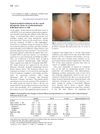
July 2012 in “Journal of the American Academy of Dermatology” Topical tacalcitol ointment can help improve symptoms of EFFC.
4 citations
,
December 2024 in “International Journal of Molecular Sciences” Hom Thong banana peels can help reduce skin pigmentation by inhibiting melanin production.
 30 citations
,
June 2006 in “British journal of dermatology/British journal of dermatology, Supplement”
30 citations
,
June 2006 in “British journal of dermatology/British journal of dermatology, Supplement” Oral zinc sulphate reduces dark hair color in mice.
14 citations
,
September 2017 in “Hereditas” Genes influence horse coat color and may help understand human skin conditions.