 9 citations
,
November 2021 in “Frontiers in Cell and Developmental Biology”
9 citations
,
November 2021 in “Frontiers in Cell and Developmental Biology” PBX1 helps reduce aging and cell death in hair follicle stem cells by decreasing DNA damage, not by improving DNA repair.
November 2024 in “Journal of Investigative Dermatology” Blocking the JAK/STAT pathway may help reduce skin sensitivity in Xeroderma pigmentosum.
 12 citations
,
June 2022 in “FARMACIA”
12 citations
,
June 2022 in “FARMACIA” Transethosomal gels improve naftifine skin delivery better than Exoderil cream.
 17 citations
,
August 2012 in “Journal of Medical Genetics”
17 citations
,
August 2012 in “Journal of Medical Genetics” A new mutation in the XEDAR gene might cause a rare skin condition called hypohidrotic ectodermal dysplasia.
89 citations
,
March 1996 in “Proceedings of the National Academy of Sciences” CD18-deficient mice developed psoriasis-like skin disease, useful for studying inflammatory skin disorders.
 September 2022 in “Institutional Repositories DataBase (IRDB)”
 3D-oxy exosomes may significantly boost hair growth, offering new treatment options for hair loss.
2 citations
,
September 2022 in “Annals of Oncology” Mirvetuximab soravtansine improves quality of life and reduces symptoms more than standard chemotherapy in ovarian cancer patients.
 45 citations
,
January 2010 in “Journal of Veterinary Medical Science”
45 citations
,
January 2010 in “Journal of Veterinary Medical Science” A gene mutation causes curly hair and hair loss in rats.
January 2007 in “Zhōnghuá yàoxué zázhì” The method effectively showed that the two exemestane preparations are bioequivalent.
9 citations
,
August 2022 in “Frontiers in Pharmacology” Kangfuxin (KFX) extract speeds up wound healing and improves skin regeneration.
January 2022 in “Essentials in ophthalmology” Tamsulosin increases the risk of floppy iris syndrome during cataract surgery.
October 2024 in “Frontiers in Oncology” A new gene mutation linked to Olmsted syndrome may increase cancer risk, suggesting the need for ongoing patient monitoring.
 June 2025 in “Journal of Cosmetic Dermatology”
 Exosome therapy with laser treatment helped hair regrowth in a child with a rare skin condition.
 April 2016 in “Journal of Investigative Dermatology”
 FOL-005, a new substance, was found to reduce hair growth without toxicity when injected into skin, suggesting it could be used to treat excessive hair growth.
 13 citations
,
February 2007 in “British Journal of Dermatology”
13 citations
,
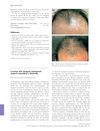
February 2007 in “British Journal of Dermatology” EF and PXE not closely related.
13 citations
,
December 2021 in “Journal of Cellular and Molecular Medicine” Exosome-enriched vesicles from placental cells improved skin condition in a patient with chronic graft-versus-host disease.
6 citations
,
December 2024 in “International Journal of Biological Macromolecules” The hydrogel improves burn healing by promoting tissue growth and reducing inflammation.
 53 citations
,
August 2019 in “American journal of human genetics”
53 citations
,
August 2019 in “American journal of human genetics” FOXN1 gene variants cause low T cells and immune issues from birth.
 April 2012 in “Journal of the American Academy of Dermatology”
 Clofazimine may be effective for treating ashy dermatosis.

Microneedling with exosome therapy may effectively regrow hair without side effects.
 July 2025 in “bioRxiv (Cold Spring Harbor Laboratory)”
 A new Wnt surrogate specifically targets the Frizzled7 receptor, promoting organoid formation and hair growth.
November 2025 in “OPAL (Open@LaTrobe) (La Trobe University)” Gentamicin-loaded exosomes improve healing of infected diabetic wounds in mice.
 1 citations
,
January 2025 in “Frontiers in Oncology”
1 citations
,
January 2025 in “Frontiers in Oncology” REV7 is crucial for genome stability and cancer treatment, making it a potential target for therapy.
1 citations
,
January 2025 in “Regenerative Biomaterials” Exosomes from Pinctada martensii mucus can safely reduce melanin production, offering a new treatment for skin pigment issues.
 January 2025 in “Cell Communication and Signaling”
 CXXC5 can both suppress and promote cancer, making it a complex target for treatment.
 January 2016 in “Human & Experimental Toxicology”
 A specific DNA sequence caused hair loss in male mice by activating immune cells and increasing a certain immune signal.
 March 2024 in “Research Square (Research Square)”
 The TT genotype of a specific SNP in sheep is linked to better wool quality.
October 2025 in “Brazilian Journal of Veterinary Research and Animal Science” Neotropical porcupines can get co-infected with poxvirus and Toxoplasma gondii.
Researchers created a new mouse model, G4, that mimics human PCOS symptoms and links the condition to a specific gene.
 4 citations
,
February 2016 in “Clinical Pharmacology & Therapeutics”
4 citations
,
February 2016 in “Clinical Pharmacology & Therapeutics” Hair follicle samples effectively show how well the drug MK-0752 targets and engages with the Notch pathway.