 6 citations
,
August 1996 in “The Journal of Clinical Endocrinology and Metabolism”
6 citations
,
August 1996 in “The Journal of Clinical Endocrinology and Metabolism” MK-386 and finasteride together effectively reduce DHT levels, potentially treating acne and male pattern baldness.
1 citations
,
January 2002 in “Yaoxue jinzhan” Finasteride reduces sperm count and affects male reproductive function, while Epristeride does not.
4 citations
,
January 2007 in “Iraqi postgraduate Medical Journal” April 2015 in “한국생물공학회 학술대회” Finasteride reduces melanin production in skin cells.
Finasteride is popular for treating male hair loss but may increase the risk of serious prostate cancer and has other potential side effects.
33 citations
,
January 2009 in “Journal of Cutaneous and Aesthetic Surgery” Finasteride reduces prostate cancer risk but may affect ejaculatory volume and requires careful consideration for young men.
July 2006 in “Inpharma Weekly”  June 2018 in “The Journal of Sexual Medicine”
 Finasteride does not negatively affect male reproductive function.
 2 citations
,
April 2019 in “Journal of Internal Medicine”
2 citations
,
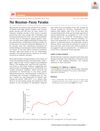
April 2019 in “Journal of Internal Medicine” Men using steroids or finasteride to look more attractive may harm their fertility and sexual function, creating a paradox where they seem fit but may be less able to reproduce.
January 2021 in “Asian Journal of Research in Dermatological Science”  March 2013 in “Reactions Weekly”
 A man's fertility improved after he stopped taking finasteride but worsened again when he restarted the medication.
1 citations
,
July 2010 in “PubMed”  2 citations
,
December 2006 in “Lancet Oncology”
2 citations
,
December 2006 in “Lancet Oncology” Finasteride significantly reduces PSA levels in men, and doctors should adjust PSA readings for those taking the drug.
May 2008 in “10th European Congress of Endocrinology” ![Synthesis and Activity of 8-Substituted Benzo[c]quinolizin-3-ones as Dual Inhibitors of Human 5α-Reductases 1 and 2](/images/assets/efc54340-66d6-4f27-9930-045ac023f903/small/15248.jpg) 9 citations
,
November 2004 in “Bioorganic & Medicinal Chemistry Letters”
9 citations
,
November 2004 in “Bioorganic & Medicinal Chemistry Letters” New compounds were made that effectively block enzymes related to prostate issues and hair loss.
 April 2017 in “Reactions Weekly”
 Man experienced sexual dysfunction, depression, breast growth, and skin discoloration after taking finasteride for hair loss.
 September 2018 in “Dermatologic Therapy”
 Finasteride at 2.5mg/day may help postmenopausal women with hair loss.
 3 citations
,
October 2010 in “Wiley-VCH Verlag GmbH & Co. KGaA eBooks”
3 citations
,
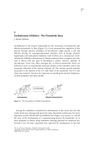
October 2010 in “Wiley-VCH Verlag GmbH & Co. KGaA eBooks” Finasteride safely treats enlarged prostate and male-pattern baldness.
 7 citations
,
October 2009 in “Journal of the American Geriatrics Society”
7 citations
,
October 2009 in “Journal of the American Geriatrics Society” Finasteride may help reduce inappropriate sexual behaviors in dementia patients with prostate issues.
 October 2020 in “Journal of Pakistan Association of Dermatology”
 Finasteride appears safe for long-term sperm concentration, but more research is needed for clear conclusions.
August 2021 in “The Journal of Urology” Finasteride use is strongly linked to sexual dysfunction, especially in young men treating hair loss.
 October 2025 in “Frontiers in Medicine”
 The minoxidil-finasteride combination is more effective for hair growth than minoxidil alone.
15 citations
,
August 1999 in “Archives of Dermatology” January 2012 in “Земский врач” Finasteride helps improve treatment for benign prostatic hyperplasia.
 June 2021 in “Reactions Weekly”
 Finasteride caused serious side effects and led to six suicides.
4 citations
,
April 2018 in “Journal of Mind and Medical Sciences” Patients should discuss risks with doctors before using finasteride for hair loss.
 1 citations
,
May 1998 in “Inpharma Weekly”
1 citations
,
May 1998 in “Inpharma Weekly” Finasteride works for male hair loss only.
 30 citations
,
August 1992 in “The Journal of Clinical Endocrinology and Metabolism”
30 citations
,
August 1992 in “The Journal of Clinical Endocrinology and Metabolism” Finasteride doesn't affect hormone levels in normal men.
 10 citations
,
December 2014 in “PubMed”
10 citations
,
December 2014 in “PubMed” Finasteride, a hair loss drug, may cause sexual dysfunction and depression, but these effects are usually temporary and the drug is generally safe. More research is needed.
 44 citations
,
January 2013 in “International Journal of Trichology”
44 citations
,
January 2013 in “International Journal of Trichology” Finasteride 5 mg/day effectively treats hair loss in postmenopausal women without hyper-androgenism.