February 2026 in “Veterinary Dermatology” Coat-type differences in Pomeranians affect Alopecia X diagnosis and treatment.
July 2025 in “Frontiers in Animal Science” Animal fibers are valued for being natural and eco-friendly, but face challenges like price volatility and a focus on meat over fiber.
May 2020 in “Research Square (Research Square)” The study identified key genes that align with the cashmere growth cycle in goats, which could help improve cashmere production timing.
 137 citations
,
September 2005 in “Proceedings of the National Academy of Sciences of the United States of America”
137 citations
,
September 2005 in “Proceedings of the National Academy of Sciences of the United States of America” The HR protein helps hair grow by blocking a hair growth inhibitor, aiding in hair follicle regeneration.
September 2001 in “Connective tissue” Type XII and XIV collagens help maintain hair follicle structure in bovine skin.
55 citations
,
June 1987 in “PubMed” Cyclosporin A significantly increases hair growth in certain areas of mice.
 10 citations
,
June 2005 in “The journal of investigative dermatology/Journal of investigative dermatology”
10 citations
,
June 2005 in “The journal of investigative dermatology/Journal of investigative dermatology” FP-1 is a key protein in rat hair growth, active only during the growth phase.
 35 citations
,
March 2007 in “Skin Research and Technology”
35 citations
,
March 2007 in “Skin Research and Technology” The conclusion is that exogen is a unique hair cycle phase and the new sampling method specifically targets this stage, which may help in future hair loss research.
June 1999 in “Connective tissue”  19 citations
,
March 1961 in “Nature”
19 citations
,
March 1961 in “Nature” A fatty acid/protein complex in human hair helps protect it from damage.
 5 citations
,
November 2017 in “Asian journal of pharmaceutical and clinical research”
5 citations
,
November 2017 in “Asian journal of pharmaceutical and clinical research” Pakis Gajah (Angiopteris evecta) water extract may promote hair growth in rabbits, but more research is needed for human use.
12 citations
,
January 2013 in “International Journal of Genomics” The study identified key genes involved in goat hair growth.
55 citations
,
August 2013 in “PloS one” Genetic differences between young and old Tan sheep explain why their fleece changes from curly to straight as they age.
 12 citations
,
February 2006 in “Lipids”
12 citations
,
February 2006 in “Lipids” Hair texture changes with age due to varying levels of lipids.
 September 2022 in “Institutional Repositories DataBase (IRDB)”
 3D-oxy exosomes may significantly boost hair growth, offering new treatment options for hair loss.
 March 2010 in “International Journal of Cosmetic Science”
 Disulfide bonds affect the melting behavior of hair's crystalline structure, but hair retains some stability even after these bonds are broken.
33 citations
,
December 1999 in “Journal of Investigative Dermatology Symposium Proceedings”  April 2017 in “Journal of Investigative Dermatology”
 Hair loss patterns differ between males and females due to 5 master regulators and JAK-STAT signaling affects hair growth.
61 citations
,
February 1997 in “Differentiation” Hair differentiation starts earlier than thought, involving multiple type-II keratins.
1 citations
,
April 2019 in “PubMed” The medulla in Asian scalp hair has a tubular structure that allows ions and large molecules to flow through it.
 7 citations
,
January 2012 in “International Journal of Trichology”
7 citations
,
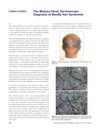
January 2012 in “International Journal of Trichology” A man with Woolly Hair Syndrome had very curly, fragile hair, and doctors used a special scalp examination to diagnose him without invasive tests.
January 2007 in “Journal of Inner Mongolia University” The research helps in creating genetically modified animals to study hair growth.
68 citations
,
August 2014 in “PeerJ” Human hair proteins vary by individual, body site, and ethnicity, useful for forensics.
August 2009 in “PHARMACY: Jurnal Farmasi Indonesia (Pharmaceutical Journal of Indonesia)” Noni fruit extract speeds up hair growth in rabbits.
 February 2026 in “Preprints.org”
 Beer yeast vesicles may improve hair follicle health.
 19 citations
,
May 2006 in “Clinical and Experimental Dermatology”
19 citations
,
May 2006 in “Clinical and Experimental Dermatology” Researchers found a new mutation causing total hair loss from birth.
1 citations
,
August 2020 in “CRC Press eBooks” Hair growth can be influenced by manipulating keratin and growth factor genes.
 3 citations
,
April 1990 in “Archives of dermatology”
3 citations
,
April 1990 in “Archives of dermatology” The book reveals diverse patterns of hair growth in different species and advancements in hair and alopecia research.
3 citations
,
July 2024 in “Dermatology and Therapy” Hair shaft abnormalities can help distinguish mycosis fungoides from other skin conditions.
 September 2017 in “Journal of Investigative Dermatology”
 Certain products and treatments can improve hair health and growth.