33 citations
,
January 1997 in “Journal of Investigative Dermatology” Interleukin-1β stops hair growth by increasing cyclic AMP levels.
 3 citations
,
September 2020
3 citations
,
September 2020 Dyclonine can effectively reduce skin issues by inhibiting the TRPV3 channel.
2 citations
,
May 2025 in “Journal of Clinical Medicine” Upadacitinib is safe and effective for treating alopecia areata and atopic dermatitis in children.
3 citations
,
April 1997 in “Developmental Dynamics” Trypsin slows hair growth and affects color by causing cell death in hair follicles.
 68 citations
,
May 2018 in “PLOS Biology”
68 citations
,
May 2018 in “PLOS Biology” Cyclosporine A may help treat hair loss by blocking a protein that inhibits hair growth.
 February 2025 in “International Journal of Molecular Sciences”
 RIPK1 inhibitors may help prevent alopecia areata by reducing immune cell activity.
Hit15 shows promise as a COVID-19 treatment by reducing virus infection and inflammation.
14 citations
,
March 2022 in “Plant Cell & Environment” The protein AtRXR3 limits root hair growth in Arabidopsis, affecting phosphorus uptake.
1 citations
,
January 2002 in “Yaoxue jinzhan” Finasteride reduces sperm count and affects male reproductive function, while Epristeride does not.
5 citations
,
May 2024 in “Journal of Allergy and Clinical Immunology Global” Upadacitinib effectively improved severe atopic dermatitis and alopecia universalis in a 29-year-old man.
November 2025 in “Biomedicines” JAK1 inhibitors can help reduce itchiness in atopic dermatitis.
16 citations
,
October 2004 in “Journal of Investigative Dermatology” Normal human melanocytes can avoid cell death through multiple pathways.
 159 citations
,
October 2015 in “Science Advances”
159 citations
,
October 2015 in “Science Advances” Blocking JAK-STAT signaling can lead to hair growth.
 53 citations
,
June 1993 in “Proceedings of the National Academy of Sciences of the United States of America”
53 citations
,
June 1993 in “Proceedings of the National Academy of Sciences of the United States of America” LY191704 is a compound that effectively blocks a specific enzyme involved in hormone conversion and could help treat enlarged prostate and hair loss.
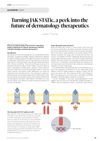 August 2024 in “New Zealand Medical Student Journal”
 JAK inhibitors show promise for treating skin diseases effectively and safely.
 98 citations
,
April 1997 in “The Journal of Steroid Biochemistry and Molecular Biology”
98 citations
,
April 1997 in “The Journal of Steroid Biochemistry and Molecular Biology” Finasteride effectively blocks rat enzymes, but with varying methods and strength.
 April 2016 in “Journal of Investigative Dermatology”
 Blocking Oncostatin M's role in the JAK-STAT pathway can stimulate hair growth in mice.

RIPK1 inhibitors might help prevent alopecia areata.
58 citations
,
September 2019 in “EMBO Molecular Medicine” CDK4/6 inhibitors can protect hair cells from chemotherapy damage.
59 citations
,
March 2003 in “The Lancet” Imatinib can repigment grey hair, while SU11428 can cause temporary hair depigmentation.
 June 2026 in “Frontiers in Immunology”
 Upadacitinib effectively treated severe atopic dermatitis, vitiligo, and alopecia areata in one patient.
53 citations
,
October 2011 in “Psychoneuroendocrinology” Finasteride may help improve certain brain function issues linked to dopamine.
February 2026 in “Colloids and Surfaces A Physicochemical and Engineering Aspects” JAK inhibitors can enter the skin through hair follicles using a unique pathway.
 March 2026 in “Clinical Cosmetic and Investigational Dermatology”
 Upadacitinib improved multiple immune-related conditions in one patient.
45 citations
,
November 2018 in “Journal of dermatological treatment” JAK-inhibitors are effective for treating psoriasis and show promise for other skin diseases.
September 2002 in “Research Repository (Kingston University London)” Mimicking the steroid A-ring may help create effective enzyme inhibitors for prostate disease treatment.
 March 2014 in “Journal of The American Academy of Dermatology”
 Mycophenolic acid may help hair grow by activating pathways important for hair growth.
January 2025 in “European Journal of Pharmacology” Forsythoside A may help treat hair loss by blocking specific channels.
 May 2023 in “Research Square (Research Square)”
 Botulinum toxin type A helps treat hair loss by stopping cell death in hair follicles through a process involving certain non-coding RNAs and a protein called Bax.
37 citations
,
December 1995 in “Journal of Cell Science” Nexin 1 may help control hair growth.