January 2011 in “Nuclear Techniques” Lead levels in hair increased due to environmental exposure, while iron, copper, and zinc levels stayed stable.
 1 citations
,
May 2001 in “Proceedings of SPIE, the International Society for Optical Engineering/Proceedings of SPIE”
1 citations
,
May 2001 in “Proceedings of SPIE, the International Society for Optical Engineering/Proceedings of SPIE” The system helps monitor hair properties using RGB video microscopy.
November 2021 in “Frontiers in Genetics” The FAW-FS algorithm improves depression recognition, and psychological interventions help AGA patients' mental health.
 2 citations
,
January 2014 in “Turkish Journal of Medical Sciences”
2 citations
,
January 2014 in “Turkish Journal of Medical Sciences” TrichoScan effectively diagnoses different types of hair loss and is linked to low iron stores in patients.
 1 citations
,
December 2025 in “Scientific Reports”
1 citations
,
December 2025 in “Scientific Reports” A machine learning model can predict alopecia areata early using specific gene markers.
 September 2022 in “Research Square (Research Square)”
 The AI model DIET-AI effectively diagnoses skin diseases as well as doctors.
 February 2024 in “Frontiers in physics”
 The new model detects hair clusters more accurately and efficiently, helping with early hair loss treatment and diagnosis.
 March 2005 in “International Journal of Cosmetic Science”
 DVI provides detailed 3D imaging of hair and shows how various products protect and enhance hair.
 1 citations
,
April 2016 in “Journal of The American Academy of Dermatology”
1 citations
,
April 2016 in “Journal of The American Academy of Dermatology” Ixekizumab helps improve life quality, physical ability, and work performance in patients with psoriatic arthritis who haven't used biologic drugs before.
14 citations
,
September 2021 in “International journal of molecular sciences” Zinc pyrithione needs targeted delivery to the scalp for effective dandruff treatment.
 July 2022 in “The journal of investigative dermatology/Journal of investigative dermatology”
 MPZL3 is important for controlling the hair growth cycle in mice and humans.
3 citations
,
March 2024 in “arXiv (Cornell University)” The new AI system improves remote skin condition diagnosis and access to care.
January 2026 in “In Silico Research in Biomedicine” Betulinic acid may help treat alopecia by stabilizing hair follicle cells.
2 citations
,
March 2024 in “JAAD Case Reports” AI can help track and improve hair loss treatment outcomes.
 May 2026 in “Frontiers in Immunology”
 Bimekizumab effectively treats scalp cellulitis and improves quality of life.
November 2022 in “Journal of Investigative Dermatology” A new tool helps study hair follicle cells to develop better treatments for hair disorders.
March 2026 in “Drug Testing and Analysis” PTeCA is a reliable marker for detecting oxidative hair treatments.
 January 2020 in “Skinmed”
 Zinc levels are not significantly different in people with hair loss conditions like Androgenetic Alopecia and Alopecia Areata.
 August 2016 in “Journal of Investigative Dermatology”
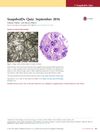
 Scalp psoriasis features reversible hair loss and specific immune activation, with no significant hair follicle damage.
5 citations
,
February 2025 in “Journal of Clinical Medicine” A new method improves alopecia diagnosis using non-invasive steps.
1 citations
,
August 2010 in “Journal of dermatology” Photoepilation significantly reduces hair, and phototrichograms can objectively measure its effectiveness.
 April 2023 in “Journal of Investigative Dermatology”
 A protein called MPZL3 in mitochondria slows down hair growth and could be a target for treating hair growth disorders.

Ion sequential therapy improves heart function after a heart attack.
 7 citations
,
August 2022 in “Experimental dermatology”
7 citations
,
August 2022 in “Experimental dermatology” Blocking YAP/TAZ could be a new way to treat skin cancer.
 74 citations
,
January 2020 in “IEEE Access”
74 citations
,
January 2020 in “IEEE Access” ScalpEye accurately diagnoses scalp issues like dandruff and hair loss.
3 citations
,
October 2006 in “Journal of dermatology” X-ray microscopy can non-invasively show hair structure changes after treatments, but it's less detailed than TEM and needs improvement.
 16 citations
,
January 2011 in “International Journal of Trichology”
16 citations
,
January 2011 in “International Journal of Trichology” Use good lighting, consistent positioning, and proper camera settings for effective hair disorder photos.
 3 citations
,
October 2021 in “Research Square (Research Square)”
3 citations
,
October 2021 in “Research Square (Research Square)” The model can effectively help diagnose meibomian gland dysfunction automatically.
 4 citations
,
March 2021 in “Postepy Dermatologii I Alergologii”
4 citations
,
March 2021 in “Postepy Dermatologii I Alergologii” High-frequency ultrasonography can be a useful tool for diagnosing different stages of alopecia areata, a type of hair loss.