59 citations
,
November 2011 in “Development” Trps1 is essential for proper hair follicle development.
28 citations
,
January 2015 in “Journal of Cell Science” PINCH-1 is crucial for skin cell adhesion and movement, working with EPLIN and ILK.
 7 citations
,
February 2010 in “British Journal of Dermatology”
7 citations
,
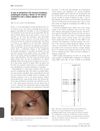
February 2010 in “British Journal of Dermatology” A woman with a rare autoimmune disorder had a blister on her eye and unique immune reaction, which was effectively treated with medication.
 54 citations
,
October 2023 in “Oncogene”
54 citations
,
October 2023 in “Oncogene” p63 is essential for controlling epithelial stem cells and tissue health.
January 2000 in “Medical Entomology and Zoology” 46 citations
,
November 2007 in “Gene Expression Patterns” Trps1 plays a key role in hair follicle development and cycling.
5 citations
,
July 1999 in “Journal of Anatomy” Methylene blue staining effectively reveals detailed nerve structures in rat snouts.
38 citations
,
September 1997 in “The journal of investigative dermatology/Journal of investigative dermatology” A mutation in mice causes hair loss and skin issues due to a defect in a gene affecting cell adhesion.
 November 2022 in “bioRxiv (Cold Spring Harbor Laboratory)”
 MOF controls skin development by regulating genes for mitochondria and cilia.
 1 citations
,
October 2022 in “Dermatology practical & conceptual”
1 citations
,
October 2022 in “Dermatology practical & conceptual” Isolated patchy heterochromia with pili annulati can occur without other health issues.
October 2020 in “Faculty Opinions – Post-Publication Peer Review of the Biomedical Literature” Stem cell niche exit in C. elegans is influenced by Sh1 cell membrane protrusions.
 16 citations
,
January 2005 in “The International Journal of Developmental Biology”
16 citations
,
January 2005 in “The International Journal of Developmental Biology” Hex gene plays a crucial role in starting feather development in chick embryos.
23 citations
,
January 1986 Involucrin is crucial for skin cell maturation and protection.
 April 2018 in “Journal of Investigative Dermatology”
 CENPV, a new partner of CYLD, helps regulate ciliary acetylated tubulin and is overexpressed in certain skin tumors.
56 citations
,
February 2012 in “Developmental biology” Sostdc1 controls the size and number of hair and mammary gland structures.
 April 2023 in “Research Square (Research Square)”
 Lower GPX4 mRNA levels are linked to higher disease activity and symptoms in lupus patients.
45 citations
,
August 1992 in “PubMed” The rat vibrissa follicle can quickly remodel its basement membrane during hair growth, affecting cell signaling and activity.
29 citations
,
February 2001 in “Proceedings of the National Academy of Sciences” A specific DNA region controls skin cell gene expression by working with certain proteins.
January 2004 in “uO Research (University of Ottawa)” Claudin 6 is crucial for normal skin and hair development.
 34 citations
,
August 2016 in “Scientific Reports”
34 citations
,
August 2016 in “Scientific Reports” Blocking TGFβ-RI signaling enhances surface ectoderm differentiation from human stem cells.
1 citations
,
July 2006 in “Journal of Investigative Dermatology” A 4kb fragment of the desmocollin 3 promoter targets gene expression to specific skin and hair follicle areas.
 1 citations
,
February 2025 in “Scientific Reports”
1 citations
,
February 2025 in “Scientific Reports” CD4 is crucial for maintaining skin stem cell balance and aiding wound healing.
1 citations
,
October 2024 in “European Journal of Histochemistry” Telocytes in silky fowl embryos develop distinct features and connections by the 20th day of incubation.
 109 citations
,
March 2011 in “Journal of controlled release”
109 citations
,
March 2011 in “Journal of controlled release” New micelle solutions greatly improve skin delivery of certain antifungal drugs.
 31 citations
,
August 2019 in “Regenerative Medicine”
31 citations
,
August 2019 in “Regenerative Medicine” Human placenta hydrogel helps restore cells needed for hair growth.
July 2025 in “Journal of Investigative Dermatology” Secreted inhibitors of Wnt and IGF signaling control hair and tooth development, creating species-specific patterns.
 November 2022 in “The journal of investigative dermatology/Journal of investigative dermatology”
 The STRIPAK complex is crucial for skin cell organization and creating a functional skin barrier.
Nipple area expansion in mice needs both pregnancy hormones and mechanical strain.
 September 2017 in “Journal of Investigative Dermatology”
 Hair follicle cells change their DNA packaging during growth cycles and when grown in the lab.
46 citations
,
August 2022 in “Animals” miR-144-y and FOXO3 play key roles in skin and feather development in Zhedong White geese.