 176 citations
,
May 2020 in “Dermatologic Therapy”
176 citations
,
May 2020 in “Dermatologic Therapy” COVID-19 can cause different skin symptoms that may help with early diagnosis and show how severe the disease is.
January 2003 in “Journal of Practical Aesthetic and Plastic Surgery” Both steroid treatments effectively regrow hair in severe alopecia areata.
21 citations
,
September 2019 in “Journal of the American Academy of Dermatology” Ixekizumab effectively treats generalized pustular psoriasis.
 March 2024 in “Indian Journal of Dermatology/Indian journal of dermatology”
 Using animal names for skin conditions helps with learning and memory.
 1 citations
,
March 2020 in “Australasian Journal of Dermatology”
1 citations
,
March 2020 in “Australasian Journal of Dermatology” The paper concludes that recognizing bitemporal alopecia areata is important for early treatment and preventing its progression.
 January 2020 in “International Journal of PharmTech Research”
 A man with severe leprosy developed painless ulcers and numbness, treated successfully with multiple drugs and vitamins.

The patient with total hair loss did not regrow hair despite treatment, indicating a poor outlook for this type of hair loss.
Alopecia areata is an autoimmune disease that targets hair follicles.
March 1997 in “Medical Molecular Morphology” Zinc deficiency causes early scalp hair damage that recovers slower than skin symptoms.
 January 2021 in “Indian journal of sexually transmitted diseases and AIDS”
 A dermatologist helped identify syphilis in a teenager who only had hair loss.
March 2023 in “Italian journal of dermatology and venereology”  1 citations
,
June 2014 in “Serbian Journal of Dermatology and Venereology”
1 citations
,
June 2014 in “Serbian Journal of Dermatology and Venereology” A woman with discoid lupus improved with treatment after being misdiagnosed with a different hair loss condition.
133 citations
,
June 2016 in “Nature Neuroscience” Zeb2 is crucial for nerve repair by controlling Schwann cell function.
5 citations
,
March 1981 in “PubMed” A girl grew extra hair in areas where she had insect bites.
28 citations
,
September 1986 in “Pediatric dermatology” Zinc therapy improved hair health in a girl with acrodermatitis enteropathica.
 January 1994 in “Nippon Ronen Igakkai Zasshi Japanese Journal of Geriatrics”
 Both VEPA and ML-Y1 treatments are not effective enough for elderly non-Hodgkin's lymphoma patients.
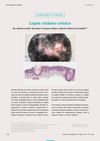 January 2024 in “Revista Dermatológica Centro Uraga”
 The patient has Chronic Cutaneous Lupus, a skin condition causing plaques and hair loss.
May 2025 in “Acta Dermato Venereologica” Alopecia areata patients have higher risks of infections, lymphoma, heart issues, and death.
 March 2026 in “Frontiers in Medicine”
 Different types of alopecia cause hair loss due to immune system issues, with some allowing regrowth and others causing permanent loss.
87 citations
,
August 1974 in “Journal of Investigative Dermatology” September 2021 in “Dermatologic Surgery”  35 citations
,
January 2013 in “Indian Journal of Dermatology, Venereology and Leprology”
35 citations
,
January 2013 in “Indian Journal of Dermatology, Venereology and Leprology” Intralesional triamcinolone acetonide is effective for treating patchy hair loss, and dermoscopy helps detect treatment response and side effects early.
4 citations
,
April 2004 in “Medical veritas” Zinc can reverse hair loss caused by the anthrax vaccine.
 September 1985 in “Journal of The American Academy of Dermatology”
 Dr. Rasmussen disagrees with Alexander and Schor, emphasizing uncertainty in genital wart transmission and advocating for discussions on potential abuse and referrals in such cases.
39 citations
,
March 2008 in “British Journal of Dermatology” Etanercept may cause lichen planopilaris, so doctors should be cautious.
December 2013 in “American journal of transplantation” The patient improved after antiviral treatment for a viral infection.
 68 citations
,
November 2015 in “The Journal of Allergy and Clinical Immunology”
68 citations
,
November 2015 in “The Journal of Allergy and Clinical Immunology” Blocking IL-12/IL-23p40 helped reverse severe hair loss in patients.
 1 citations
,
January 2013 in “The Journal of Dermatology”
1 citations
,
January 2013 in “The Journal of Dermatology” A skin condition called pyodermatitis vegetans was found in a patient with multiple myeloma for the first time.
8 citations
,
January 2013 in “International journal of trichology” Two people had unusual ring-shaped hair loss due to an autoimmune disorder.
 1 citations
,
August 2005 in “British Journal of Dermatology”
1 citations
,
August 2005 in “British Journal of Dermatology” Accidentally eating a topical steroid may rarely cause acute generalized pustular psoriasis.