13 citations
,
June 2012 in “European journal of medical genetics” Identical twins had different symptoms because one had more cells with an extra chromosome fragment in different tissues.
October 2015 in “CRC Press eBooks” Trichoscopy is a useful tool for examining and monitoring hair and scalp conditions.
March 2016 in “RepositóriUM (Universidade do Minho)” Molecular dynamics simulations help understand keratin's properties and predict hair's response to treatments.
July 2025 in “Journal of Investigative Dermatology” Machine learning can help identify biomarkers for personalized Pemphigus vulgaris treatment.
6 citations
,
May 2022 in “Pharmaceutics” Zinc pyrithione dissolves quickly on the skin and in hair follicles, especially in smaller particles.
29 citations
,
April 2011 in “Journal of Microscopy” The modified osmium method improves hair cortex staining for better visualization.
January 2011 in “Zhongguo nongye Kexue” Transgenic sheep cells with spider silk gene were successfully created for future sheep hair expression.
 1 citations
,
June 2014 in “Toxicologie analytique et clinique/Annales de toxicologie analytique”
1 citations
,
June 2014 in “Toxicologie analytique et clinique/Annales de toxicologie analytique” Body hair can be used to test for alcohol intake, especially in men.
 7 citations
,
January 2012 in “International Journal of Trichology”
7 citations
,
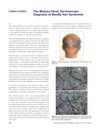
January 2012 in “International Journal of Trichology” A man with Woolly Hair Syndrome had very curly, fragile hair, and doctors used a special scalp examination to diagnose him without invasive tests.
26 citations
,
June 2016 in “Frontiers in Plant Science” Autofluorescence can sort plant cells without labeling.
January 2013 in “Wageningen Academic Publishers eBooks” Proteomics helps understand protein changes in wool fiber development.
 13 citations
,
March 2006 in “International Journal of Cosmetic Science”
13 citations
,
March 2006 in “International Journal of Cosmetic Science” The study found that a polymer treatment changes the charge on hair surfaces, making bleached hair smoother and less porous.
 December 2022 in “IntechOpen eBooks”
 Forensic DNA Phenotyping accurately predicts physical traits and is used in investigations, but needs more diverse population data for confirmation.
 69 citations
,
January 2015 in “Current problems in dermatology”
69 citations
,
January 2015 in “Current problems in dermatology” Trichoscopy is a quick, noninvasive method to diagnose hair and scalp disorders, often reducing the need for biopsies.
8 citations
,
January 2023 in “International journal of molecular sciences” Transglutaminase activity is important for skin and is found in both mammals and birds.
 May 2024 in “Ultramicroscopy”
 Atomic Force Microscopy is a more accurate way to assess hair damage and the effect of cosmetic treatments.
The research shows how certain drugs can form stable structures with polymers, which is important for making new pharmaceuticals.
 94 citations
,
July 2020 in “European Journal of Human Genetics”
94 citations
,
July 2020 in “European Journal of Human Genetics” The guidelines ensure accurate genetic testing and reporting for 21-hydroxylase deficiency.
January 2026 in “British Journal of Dermatology” The ATP assay can measure skin microbiome changes and recovery, with ethanol-treated skin taking longer to recover than tape-stripped skin.
25 citations
,
April 1985 in “Journal of Investigative Dermatology” 32 citations
,
January 2020 in “Journal of Molecular Histology” K31 can identify clear secretory cells in human sweat glands.
42 citations
,
February 2000 in “Journal of Investigative Dermatology” Type VII collagen absence helps skin development by allowing tissue remodeling.
21 citations
,
May 2016 in “Experimental and Therapeutic Medicine” MMP-2 and MMP-9 help hair grow, while their inhibitors peak when hair growth slows.
26 citations
,
December 2003 in “Experimental Dermatology” Specific keratin gene mutations can cause monilethrix.
74 citations
,
March 2006 in “Journal of Chromatography B” Hair analysis is promising for detecting drug misuse in livestock.
 November 2022 in “The journal of investigative dermatology/Journal of investigative dermatology”
 New imaging technology can show up to 40 different markers in hair loss tissue, helping to understand hair disease better.
 February 2013 in “Journal of Visualized Experiments”
 The document's conclusion cannot be provided because the document is not available for analysis.
 42 citations
,
September 2017 in “Advances in protein chemistry and structural biology”
42 citations
,
September 2017 in “Advances in protein chemistry and structural biology” Surface Plasmon Resonance is a useful tool for studying protein interactions and has potential for future technological advancements.
69 citations
,
April 2005 in “Forensic Science International” Degraded hair shafts resist contamination and can be easily cleaned.
 80 citations
,
March 2000 in “Journal of cutaneous pathology”
80 citations
,
March 2000 in “Journal of cutaneous pathology” The VVG stain effectively differentiates scar tissue from normal skin and helps classify types of permanent alopecia.