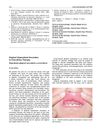
 January 2010 in “Actas Dermo-Sifiliográficas”
 A woman developed thick gums from everolimus treatment after a kidney transplant.
November 2020 in “Universal Journal of Pharmaceutical Research” Tacrolimus is a better option than cyclosporine due to fewer side effects.
 7 citations
,
March 2021 in “Journal of the American Academy of Dermatology”
7 citations
,
March 2021 in “Journal of the American Academy of Dermatology” Tofacitinib can regrow hair in alopecia areata patients, but some may experience flares during treatment.
 24 citations
,
June 2016 in “Acta dermato-venereologica”
24 citations
,
June 2016 in “Acta dermato-venereologica” Tofacitinib helped a young woman's severe hair loss and arthritis but not her plaque psoriasis.
May 2007 in “Inpharma Weekly” November 2001 in “Oncology Times” The committee decided not to approve the drug due to low effectiveness and high risks.
 52 citations
,
October 2010 in “Antiviral Therapy”
52 citations
,
October 2010 in “Antiviral Therapy” New treatments for Hepatitis C show promise but need more research to confirm their safety and effectiveness for clinical use.
December 2025 in “Zenodo (CERN European Organization for Nuclear Research)” December 2025 in “Zenodo (CERN European Organization for Nuclear Research)” 6 citations
,
March 2023 in “Journal of Ethnopharmacology” Jieduquyuziyin prescription helps treat SLE with atherosclerosis by improving cholesterol removal and reducing inflammation.
![Antiexudative Effects of Finasteride and a New Pyrazolo[C]Pyridine Derivative GIZh-72 in Acetic Acid-Induced Experimental Peritonitis](/images/assets/10e636c8-32b7-4d90-b645-80e0039c5960/small/4762.jpg) February 2020 in “Bulletin of Experimental Biology and Medicine”
February 2020 in “Bulletin of Experimental Biology and Medicine” Finasteride and GIZh-72 reduce inflammation, with GIZh-72 being more effective.
April 2022 in “Reactions Weekly” 3 citations
,
October 2025 in “Cancer” PROTACs offer a new, precise way to treat cancer by breaking down harmful proteins.
 15 citations
,
December 2014 in “Dermatology and therapy”
15 citations
,
December 2014 in “Dermatology and therapy” Sorafenib can cause facial acne-like eruptions, which improve after reducing the dose or stopping the drug.

Tofacitinib effectively regrows hair in alopecia universalis triggered by a virus.
19 citations
,
September 2006 in “Journal of Pediatric Gastroenterology and Nutrition” Early use of infliximab in severe pediatric Crohn's disease can lead to significant improvement and remission.
2 citations
,
March 2026 in “Journal of Dermatological Treatment” JAK inhibitors for alopecia areata have different safety risks, requiring specific monitoring for each drug.
 18 citations
,
May 2020 in “Biomolecules”
18 citations
,
May 2020 in “Biomolecules” Spironolactone, a heart and liver drug, has new uses including cancer treatment, viral infection prevention, and skin condition improvement.
 1 citations
,
May 2025 in “The Journal of Rheumatology”
1 citations
,
May 2025 in “The Journal of Rheumatology” Upadacitinib may help treat difficult cases of systemic lupus erythematosus.
 August 2025 in “Frontiers in Pharmacology”
 [6]-Gingerdiol 3-monoacetate shows promise for treating T. whipplei infections.
October 2025 in “Australasian Journal of Dermatology” Bimekizumab effectively treated a man's chronic beard hair loss.
November 2001 in “The Journal of neuropsychiatry and clinical neurosciences/The journal of neuropsychiatry and clinical neurosciences” Divalproex sodium can unexpectedly cause agitation and hyperactivity in some patients.
 January 1993 in “Journal of International Medical Research”
 The document corrects errors in previous articles, including a reversed term, updated subject weights, hair count data, and reference numbering.
1 citations
,
February 2002 in “Oncology Times” Intravenous arsenic is safe and effective for treating certain blood cancers.
 May 2015 in “Journal of The American Academy of Dermatology”
 Povidone-iodine nail solution effectively treats nail infections caused by chemotherapy.
2 citations
,
November 2025 in “Journal of the American Academy of Dermatology” Deuruxolitinib effectively regrows hair in adults with alopecia areata and is well tolerated.
Apraglutide and N-acetylcysteine (NAC) show promise in reducing cytarabine's harmful effects on organs.
21 citations
,
January 2021 in “Frontiers in Pharmacology” Thiopurines help treat IBD but require genetic testing to avoid side effects.
August 2026 in “Canadian Journal of Health Technologies” Litfulo is recommended for treating severe alopecia areata in people 12 and older, as it helps hair regrowth.
 9 citations
,
August 2002 in “Current Opinion in Pediatrics”
9 citations
,
August 2002 in “Current Opinion in Pediatrics” An 18-year-old girl with pemphigus vulgaris needed strong medication and careful treatment due to ineffective initial therapies and side effects.