Catecholaminergic Neurons Enhance Fibroblast Osteogenic Activity in Keloid
May 2026
in “
Nature Communications
”
TLDR Targeting catecholaminergic signaling may help treat keloid scars.
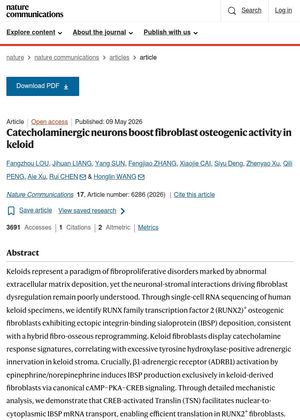
This study explores the role of catecholaminergic neurons in enhancing the osteogenic activity of fibroblasts in keloid scars. Researchers identified specific cell populations in keloids that exhibit osteogenic properties, contributing to the rigidity of these scars. Catecholamine neurotransmitters, especially epinephrine, were found to stimulate osteogenic markers in keloid fibroblasts through the ADRB1 receptor and a mechanism involving the mRNA transporter Translin. Blocking this receptor with metoprolol reduced keloid characteristics in a rat model, suggesting that targeting catecholaminergic signaling could be a promising therapeutic strategy for keloid treatment. The study involved fibroblasts from 3 normal and 3 keloid skin samples, providing insights into potential therapeutic targets.