TLDR Women with polycystic ovary syndrome (PCOS) show higher levels of hope, judgement, perspective, and transcendence, and could benefit from positive psychology therapy.
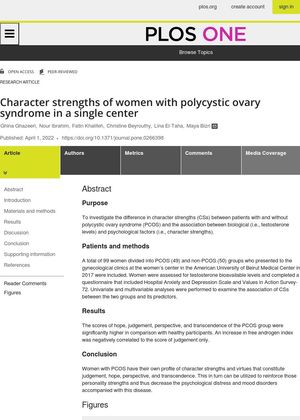
The study involved 99 women, 49 with polycystic ovary syndrome (PCOS) and 50 without, and aimed to compare their character strengths (CSs). It was found that women with PCOS had higher scores in hope, judgement, perspective, and transcendence. There was no correlation between testosterone levels and CSs. Acne and hirsutism were negatively associated with the appreciation of beauty and excellence score, while menstrual cycle disturbances were linked to higher curiosity and transcendence scores. The study suggests that PCOS patients should undergo positive psychology therapy to enhance their CSs from the onset of diagnosis. However, the results may not be representative of all PCOS women due to the small sample size and single-center study.
186 citations
,
February 2015 in “Frontiers in Neuroscience” Testosterone affects brain behavior in complex and varied ways.
 101 citations
,
May 2014 in “PLOS ONE”
101 citations
,
May 2014 in “PLOS ONE” Women with PCOS have a higher chance of experiencing depression, anxiety, and sleep disorders.
951 citations
,
December 2013 in “Clinical epidemiology” PCOS is a common hormonal disorder in women that can be managed with lifestyle changes and various medications.
 926 citations
,
June 2010 in “BMC Medicine”
926 citations
,
June 2010 in “BMC Medicine” Polycystic ovary syndrome is a complex condition that affects women's mental, reproductive, and metabolic health throughout their lives.
 286 citations
,
January 2009 in “Human Reproduction Update”
286 citations
,
January 2009 in “Human Reproduction Update” Women with the NIH type of PCOS have more obesity and higher risk of diabetes and heart disease than those with other types of PCOS.
 1744 citations
,
August 2006 in “The Journal of Clinical Endocrinology and Metabolism”
1744 citations
,
August 2006 in “The Journal of Clinical Endocrinology and Metabolism” Polycystic Ovary Syndrome should be seen mainly as a condition of excess male hormones, with a focus on this in its definition.
 414 citations
,
August 2005 in “The Journal of Clinical Endocrinology and Metabolism”
414 citations
,
August 2005 in “The Journal of Clinical Endocrinology and Metabolism” Polycystic ovary syndrome costs the U.S. over $4 billion a year, mainly from treating related health issues.