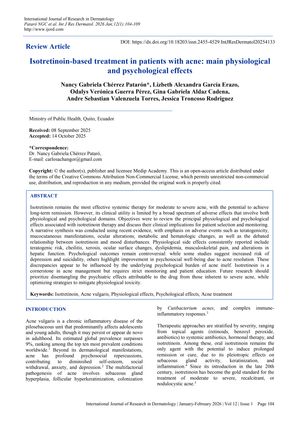
Isotretinoin is highly effective for treating moderate to severe acne, offering potential long-term remission, but its use is limited by significant adverse effects. Physiological side effects include teratogenic risk, cheilitis, xerosis, ocular changes, dyslipidemia, musculoskeletal pain, and hepatic function alterations. The psychological impact is debated, with some studies indicating increased depression and suicidality, while others report improved psychosocial well-being due to acne resolution. These mixed findings may be influenced by the psychological burden of acne itself. Isotretinoin remains essential in acne management, necessitating careful monitoring and patient education. Future research should focus on distinguishing the psychiatric effects of the drug from those related to severe acne and improving strategies to reduce physiological toxicity.

116 citations
,
December 2017 in “International Journal of Women's Dermatology” Adult female acne treatment should be personalized, considering individual preferences and pregnancy, using various topical and oral medications while managing side effects and resistance.
121 citations
,
June 2010 in “Australasian Journal of Dermatology” Most people on isotretinoin had chapped lips, but only a few stopped the medicine due to side effects.
30 citations
,
April 2007 in “Dermatologic Clinics” The document concludes that new treatments are needed to better manage acne and reduce side effects related to current therapies.
22 citations
,
October 2020 in “Anais Brasileiros de Dermatologia” The Brazilian Society of Dermatology agrees that oral isotretinoin is effective for acne and other skin conditions, and it's safe when monitored, but more research is needed on dosing and duration.
6 citations
,
September 2012 in “Our Dermatology Online” Retinoids are effective for various skin conditions and hair loss but have serious side effects, so low doses are recommended.
January 2018 in “Springer eBooks” The document says that early treatment of Acne Vulgaris is important to prevent scarring and that adult onset acne is common in women, often due to hormonal imbalances.
126 citations
,
October 1983 in “Journal of The American Academy of Dermatology” Isotretinoin effectively treats severe acne and similar conditions, but has common, mostly reversible side effects, requiring careful patient monitoring.