TLDR Surface and internal treatments can help prevent hair lipid loss during washing.
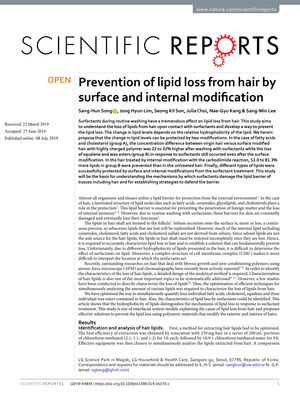
The study investigated methods to prevent lipid loss from hair caused by surfactants during washing, focusing on surface and internal modifications. Surface modification with highly charged cationic polymers reduced the loss of fatty acids and cholesterol by 22-32%, while internal modification using a carbodiimide reaction prevented 52.0-81.3% of squalene and wax esters from being lost. The study concluded that different lipids are affected by distinct mechanisms, with surface treatments primarily preventing the loss of amphipathic lipids and internal modifications effectively retaining hydrophobic lipids. The findings provided insights into surfactant-induced lipid loss and suggested strategies for protecting hair lipids.

3 citations
,
November 2017 in “International Journal of Cosmetic Science” Solute binding to hair keratin is mainly driven by hydrophobic interactions and changes with pH.
40 citations
,
May 2016 in “Proceedings of the National Academy of Sciences of the United States of America” Changes in keratin make hair follicles stiffer.
2 citations
,
February 2016 in “Journal of sol-gel science and technology” A small molecule can strengthen fine hair, making it more resistant and natural-feeling.
18 citations
,
August 2014 in “Lipids” Human hair has more unsaturated fats inside than on the surface, and certain lipids may help bind the outer and inner layers together.
14 citations
,
January 2012 in “Proteins” Electrostatic interactions mainly stabilize the binding of peptides to hair keratin.
43 citations
,
July 2005 in “Journal of Chromatography B” A new method accurately measures hair lipids, revealing individual differences.
July 2024 in “ADMET & DMPK” Surface-modified nanostructured lipid carriers can improve hair growth treatments.
1 citations
,
January 2019 in “Archives of Clinical and Medical Case Reports” Changing hair's surface and structure can help protect its natural oils from being washed away.
151 citations
,
November 2018 in “International Journal of Pharmaceutics” Nanoparticles improve drug delivery through the skin but more research is needed on their long-term effects and skin penetration challenges.
2 citations
,
July 2023 in “Cosmetics” Surfactants in shampoos and conditioners remove some but not all lipids from hair, and more research is needed to understand their full impact.
32 citations
,
June 2017 in “Journal of Pharmaceutical Sciences” Chitosan-coated nanoparticles improve skin delivery of hair loss treatments with fewer side effects.