 3 citations
,
August 2025 in “Frontiers in Pharmacology”
3 citations
,
August 2025 in “Frontiers in Pharmacology” Oral JAK inhibitors are safe for alopecia areata, but baricitinib may cause more acne and infections.
 August 2024 in “JAMA Dermatology”
 Continuous baricitinib is needed to keep hair regrowth in severe alopecia areata.
 20 citations
,
July 2024 in “Archives of Dermatological Research”
20 citations
,
July 2024 in “Archives of Dermatological Research” Dupilumab helps children with alopecia areata regrow hair safely.
7 citations
,
April 2024 in “International Journal of Dermatology” Alopecia areata greatly affects the quality of life for children and their families.
 April 2024 in “Frontiers in medicine”
 Alopecia Areata significantly lowers quality of life and current treatments are inadequate, highlighting a need for better therapies and standardized treatment protocols.
2 citations
,
April 2024 in “European Journal of Dermatology” Alopecia areata in Spain has a significant impact with unmet treatment needs and high costs.
6 citations
,
April 2024 in “Health Science Reports” Younger patients with severe alopecia areata often have nail problems.
21 citations
,
February 2024 in “JAMA Dermatology” Alopecia areata severity is influenced by factors like long disease duration, relapses, treatment response, and mental health, leading to the creation of a new severity measurement tool.
 4 citations
,
January 2024 in “JEADV. Journal of the European Academy of Dermatology and Venereology/Journal of the European Academy of Dermatology and Venereology”
4 citations
,
January 2024 in “JEADV. Journal of the European Academy of Dermatology and Venereology/Journal of the European Academy of Dermatology and Venereology” Baricitinib and ritlecitinib are recommended for severe alopecia areata, with other treatments available off-label.
48 citations
,
July 2023 in “Pediatric Dermatology” Ritlecitinib effectively regrows hair in adolescents with alopecia areata and is safe.
227 citations
,
April 2023 in “The Lancet” Ritlecitinib effectively treats alopecia areata and is well-tolerated.
 9 citations
,
January 2023 in “Dermatology and therapy”
9 citations
,
January 2023 in “Dermatology and therapy” A 14-year-old girl with severe hair loss regrew her hair using upadacitinib.
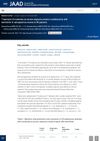 January 2023 in “Journal of The American Academy of Dermatology”
 Baricitinib helped most teenagers with severe hair loss regrow hair and had mild side effects.
7 citations
,
July 2021 in “JAAD case reports” Dupilumab may help treat alopecia areata in children with atopic dermatitis, but it can also cause new hair loss.
48 citations
,
April 2021 in “Journal of the American Academy of Dermatology” Topical corticosteroids are the best initial treatment for children's alopecia areata.
19 citations
,
January 2021 in “Journal of the American Academy of Dermatology” Dupilumab may help children with alopecia areata and atopic dermatitis regrow hair.
 26 citations
,
October 2020 in “Pediatric Dermatology”
26 citations
,
October 2020 in “Pediatric Dermatology” Oral tofacitinib may effectively treat hair loss in children with alopecia areata.
58 citations
,
July 2018 in “Journal of Allergy and Clinical Immunology” Alopecia areata severity is linked to increased TH1 and TH2 activity.
22 citations
,
June 2017 in “Journal of dermatological treatment” Methotrexate is generally safe and often effective for treating hair loss in children.
 15 citations
,
May 2017 in “JEADV. Journal of the European Academy of Dermatology and Venereology/Journal of the European Academy of Dermatology and Venereology”
15 citations
,
May 2017 in “JEADV. Journal of the European Academy of Dermatology and Venereology/Journal of the European Academy of Dermatology and Venereology” High-dose corticosteroids and methotrexate had a modest effect on severe childhood alopecia, but side effects and relapse were concerns.
 63 citations
,
January 2017 in “Annals of Dermatology”
63 citations
,
January 2017 in “Annals of Dermatology” More research is needed to understand alopecia areata severity.
28 citations
,
July 2015 in “Dermatologic therapy” The combined therapy was effective and safe for children with severe alopecia areata.
 144 citations
,
July 2015 in “Clinical, Cosmetic and Investigational Dermatology”
144 citations
,
July 2015 in “Clinical, Cosmetic and Investigational Dermatology” Alopecia areata is a common autoimmune disease affecting about 2% of people, causing significant disability and often associated with mental health issues and other autoimmune conditions.
25 citations
,
June 2015 in “Acta dermato-venereologica” Methotrexate can help some kids with severe hair loss regrow hair.
38 citations
,
January 2013 in “Dermatology” Careful patient selection is key for effective pulse corticosteroid treatment in children with alopecia areata.
38 citations
,
January 2012 in “Journal of Korean Medical Science” Early-onset alopecia, especially with a family history, leads to worse outcomes and more related health issues.
70 citations
,
April 2011 in “British journal of dermatology/British journal of dermatology, Supplement” Methotrexate sometimes helps regrow hair in children with severe alopecia areata and is generally safe.
48 citations
,
July 1998 in “Pediatric Dermatology” Monthly oral corticosteroid pulses effectively treat widespread alopecia areata in young patients.