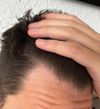
User applied topical Minoxidil 5% and Finasteride 0.1% daily, with rosemary oil weekly, and saw initial baby hair growth. They plan to add derma stamping and Redensyl serum.
The user is using RU58841, Minoxidil, and weekly microneedling for hair loss, having stopped finasteride due to side effects like low libido and depression. They are considering dutasteride as an alternative but are cautious due to past experiences with DHT blockers.
The post and conversation are about the high cost and skepticism surrounding pyrilutamide as a hair loss treatment, with comparisons to minoxidil, finasteride, and RU58841. The original poster defends pyrilutamide's effectiveness and criticizes others for dismissing it without proper understanding.
Potential success with the hair loss treatment Pyrilutamide, and possible group buying opportunities for it along with other treatments such as Finasteride and Minoxidil.
Finasteride and dutasteride have potential risks, including post-finasteride syndrome, but are commonly used for hair loss. RU58841, minoxidil, and needling are suggested as alternatives, though all treatments carry risks.
A user's 2.5 year transformation of using 0.5mg finasteride and RU58841 to combat hair loss, with the possibility of increasing the RU for further regrowth.
A 25-year-old male experienced significant hair regrowth after one year of using 0.5mg daily finasteride, with plans to add 1.25mg oral minoxidil and microneedling for further improvement. He also uses Nizoral shampoo weekly and reports no current side effects.
Hair loss treatments RU55841, CB-03-01, and Eucapil were discussed, with concerns about needing increased dosages over time and potential side effects. A user suggested that CB's results could be due to various factors and that combining it with finasteride might slow down any upregulation.
A 25-year-old male experiencing hair loss and thinning since age 20 is seeking advice on effective DHT inhibitors. He lists various oral and topical treatments, excluding Minoxidil due to adverse effects.
The user mixes their own RU58841 solution and found that increasing the ethanol content improved absorption and reduced scalp itching. A study on minoxidil showed that penetration increased with higher ethanol concentrations, reaching maximum penetration at 90% ethanol.
DHT Itch and its link to balding, with various treatments such as finasteride being discussed. Members shared their experiences of scalp itch before and after taking 5AR inhibitors, and potential underlying causes such as seborrheic dermatitis were discussed.
Delayed release oral minoxidil is seen as a promising advancement for hair loss treatment, offering safer, higher doses and more consistent hair follicle stimulation compared to current options. However, it is not expected to replace finasteride or dutasteride, as it does not prevent androgenetic alopecia.
A user shared progress pictures after 5 months of using 1mg finasteride daily, 1ml minoxidil topically every night, and 1.5mm microneedling weekly. Responses included skepticism and congratulations.
The user has been on finasteride for 1.5 years with good results but avoids minoxidil due to pet safety concerns. They're considering alternatives like Redensyl and natural remedies like rosemary oil and stinging nettle tincture for hair loss.
The conversation discusses using RU58841 as a topical treatment for hair loss, with some users reporting no systemic issues. The original poster is considering RU58841 due to limited progress with dutasteride and oral minoxidil.
Exploring hair loss treatments, with a focus on Finasteride and RU58841 as well as other topical solutions like stemoxydine 5%. The user found that they were sensitive to both oral and topical finasteride, but remain optimistic about finding the right treatment.
The user experienced anxiety and side effects from topical finasteride and is considering switching to saw palmetto. Another user reported no improvement with saw palmetto and experienced liver issues.
Using a combination of low-dose topical finasteride (0.025%) and 0.5% pyrilutamide for hair loss, with a focus on minimizing side effects. The user seeks experiences and results from others who have tried this combination.
The user has been taking finasteride for 1.5 years without seeing improvement in hair regrowth. Suggestions include adding minoxidil or switching to dutasteride, with concerns about side effects.
The user is experiencing hair loss and has been using RU58841 but is considering pyrilutamide and minoxidil, avoiding finasteride due to side effects. Another user suggests finasteride or dutasteride as essential, possibly in topical form, while dismissing saw palmetto as ineffective.
A user experienced positive hair growth results using 5% topical minoxidil for a year and 1 mg finasteride for four months but is considering stopping finasteride due to persistent side effects like libido loss. Others in the conversation discuss similar experiences, suggest trying topical finasteride to reduce side effects, and emphasize the importance of overall health and lifestyle.
A user experiencing diffuse thinning at the hairline after 12 months on finasteride is considering adding minoxidil, dutasteride, or RU58841 to their treatment. Another user suggests adding minoxidil now, holding off on dutasteride, and shares personal side effects from RU58841.
Ursolic acid, found in apple peels, lemongrass, rosemary, and lavender, may have anti-androgen effects similar to finasteride. It might be beneficial for hair health when used with other treatments like Minoxidil, Finasteride, and RU58841.
The user has been using oral finasteride and topical minoxidil for years and recently started 2.5 mg oral minoxidil, with no significant regrowth observed yet. They are considering adding tretinoin cream to their regimen but are concerned about potential shedding.
The conversation is about a user's hair regrowth after using only finasteride for 5 months, with some users expressing congratulations and curiosity about the lack of minoxidil use and potential side effects.
Pyrilutamide, a new drug being tested to combat hair loss that has been found to perform comparably or better than finasteride and dutasteride in the initial 6 months of treatment with minimal reported side effects.
Fluridil, also known as Topilutamide or Eucapil, is discussed as a treatment for hair loss. It is noted as an androgen receptor antagonist, not a vasodilator.
A 30-year-old woman with androgenetic alopecia is considering bicalutamide to slow hair loss but is concerned about its impact on muscle growth due to its anti-androgen effects. Alternatives suggested include dutasteride, spironolactone, RU58841, and minoxidil, with concerns about bicalutamide's side effects.