4 citations
,
May 2024 in “Steroids” The method accurately measures sex hormones in human plasma but can have small errors.
3 citations
,
April 2022 in “Biomolecules” Higher miR-34a levels and the A variant of the MIR-34A gene are linked to increased risk and severity of alopecia areata.
 September 2024 in “Medicina”
 Certain gene variations may protect against skin issues and oxidative stress in women with PCOS.
April 2016 in “Journal of Investigative Dermatology” Iron deficiency causes hair loss by affecting hair differentiation and cycling.
 15 citations
,
June 2015 in “Lasers in Medical Science”
15 citations
,
June 2015 in “Lasers in Medical Science” The 830-nm wavelength was most effective at promoting hair growth in rats using low-level laser therapy.
 6 citations
,
July 2018 in “Advances in Clinical and Experimental Medicine”
6 citations
,
July 2018 in “Advances in Clinical and Experimental Medicine” Different body parts have varying levels of certain hair follicle markers.
 November 2021 in “Research Square (Research Square)”
 A 532 nm laser at 15 J/cm2 speeds up tendon healing by increasing tendon stem cell growth and tendon-related gene activity.
 October 2021 in “Research Square (Research Square)”
 A 532 nm laser helps tendon stem cells grow and become tendon-like by increasing Nr4a1 activity, which may speed up tendon repair.
4 citations
,
June 2025 in “Journal of Cosmetic Dermatology” The triple-wavelength diode laser effectively and safely reduces hair and improves skin appearance in people with darker skin.

The laser treatment effectively and safely improves hair lightening, pigment clearance, and skin rejuvenation.
 February 2025 in “Journal of Biophotonics”
 Dual-wavelength laser therapy promotes better hair regrowth than single-wavelength treatments.
February 2020 in “Journal of Physics Conference Series” 755 nm laser at 10-15 J/cm² is best for light skin, 4.5-10 J/cm² at 755-1064 nm for dark skin.
March 2026 in “Health Science Reports” The 755 nm laser is more effective and safer for hair removal than the dual-wavelength laser.
9 citations
,
April 2019 in “Dermatologic Therapy” The 1,064-nm Nd:YAG laser is versatile and effective for treating leg veins, hair removal, and skin rejuvenation, especially in darker skin types.
12 citations
,
January 2021 in “Dermatology Research and Practice” The 1927 nm Thulium laser effectively and safely treats postinflammatory hyperpigmentation in darker skin tones.
April 2020 in “The Aesthetics” LED-LLLT helps heal wounds, reduce pain, and regrow hair using specific light wavelengths.
Low-level laser therapy is a safe, painless method that effectively treats acne and improves skin without post-treatment care.
 63 citations
,
December 2002 in “Archives of Dermatology”
63 citations
,
December 2002 in “Archives of Dermatology” The 308-nm excimer laser is a promising treatment for vitiligo with varying success and mild side effects.
 1 citations
,
November 2023 in “Clinical, cosmetic and investigational dermatology”
1 citations
,
November 2023 in “Clinical, cosmetic and investigational dermatology” The long-pulse alexandrite laser is good for removing hair and treating skin problems like spots and veins.
 January 1998 in “Lasers in Surgery and Medicine”
 Lasers are effective and safe for various medical treatments, including cancer, wound healing, and skin conditions.
82 citations
,
May 2005 in “Dermatologic therapy” Laser hair removal has advanced to effectively reduce hair for various skin types and hair colors.
Laser therapy is effective for treating vascular lesions with the right light settings and trained professionals.
 August 2025 in “Photodermatology Photoimmunology & Photomedicine”
 LED therapy is a promising, non-invasive skin treatment, but needs standardization and personalization.
 January 2023 in “Dermatologic Therapy”
 A new hand-held light therapy device was found to be safe and effective for treating mild-to-moderate acne.
 2 citations
,
January 2007 in “Journal of The American Academy of Dermatology”
2 citations
,
January 2007 in “Journal of The American Academy of Dermatology” Red and infrared light therapy improves hair growth in balding patients.
August 2021 in “Journal of advances in medicine and medical research” Excimer light therapy is more effective than low level laser therapy for treating alopecia areata.
 February 2009 in “Journal of The American Academy of Dermatology”
 Fractional infrared technology is effective and safe for treating cervical laxity.
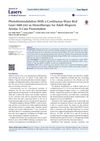 July 2023 in “Journal of lasers in medical sciences”
 Red laser therapy helped regrow hair in an alopecia areata patient within 21 days.
 20 citations
,
December 2003 in “Journal of Cosmetic and Laser Therapy”
20 citations
,
December 2003 in “Journal of Cosmetic and Laser Therapy” An 800nm diode laser safely and effectively reduces hair for about 8 months, with most patients satisfied and few side effects.
 26 citations
,
April 1999 in “Dermatologic Clinics”
26 citations
,
April 1999 in “Dermatologic Clinics” The long-pulsed alexandrite laser is effective for hair reduction, particularly for light-skinned individuals with dark hair, but caution is needed for darker skin.