January 1985 in “Clinical research” Topical alpha-terthienyl with UVA may safely treat psoriasis without cancer risk.
 9 citations
,
March 2022 in “Antioxidants”
9 citations
,
March 2022 in “Antioxidants” Synthetic antioxidants are effective, cheap, and stable, with some like zinc and cholecalciferol reducing child and cancer deaths, but the safety of additives like BHA, BHT, TBHQ, and PEG needs more research.
9 citations
,
May 2014 in “Clinical Cosmetic and Investigational Dermatology” Using tazarotene with GliSODin improves facial skin more than tazarotene alone.
July 2025 in “Journal of Investigative Dermatology” Solid Lipid Particle technology makes retinol more stable, effective, and gentle on the skin.
7 citations
,
April 1996 in “Archives of dermatological research” Topical tacalcitol can treat psoriasis by acting directly on skin cells.
 January 2011 in “Side effects of drugs annual”
 Tretinoin gel is safe for sun exposure, but tacalcitol doesn't significantly improve non-segmental vitiligo.
9 citations
,
January 2021 in “Mediators of Inflammation” 15d‐PGJ2 cream protects against UVB-induced skin damage in mice.
36 citations
,
July 2017 in “Journal of controlled release” A new method allows for controlled, long-lasting delivery of retinoic acid through the skin with fewer side effects.
 January 2023 in “Journal of cosmetic dermatology”
 The synthetic retinoid EC23 thickens skin and promotes hair growth more effectively and with a lower dose than natural retinoids.
 17 citations
,
April 2004 in “Acta Clinica Belgica”
17 citations
,
April 2004 in “Acta Clinica Belgica” UV light makes skin signs of lack of carotene and vitamin A more visible.
11 citations
,
January 1956 in “Journal of Investigative Dermatology” June 2025 in “British Journal of Dermatology” Tofacitinib was more effective than methotrexate for treating alopecia areata.
 37 citations
,
October 2017 in “Clinical and Experimental Dermatology”
37 citations
,
October 2017 in “Clinical and Experimental Dermatology” Oral tofacitinib shows promise in treating atopic dermatitis and alopecia areata, but only slight improvement in vitiligo.
 January 2025 in “ARC Journal of Clinical Case Reports”
 Encapsulated retinol may effectively treat actinic keratosis without side effects.
4-(Ethoxycarbophenyl) retinamide is much less toxic than other retinoids.
June 2025 in “British Journal of Dermatology” Tofacitinib is more effective than methotrexate for treating moderate-to-severe alopecia areata.
 29 citations
,
June 2014 in “Drug delivery”
29 citations
,
June 2014 in “Drug delivery” The new formulation improved the skin absorption of the drug Thiocolchicoside.
14 citations
,
November 2021 in “Nanoscale” The research shows how a specially structured nanoemulsion delivers vitamins A and E through the skin.
 14 citations
,
July 2012 in “Journal of the American Academy of Dermatology”
14 citations
,
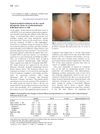
July 2012 in “Journal of the American Academy of Dermatology” Topical tacalcitol ointment can help improve symptoms of EFFC.
July 2026 in “Journal of Cutaneous and Aesthetic Surgery” Vitamin D3 injections are as effective and potentially safer than TAC for treating alopecia areata.
March 2019 in “Reactions Weekly” 9 citations
,
October 1957 in “A M A Archives of Dermatology” Sebaceous glands can quickly convert carotene to vitamin A.
2 citations
,
September 2018 in “Walailak Journal of Science and Technology (WJST)” Thuja orientalis fruits have more antioxidants and could benefit the pharmaceutical industry.
 4 citations
,
April 2018 in “Journal of Investigative Dermatology”
4 citations
,
April 2018 in “Journal of Investigative Dermatology” Hydroxypinacolone retinoate is a potent anti-aging ingredient for skin that is more effective and less irritating than other forms of retinoids.
July 2025 in “JAAD Case Reports” 2 citations
,
October 2022 in “Journal of Sustainable Materials Processing and Management” Vitamin-E and aloe-vera nano-transfersomes may effectively treat psoriasis.
 May 2025 in “Journal of the Egyptian Womenʼs Dermatologic Society”
 Vitamin D3 is a safe and effective alternative to steroids for treating alopecia areata, with fewer side effects.
 1 citations
,
December 2022 in “Journal of cosmetic dermatology”
1 citations
,
December 2022 in “Journal of cosmetic dermatology” The combination of vitamin D analogues with potent steroids is a favorable treatment for alopecia areata with fewer side effects.
1 citations
,
September 2025 in “Molecules” The conventional extraction method with 50% ethanol was the most effective for antioxidant activity.
258 citations
,
July 2005 in “Journal of lipid research” DGAT1 enzyme helps make diacylglycerols, waxes, and retinyl esters.