 4 citations
,
July 2022 in “Journal of health economics and outcomes research”
4 citations
,
July 2022 in “Journal of health economics and outcomes research” Alopecia areata in US adolescents leads to significant healthcare costs and usage.
April 2017 in “The journal of investigative dermatology/Journal of investigative dermatology” Researchers found that certain miRNAs, which affect immune system regulation, are differently expressed in mice with a hair loss condition compared to healthy mice.
69 citations
,
February 2008 in “The American journal of pathology” Controlled delivery of specific RNA and IL-4 restored hair growth in mice with autoimmune alopecia.
July 2025 in “Journal of Investigative Dermatology” Candida auris uses the immune response to colonize hair follicles.
July 2026 in “Journal of the American Academy of Dermatology”  May 2023 in “Journal of Applied Cosmetology”
 The Annurca apple supplement significantly improved hair growth in people with hair loss.
28 citations
,
March 2013 in “Journal of Investigative Dermatology” Kv1.3 blockers may help treat alopecia areata and promote hair regrowth.
2 citations
,
July 2025 in “Frontiers in Veterinary Science” MicroRNAs and AI can improve cashmere goat hair quality and aid in hair disorder diagnosis.
3 citations
,
January 2019 in “Skin Appendage Disorders” People with alopecia areata may also have allergic rhinitis and should be checked for respiratory allergies.
 September 2024 in “Journal of the American Academy of Dermatology”
 Baricitinib 4 mg is effective and safe for treating severe alopecia areata.
January 2015 in “프로그램북(구 초록집)” Two patients with stubborn hair loss grew hair after PDRN injections.
18 citations
,
February 2023 in “eLife” ILC1-like cells can independently cause alopecia areata.
October 2022 in “Journal of pharmaceutical negative results” People with Alopecia areata have higher levels of certain T regulatory cells in their blood.
 April 2023 in “Revista colombiana de reumatología”
 JAK inhibitors like tofacitinib can effectively treat severe alopecia areata.
 May 2026 in “Journal of Asia Pacific Aesthetic Sciences”
 Low-dose intralesional corticosteroid treatment led to rapid hair regrowth in localized alopecia areata.
 11 citations
,
November 2021 in “BMJ Open”
11 citations
,
November 2021 in “BMJ Open” People with alopecia areata have higher rates of mental health issues, autoimmune diseases, and infections.
 23 citations
,
June 2003 in “Journal of Investigative Dermatology Symposium Proceedings”
23 citations
,
June 2003 in “Journal of Investigative Dermatology Symposium Proceedings” Alopecia Areata is an autoimmune disease affecting hair follicles, influenced by genetic and environmental factors, with rodent models being essential for research.
June 2026 in “Advanced Healthcare Materials” A new taurine-based liquid can help treat hair loss by improving hair follicle health and promoting regrowth.
3 citations
,
July 2025 in “Clinical and Experimental Dermatology” Ritlecitinib may be more effective for severe alopecia areata than conventional treatments.
36 citations
,
July 2007 in “Journal of Investigative Dermatology” Certain HLA class II alleles increase or decrease the risk of alopecia areata.
 June 2023 in “Dermatology and therapy”
 The Middle East and Africa need better data, treatment consensus, and support for Alopecia Areata.
14 citations
,
March 1994 in “Archives of Dermatology” A married couple both developed alopecia areata, possibly due to shared stress.
April 2025 in “Anais Brasileiros de Dermatologia” Abrocitinib effectively treats severe alopecia areata with significant improvement and no side effects.
1 citations
,
May 2025 in “Journal of the European Academy of Dermatology and Venereology” Ritlecitinib and baricitinib are effective for alopecia areata, but more research is needed to determine which is better.
1 citations
,
December 2013 in “The journal of investigative dermatology. Symposium proceedings/The Journal of investigative dermatology symposium proceedings” New treatments and strategies are needed for Alopecia Areata, focusing on immune response and better trial designs.
 December 2023 in “Acupuncture in Medicine”
 Acupuncture might help with hair loss from androgenetic alopecia, as shown in two cases.
A new microneedle patch effectively treats hair loss by delivering growth factors to the skin.
 April 2026 in “Human Genome Variation”
 The MBTPS2 gene variant c.970+5G>A is a common mutation causing IFAP syndrome.
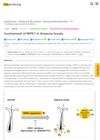
RIPK1 inhibitors might help prevent alopecia areata.