1 citations
,
January 2012 in “Human health handbooks” Linoleic acid is important for healthy skin, and while most people get enough from their diet, not having enough can cause skin and hair problems.
 2 citations
,
December 2022 in “PNAS nexus”
2 citations
,
December 2022 in “PNAS nexus” SCD-153 shows promise as an effective topical treatment for alopecia areata.
November 2025 in “Figshare” SQSTM1 is linked to increased risk of alopecia areata.
January 2019 in “Social Science Research Network” Hair follicle stem cells prevent melanocyte stem cells from differentiating by controlling retinoic acid levels.
 April 2023 in “The journal of investigative dermatology/Journal of investigative dermatology”
 p120-catenin helps control skin inflammation by regulating cadherin levels.
21 citations
,
March 2018 in “American Journal Of Pathology” Mutations in NIPAL4 cause skin issues by disrupting lipid layers, but some improvement is seen with topical treatment.
 11 citations
,
July 2021 in “Physiologia Plantarum”
11 citations
,
July 2021 in “Physiologia Plantarum” SIPHL1 from tomato enhances plants' response to low phosphate levels.
4 citations
,
July 1983 in “Journal of steroid biochemistry/Journal of Steroid Biochemistry” Certain hormones can reduce skin oil and hair growth, potentially helping treat acne and excessive hair in women.
6 citations
,
November 2021 in “Notulae Botanicae Horti Agrobotanici Cluj-Napoca” Phosphorus affects walnut root hair growth by altering auxin levels.
March 2026 in “JID Innovations” Aire mutation reduces alopecia areata, while Notch4 mutation prevents it in mice.
 August 2025 in “ACS Omega”
 New compounds show promise as nonsteroidal treatments for hair loss.
6 citations
,
January 2007 in “Journal of cutaneous medicine and surgery” The article concludes that careful examination is crucial for the timely diagnosis and treatment of a rare scalp condition in an Aboriginal Canadian teenager.
 August 2023 in “Journal of Investigative Dermatology”
 Ganoderma lucidum extract and its component, ganoderic acid A, may effectively prevent hair loss.
 April 2024 in “bioRxiv (Cold Spring Harbor Laboratory)”
 A gene network led by RSL4 is crucial for early root hair growth in response to cold in Arabidopsis thaliana.
 19 citations
,
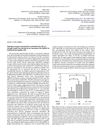
September 2011 in “Journal of Dermatological Science”
19 citations
,
September 2011 in “Journal of Dermatological Science” TGF-β1 increases androgen receptor activity in hair loss, but Hic-5/ARA55 can counter this effect.
May 2025 in “BMC Genomics” Circ 0020938 slows down hair growth in cashmere goats.
3 citations
,
May 2025 in “Carbohydrate Polymers” The new microneedle patch effectively treats alopecia areata with fewer side effects than oral medication.
October 2020 in “The American journal of gastroenterology” Para-aminobenzoic acid in hair supplements can cause autoimmune hepatitis.
14 citations
,
April 2008 in “PROTEOMICS” Increased 14-3-3 proteins may block hair cycle regression, causing hair loss.
94 citations
,
July 1991 in “Clinical endocrinology” Cyproterone acetate at 2mg daily is as effective as higher doses for treating excessive hair growth in women.
3 citations
,
December 2018 in “Biomedical and pharmacology journal/Biomedical & pharmacology journal” Compound 3 protects the heart from damage by activating A1-adenosine receptors.
2 citations
,
April 2025 in “Plants” Lambertianic acid helps prevent muscle wasting.
 16 citations
,
March 2016 in “The journal of investigative dermatology/Journal of investigative dermatology”
16 citations
,
March 2016 in “The journal of investigative dermatology/Journal of investigative dermatology” The Notch signaling pathway helps in mouse hair development through a noncanonical mechanism that does not rely on RBPj or transcription.
The scant hair in snthr-1Bao mice is likely caused by a deletion affecting the Plcd1 gene.
 20 citations
,
December 2011 in “Journal of inherited metabolic disease”
20 citations
,
December 2011 in “Journal of inherited metabolic disease” Valproic acid treatment increases a specific acid in urine by blocking an enzyme, possibly causing skin rash and hair loss.
 January 2024 in “bioRxiv (Cold Spring Harbor Laboratory)”
 A specific enzyme is essential for proper hair follicle stem cell development and healthy skin.
 45 citations
,
February 2018 in “Journal of basic and clinical physiology and pharmacology/Journal of basic & clinical physiology & pharmacology”
45 citations
,
February 2018 in “Journal of basic and clinical physiology and pharmacology/Journal of basic & clinical physiology & pharmacology” *Acorus calamus* has many medicinal benefits but needs more safety research.
 November 2025 in “SKIN The Journal of Cutaneous Medicine”
 Baricitinib significantly regrows hair in teens with severe alopecia areata.
July 2025 in “Skin Research and Technology” Hsa-miR-193a-5p is important in alopecia areata by promoting inflammation and involving specific genes in hair and immune function.
2 citations
,
May 2025 in “Frontiers in Immunology” Ursolic acid may help develop new anti-inflammatory drugs by affecting immune cells.