 70 citations
,
February 2019 in “The journal of immunology/The Journal of immunology”
70 citations
,
February 2019 in “The journal of immunology/The Journal of immunology” Short-chain fatty acids from *Cutibacterium acnes* cause skin inflammation, contributing to acne.
 1 citations
,
December 2023 in “Indian Dermatology Online Journal”
1 citations
,
December 2023 in “Indian Dermatology Online Journal” Steatocystoma multiplex causes recurring skin cysts and needs early recognition for better management.
1 citations
,
January 2020 in “IRIS UNIMORE (University of Modena and Reggio Emilia)” Aminexil clinical 5 effectively reduces hair loss and is well-tolerated.
March 1956 in “Institutional Repositories DataBase (IRDB)” 15 citations
,
October 1999 in “British Journal of Dermatology” Collagen remodeling is more active during hair growth stages.
 1 citations
,
July 2012 in “Nasza Dermatologia Online”
1 citations
,
July 2012 in “Nasza Dermatologia Online” CCCA may be caused by both hair traction and an immune response.
 1 citations
,
February 2017 in “The American journal of dermatopathology/American journal of dermatopathology”
1 citations
,
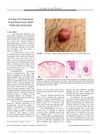
February 2017 in “The American journal of dermatopathology/American journal of dermatopathology” A man with a skin nodule was diagnosed with a rare skin condition called cutaneous focal mucinosis, which can be confused with other skin cancers.
23 citations
,
July 2003 in “Journal of Investigative Dermatology” Genetic testing for hairless gene mutations is crucial to correctly diagnose and treat atrichia with papular lesions.
 October 2025 in “Indian Journal of Physiology and Pharmacology”
 Early diagnosis and treatment of endocrine disorders like HAIR-AN syndrome can improve outcomes in adolescents.
101 citations
,
October 2007 in “Journal of Biological Chemistry” Reduced matriptase activity causes skin and hair issues in both humans and mice.
 8 citations
,
September 2016 in “The American Journal of Dermatopathology”
8 citations
,
September 2016 in “The American Journal of Dermatopathology” Enlarged sweat gland ducts may indicate scarring hair loss.
8 citations
,
September 2020 in “Genes & Genomics”  3 citations
,
April 2022 in “Microorganisms”
3 citations
,
April 2022 in “Microorganisms” People with severe hair loss (Alopecia Areata) have different scalp bacteria than healthy people, which might help predict the condition's progress.
September 2025 in “International Journal of Cosmetic Science” A balanced mix of cationic guar gum and anionic surfactants improves hair conditioning and protection.
18 citations
,
October 2022 in “Biomedicines” High AMH levels are linked to PCOS in women and may have a male equivalent with similar traits.
34 citations
,
December 1984 in “Journal of Cutaneous Pathology” Monilethrix hair issues are due to problems in the hair's internodes.
40 citations
,
April 1999 in “Journal of Histochemistry & Cytochemistry” S100A3 protein is mainly found in specific parts of human hair cells.
 4 citations
,
January 2004 in “Biological and Pharmaceutical Bulletin”
4 citations
,
January 2004 in “Biological and Pharmaceutical Bulletin” AgK114 protein helps in hamster skin injury recovery.
1 citations
,
January 1992 in “DNA sequence” Researchers found a non-functional sheep keratin gene due to mutations.
4 citations
,
December 2013 in “Journal of Investigative Dermatology Symposium Proceedings” 2 citations
,
May 2023 in “Indian Journal of Dermatology Venereology and Leprology” A new genetic mutation in the CAST gene may link PLACK syndrome to alopecia areata.
1 citations
,
December 2011 in “Arzneimittelforschung” CB-03-04 shows promise as a treatment for prostate issues due to its strong anti-androgen effects.
10 citations
,
September 2021 in “The FASEB Journal” ACKR2 helps prevent skin scarring and hair loss by controlling inflammation.

Patients and doctors often agree on the severity of eyebrow and eyelash hair loss in severe alopecia areata.
9 citations
,
February 2023 in “Medicine” Traditional Chinese medicine may help relieve symptoms of Cronkhite-Canada syndrome.
83 citations
,
February 1991 in “Development” Fos protein is crucial for cell transition to cornification in keratinized tissues.
68 citations
,
December 1983 in “British Journal of Dermatology” Major histocompatibility antigens are found in specific skin cells and structures, but not in sweat glands.
February 2018 in “Biophysical Journal” Cyclosporine A slowly changes cell membranes, explaining some of its effects and side effects.
7 citations
,
March 2025 in “Cytotechnology”  3 citations
,
January 2012 in “Internal Medicine”
3 citations
,
January 2012 in “Internal Medicine” A Rathke's cleft cyst caused hormonal imbalances and symptoms in a 68-year-old woman.