 November 2009 in “Regenerative Medicine”
 The regenerative medicine industry saw business growth with new partnerships, clinical trials, and financial investments.
October 2004 in “Emergency Medicine News” Carbuncles and other skin infections need specific treatments, and preventing nasal colonization can stop recurring infections.
 March 1985 in “Head & Neck Surgery”
 Hair transplantation improves life quality by addressing scars, aging, and genetic flaws, but is limited by the availability of the patient's own hair for donation.
 156 citations
,
October 2012 in “Seminars in Cell & Developmental Biology”
156 citations
,
October 2012 in “Seminars in Cell & Developmental Biology” Different types of stem cells in hair follicles play unique roles in wound healing and hair growth, with some stem cells not originating from existing hair follicles but from non-hair follicle cells. WNT signaling and the Lhx2 factor are key in creating new hair follicles.
 128 citations
,
October 2011 in “Development”
128 citations
,
October 2011 in “Development” Activating a protein called β-catenin in adult skin can make it behave like young skin, potentially helping with skin aging and hair loss.
112 citations
,
January 2013 in “Experimental dermatology” Faulty Notch signalling may cause hair follicle changes and inflammation in hidradenitis suppurativa.
 10 citations
,
February 2015 in “Clinics in Dermatology”
10 citations
,
February 2015 in “Clinics in Dermatology” The document concludes that changes in eyelashes and eyelid skin can indicate various local and systemic diseases.
40 citations
,
November 1966 in “Archives of Dermatology” Trichorrhexis nodosa is mainly caused by hair trauma and improves with gentler hair care.
 October 2022 in “Practice in Clinical Psychology”
 Addressing personal and moral aspects can improve sexual satisfaction.
47 citations
,
November 1966 in “Archives of Dermatology” Trichorrhexis nodosa is mainly caused by hair trauma, not a metabolic defect.
28 citations
,
July 1980 in “British Journal of Dermatology” The hair disorder was caused by abnormal protein formation, making hair easily damaged.
Trichorrhexis nodosa causes hair to break easily, often affecting young to middle-aged black women.
January 2023 in “Clinical and Experimental Dermatology” Oral minoxidil may help improve fragile hair.
3 citations
,
January 2002 in “Actas Dermo-Sifiliográficas” Excessive minoxidil use can damage hair structure.
April 2025 in “Indian Journal of Paediatric Dermatology” Trichorrhexis invaginata can occur with tinea capitis, though it's rare.
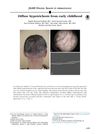 September 2016 in “Journal of The American Academy of Dermatology”
 The girl has a genetic hair condition causing thin hair since childhood.
August 2025 in “Skin Appendage Disorders” Topical minoxidil can help improve hair in trichonodosis.
March 2003 in “中華皮膚科醫學雜誌” Trichothiodystrophy causes unusual hair and developmental issues.
26 citations
,
February 1991 in “PubMed” Trichotillomania can be identified by a "Friar Tuck sign" and nail-biting.
30 citations
,
February 2015 in “Anais Brasileiros de Dermatologia” Trichoscopy is useful for diagnosing Netherton syndrome in children with skin issues.
November 2021 in “Skin appendage disorders” Self-induced hair loss should be considered in patients with androgenetic alopecia.
10 citations
,
July 2015 in “Clinical and Experimental Dermatology” Etanercept may cause hair fragility and breakage.
1 citations
,
March 2023 in “Journal of the Turkish Academy of Dermatology” Temporal triangular alopecia may be linked to sebaceous nevus and shows a new pinkish background feature.
32 citations
,
August 2016 in “Journal of the American Academy of Dermatology” Temporal triangular alopecia is a non-scarring hair loss in children, often linked to other health conditions.
Trichodysplasia spinulosa can occur after a heart transplant due to immunosuppressive drugs.
 2 citations
,
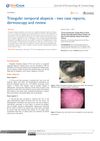
February 2018 in “Journal of dermatology & cosmetology”
2 citations
,
February 2018 in “Journal of dermatology & cosmetology” Triangular temporal alopecia is a benign hair loss pattern best diagnosed with dermoscopy, with limited treatment options like surgery and hair transplantation.
July 2024 in “Indian Dermatology Online Journal” A benign tumor on the cheek, called trichoadenoma, should be surgically removed for cosmetic reasons.
73 citations
,
January 2004 in “Journal of the American Academy of Dermatology” Immunocompromised patients can develop skin and hair issues due to a virus.
January 2026 in “Surgical & Cosmetic Dermatology” 264 citations
,
October 1958 in “Archives of Dermatology” A 4-year-old girl has a rare hair condition causing fragile, short hair.