1 citations
,
August 1999 in “ACS symposium series” Polymer JR400 sticks to hair but washes off with detergent.
1 citations
,
January 2018 in “International Journal of Pharmaceutical Sciences and Drug Research” The minoxidil gel is stable and effective for treating alopecia areata.
5 citations
,
March 2025 in “Tissue Engineering and Regenerative Medicine” 1 citations
,
January 2023 in “Chemical Engineering Journal”  January 2022 in “Social Science Research Network”
 A special coating was made for artificial hair fibers that can slowly release silver ions for up to 56 days, providing long-term protection against bacteria and inflammation.
75 citations
,
September 2015 in “Acta biomaterialia” Alkylation of human hair keratin allows for adjustable drug release rates in hydrogels for medical use.
1 citations
,
January 1998 in “Cosmetics and toiletries” Both amodimethicone and dimethicone copolyol amine are effective hair conditioners.
28 citations
,
January 2016 in “RSC Advances” A non-toxic formula using polycarboxylic acids strengthens and improves hair.
 5 citations
,
April 2016 in “Proceedings of the Latvian Academy of Sciences. Section B, Natural, Exact and Applied Sciences”
5 citations
,
April 2016 in “Proceedings of the Latvian Academy of Sciences. Section B, Natural, Exact and Applied Sciences” Researchers created small amber particles for use in bioactive and biocompatible fibers that could help with skin and hair restoration and are safe for infant clothing.
12 citations
,
July 2017 in “International Journal of Cosmetic Science” N‐AOHPA is a promising alternative to traditional surfactants for better hair conditioning.
3 citations
,
May 2025 in “Journal of Applied Polymer Science” The sprayable hydrogel is safe and effective for wound healing, killing bacteria and reducing oxidation.
15 citations
,
November 2024 in “Materials” PHAs are promising biodegradable materials for medical and dental uses.
 15 citations
,
December 2015 in “Textile Research Journal”
15 citations
,
December 2015 in “Textile Research Journal” Adding amber particles to polyamide fibers makes them suitable for medical textiles like compression socks.
 January 2007 in “Proceedings of the Korean Fiber Society Conference”
 New resin B makes artificial hair fibers hold curls longer than traditional resin A.
 January 2024 in “Authorea (Authorea)”
 Using laccase to add poly(tyrosine) to wool makes it less likely to shrink and stronger.
80 citations
,
August 2022 in “Materials Today Bio” The hydrogel dressing effectively treats chronic wounds by regulating inflammation and improving healing.
 June 2017 in “University of the Arts London Research Online (University of the Arts London)”
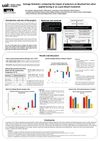
 Polymers help reduce damage and improve bleached hair when used during or after bleaching.
31 citations
,
August 2023 in “ACS Applied Bio Materials” The hydrogels are strong, self-healing, and good for 3D printing and delivering treatments.
 April 2026 in “Lithuanian University of Health Sciences”
 Cinnamic acid in hydrogels can effectively fight fungi but spreads less than in solution.
19 citations
,
January 2022 in “Journal of Nanomaterials” NH-Tween-80 is a promising stable gel for treating acne.
 20 citations
,
March 2020 in “International Journal of Biological Macromolecules”
20 citations
,
March 2020 in “International Journal of Biological Macromolecules” Lower acetylation makes chitin nanofibers thinner and more suitable for various uses.
 1 citations
,
January 2015 in “ADMET and DMPK”
1 citations
,
January 2015 in “ADMET and DMPK” Hyaluronan is a good drug delivery material because it sticks to mucosal areas and its drug release can be improved by changing its properties.
 2 citations
,
January 2008 in “Journal of Society of Cosmetic Chemists of Japan”
2 citations
,
January 2008 in “Journal of Society of Cosmetic Chemists of Japan” PMS nanoparticles improve damaged hair by protecting and restoring its surface and color.
 May 2026 in “Iranian journal of pharmaceutical research”
 HAMA hydrogels speed up skin wound healing by reducing inflammation and boosting collagen production.
July 2023 in “Nature Reviews Chemistry” A new method strengthens hair without using harmful chemicals.
 4 citations
,
August 2023 in “Materials”
4 citations
,
August 2023 in “Materials” New synthetic polymers help improve skin wound healing and can be enhanced by adding natural materials and medicines.
The research shows how certain drugs can form stable structures with polymers, which is important for making new pharmaceuticals.
18 citations
,
January 2000 in “Journal of Adhesion Science and Technology” Modified artificial hair with collagen improves tissue adhesion and is safe for long-term use.
 1 citations
,
July 2019 in “Microscopy Today”
1 citations
,
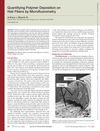
July 2019 in “Microscopy Today” Microfluorometry effectively measures how much polymer coats and penetrates hair, useful for evaluating hair products.
 16 citations
,
September 2018 in “Journal of Molecular Liquids”
16 citations
,
September 2018 in “Journal of Molecular Liquids” The PS-b-PAA copolymer nanomicelles are effective for delivering a cancer treatment drug in photodynamic therapy.