8 citations
,
September 2023 in “International Journal of Nanomedicine” A new lab-grown lung model helps study adenoviruses and test antiviral drugs.
Some vaccines, like the hepatitis B vaccine, might be linked to the hair loss condition Alopecia Areata, but more research is needed.
38 citations
,
January 2020 in “Cell Transplantation” Targeting ACE2 and TMPRSS2 may help prevent or treat COVID-19 in cancer patients.
 January 2021 in “International Journal of Dermatology”
 Possible link between COVID-19 and hair loss; more research needed.
6 citations
,
December 2022 in “Journal of Infection” The ACE1 gene variant doesn't affect long-COVID symptoms.
December 2024 in “Journal of Investigative Dermatology” People with androgenetic alopecia had milder COVID-19 symptoms during the Omicron wave in China.
July 2026 in “The Journal of Immunology” Prior infections reduced alopecia areata development in mice.
6 citations
,
May 2013 in “The Journal of Dermatology” Autoimmune reactions may cause both alopecia areata and HAM.
2 citations
,
July 2024 in “Indian Journal of Dermatology Venereology and Leprology” Children with atopic diseases have a higher risk of developing alopecia areata.
 1 citations
,
April 2019 in “The journal of investigative dermatology/Journal of investigative dermatology”
1 citations
,
April 2019 in “The journal of investigative dermatology/Journal of investigative dermatology” Melanocyte-associated antigens may play a key role in alopecia areata and could be targets for new treatments.
8 citations
,
May 2024 in “Journal of Medical Virology” COVID-19 increases the risk of hair loss, but vaccination can reduce this risk.
 June 2026 in “Archives of Dermatological Research”
 The rs4541843 variant is linked to higher risk and severity of alopecia areata.
6 citations
,
June 2023 in “Journal of the European Academy of Dermatology and Venereology” Inflammation damages sweat ducts, causing sweat gland injury.
May 2021 in “Immunology and Infectious Diseases” Viruses continue to challenge human health despite medical advances.
 June 2023 in “SPIRE - Sciences Po Institutional REpository”
 Extracellular vesicles and androgen receptors may help identify prostate cancer resistance and reduce SARS-CoV-2 infection.
 1 citations
,
September 2023 in “Clinical, cosmetic and investigational dermatology”
1 citations
,
September 2023 in “Clinical, cosmetic and investigational dermatology” Certain genetic variants linked to immune response increase the risk of alopecia areata in Taiwanese people.
 7 citations
,
March 2019 in “Frontiers in Cellular and Infection Microbiology”
7 citations
,
March 2019 in “Frontiers in Cellular and Infection Microbiology” Understanding how our bodies interact with mosquito-borne viruses is crucial because there are few treatments and vaccines.
COVID-19 may trigger or worsen rapid hair loss in alopecia areata.
 September 2023 in “Journal of the American Academy of Dermatology”
 The document concludes that more research is needed to confirm if COVID-19 vaccines cause a type of hair loss called alopecia areata.
7 citations
,
July 2024 in “Frontiers in Immunology” COVID-19 can increase the risk of hair loss, especially in people over 40.
October 2024 in “Frontiers in Immunology” Pertussis toxin may contribute to hair loss in alopecia areata.
 1 citations
,
June 2023 in “Dermatology and therapy”
1 citations
,
June 2023 in “Dermatology and therapy” People with Alopecia Areata have more herpes simplex infections but similar rates of cancer, blood clots, and heart disease compared to those without it.
4 citations
,
December 2022 in “Clinical and Experimental Dermatology” Alopecia areata doesn't significantly change the risk of common infections.
 23 citations
,
February 2021 in “Journal of Endocrinological Investigation”
23 citations
,
February 2021 in “Journal of Endocrinological Investigation” Betacoronaviruses, like COVID-19, may cause hormone system dysfunction and affect disease susceptibility and severity.
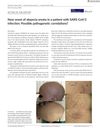 32 citations
,
March 2021 in “Journal of cosmetic dermatology (Print)”
32 citations
,
March 2021 in “Journal of cosmetic dermatology (Print)” COVID-19 infection may trigger alopecia areata in some patients.
 26 citations
,
June 2018 in “The journal of immunology/The Journal of immunology”
26 citations
,
June 2018 in “The journal of immunology/The Journal of immunology” AIRE-deficient rats developed severe autoimmune disease similar to APECED, useful for testing treatments.
1 citations
,
September 2021 in “DOAJ (DOAJ: Directory of Open Access Journals)” Alopecia areata patients often have other autoimmune diseases, especially women with nail issues or atopic diseases.
26 citations
,
September 2009 in “Clinical genetics” Arab APS1 patients have unique and recurrent AIRE gene mutations.
52 citations
,
June 1991 in “Journal of Virology” The hamster polyomavirus middle T antigen is linked to tumors in hamsters and associates with a specific tyrosine kinase.
 8 citations
,
October 2019 in “Immunological investigations”
8 citations
,
October 2019 in “Immunological investigations” The AIRE gene variant rs2075876 is linked to a higher risk of alopecia areata in males.