1 citations
,
October 2020 in “Research Square (Research Square)” Abnormal Wnt signaling in hair follicle stem cells can lead to acne-like cysts.
 75 citations
,
May 1986 in “Clinics in endocrinology and metabolism”
75 citations
,
May 1986 in “Clinics in endocrinology and metabolism” Male hormones are important for hair and oil gland development and can cause conditions like excessive hair growth and acne.
 23 citations
,
December 2004 in “Differentiation”
23 citations
,
December 2004 in “Differentiation” Sex hormones affect hair and feather growth and may help manage alopecia and hormone-dependent cancers.
January 2021 in “Figshare” Autophagy helps delay aging in mouse glands, maintains fat balance, and controls scent production.
May 2025 in “OPAL (Open@LaTrobe) (La Trobe University)” EX104 effectively promotes hair growth and regenerates follicles in androgenetic alopecia.
 April 2022 in “Jurnal Ilmiah Kesehatan Media Husada”
 Telogen effluvium is a common, reversible hair loss condition treatable with patient education and sometimes Minoxidil.
 12 citations
,
May 2016 in “British Journal of Dermatology”
12 citations
,
May 2016 in “British Journal of Dermatology” AGA progression involves increased lipid synthesis, electron transport, and hair follicle miniaturization.
 September 2019 in “The journal of investigative dermatology/Journal of investigative dermatology”
 Mouse skin glands need healthy nerves to grow properly during hair growth phases.
 December 2010 in “Faculty Opinions – Post-Publication Peer Review of the Biomedical Literature”
 New cells join the hair's dermal papilla during the growth phase, possibly affecting hair thickness.
20 citations
,
December 2019 in “International Journal of Molecular Sciences” HB-EGF boosts the hair growth ability of stem cells, making it a potential hair loss treatment.
 28 citations
,
October 2011 in “International Journal of Molecular Medicine”
28 citations
,
October 2011 in “International Journal of Molecular Medicine” Adenosine helps hair grow longer and stronger by boosting certain growth factors and signaling pathways.
10 citations
,
October 2000 in “PubMed” E6/E7 oncogenes in hair follicles cause continuous hair growth by skipping the resting phase.
10 citations
,
April 1979 in “American Journal of Veterinary Research” Canine circumanal glands develop from hair follicle sheath cells, not sebaceous glands, and lack exocrine ducts.
18 citations
,
June 1992 in “Acta Histochemica” Human hair follicles have a unique cell distribution and differentiation pattern during growth.
6 citations
,
August 2022 in “International journal of molecular sciences” α-Phellandrene may help prevent hair loss by increasing growth factors and cell growth in hair cells through a specific signaling pathway.
 1 citations
,
October 2020 in “Journal of Cosmetic Dermatology”
1 citations
,
October 2020 in “Journal of Cosmetic Dermatology” Possible link between hair loss and metabolic syndrome, with RANTES as a potential clue.
January 2002 in “Linchuang pifuke zazhi” A young woman had a rare scalp tumor usually found in older women.
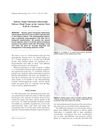 3 citations
,
May 2013 in “Pediatric Dermatology”
3 citations
,
May 2013 in “Pediatric Dermatology” A newborn girl had a rare case of salivary gland tissue on her chest, which was safely removed.
 June 2024 in “Skin Research and Technology”
 Red fluorescence in AGA scalps is linked to different microbes.
 128 citations
,
October 2011 in “Development”
128 citations
,
October 2011 in “Development” Activating a protein called β-catenin in adult skin can make it behave like young skin, potentially helping with skin aging and hair loss.
 31 citations
,
May 2019 in “Nature communications”
31 citations
,
May 2019 in “Nature communications” Single Blimp1+ cells can create functional sebaceous gland organoids in the lab.
20 citations
,
February 1977 in “The anatomical record” Excess vitamin A changes skin and hair follicle development and affects polysaccharide distribution.
12 citations
,
January 2022 in “Cells” Dermal papilla cell vesicles can boost hair growth genes in fat stem cells.
January 2026 in “Updates in clinical dermatology”  December 2023 in “bioRxiv (Cold Spring Harbor Laboratory)”
 Abnormal contraction of connective tissue in hair follicles causes hair loss by killing off important cells, and treating this could improve hair growth.
January 2022 in “Clinical Cases in Dermatology” A woman's scalp nodule was a common, harmless pilar cyst, treated by surgical removal.
 6 citations
,
April 1996 in “Journal of histochemistry and cytochemistry/The journal of histochemistry and cytochemistry”
6 citations
,
April 1996 in “Journal of histochemistry and cytochemistry/The journal of histochemistry and cytochemistry” TGF-alpha is present in sheep and ferret skin and may affect hair growth without directly stimulating cell proliferation.
 47 citations
,
October 2016 in “Molecular and Cellular Endocrinology”
47 citations
,
October 2016 in “Molecular and Cellular Endocrinology” Androgens prevent hair growth by changing Wnt signals in cells.
 25 citations
,
April 2015 in “Journal of Investigative Dermatology”
25 citations
,
April 2015 in “Journal of Investigative Dermatology” GasderminA3 is important for normal hair cycle transitions by controlling Wnt signaling.