 25 citations
,
April 2015 in “Journal of Investigative Dermatology”
25 citations
,
April 2015 in “Journal of Investigative Dermatology” GasderminA3 is important for normal hair cycle transitions by controlling Wnt signaling.
 November 2022 in “Scientific Data”
 The research identified genes and non-coding RNAs in cells that could be affected by testosterone, which may help understand hair loss and prostate cancer.

Androgenetic alopecia is a common type of hair loss in men and women, caused by a testosterone byproduct affecting hair follicles, with sensitivity determined by genetics.
7 citations
,
August 2012 in “The Journal of Urology” Women with congenital adrenal hyperplasia showed no prostatic growth.
 July 2018 in “Elsevier eBooks”
 Acne keloidalis nuchae is a chronic skin condition more common in African men, causing itchy or painful bumps and can lead to permanent hair loss if not treated early.
 19 citations
,
September 2011 in “Journal of Dermatological Science”
19 citations
,
September 2011 in “Journal of Dermatological Science” TGF-β1 increases androgen receptor activity in hair loss, but Hic-5/ARA55 can counter this effect.
33 citations
,
January 2000 in “Acta Oto-Laryngologica” Epidermal growth factor increases extra hair cells in newborn rat ears.
April 2014 in “The FASEB Journal” Women with androgenetic alopecia often have other symptoms of high androgen levels, requiring further hormone testing.
 23 citations
,
June 2006 in “Journal of Investigative Dermatology”
23 citations
,
June 2006 in “Journal of Investigative Dermatology” Men with baldness have higher levels of specific proteins, suggesting local hormone production may play a role in hair loss.
 6 citations
,
March 2022 in “PLoS ONE”
6 citations
,
March 2022 in “PLoS ONE” Centipedegrass extract may promote hair growth by activating certain cell pathways.
January 2010 in “International Journal of Dermatology and Venereology” Dermal papilla cells play a key role in hair loss by responding to androgens.
3 citations
,
December 2013 in “American Journal of Dermatopathology” A rare skin growth in a baby was successfully removed without coming back.
 March 2026 in “Editora Pasteur eBooks”
 Early diagnosis and a combination of treatments can effectively manage hair loss and improve quality of life.
September 1978 in “Journal of steroid biochemistry/Journal of Steroid Biochemistry” 9 citations
,
March 2009 in “Endocrine Practice”  2 citations
,
July 2021 in “Annales De Dermatologie Et De Venereologie”
2 citations
,
July 2021 in “Annales De Dermatologie Et De Venereologie” Vulvar acne, also known as "vulvar Fordyce adenitis", is a condition causing painful bumps on the labia, and it's not always effectively treated with common acne medications, but isotretinoin has shown promise.
192 citations
,
October 1998 in “Experimental Dermatology” Androgenetic alopecia involves complex hair follicle changes and knowledge gaps remain.
December 1990 in “PubMed” Topical 17 alpha-propylmesterolone increases hair cell growth in androgenetic alopecia.
 4 citations
,
January 2018 in “Advances in Experimental Medicine and Biology”
4 citations
,
January 2018 in “Advances in Experimental Medicine and Biology” The document concludes that hair follicles have a complex environment and our understanding of it is growing, but there are limitations when applying animal study findings to humans.
 18 citations
,
February 2014 in “PubMed”
18 citations
,
February 2014 in “PubMed” Androgenetic alopecia is a common hair loss condition caused by testosterone effects on hair follicles, leading to thinner, shorter, and less pigmented hair, diagnosed using scalp dermoscopy and treated with topical minoxidil, antiandrogen agents, and 5-alpha reductase inhibitors.
178 citations
,
April 2011 in “Journal of Clinical Investigation” Basal cell carcinomas in mice can start from hair follicle stem cells and other skin cell types, depending on signaling levels.
 54 citations
,
January 2016 in “Cell reports”
54 citations
,
January 2016 in “Cell reports” Activating β-catenin in different skin stem cells causes various types of hair growth and skin tumors.
11 citations
,
October 2002 in “The Journal of Clinical Endocrinology & Metabolism” Enzyme activities do not cause early pubic hair in these girls.
 7 citations
,
June 2019 in “Australasian Journal of Dermatology”
7 citations
,
June 2019 in “Australasian Journal of Dermatology” AGA in children needs careful diagnosis due to low androgen levels and possible other causes.
 2 citations
,
January 2017 in “Skin appendage disorders”
2 citations
,
January 2017 in “Skin appendage disorders” Women with and without hair loss have similar amounts of exogen hairs, so these hairs are not a key factor in hair loss conditions.
 22 citations
,
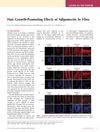
June 2012 in “Journal of Investigative Dermatology”
22 citations
,
June 2012 in “Journal of Investigative Dermatology” Adiponectin may stimulate hair growth and could be a potential treatment for promoting hair growth.
January 2022 in “Figshare” Autophagy helps mouse glands stay healthy, prevents early aging, and maintains their oil and scent production.
 4 citations
,
October 2018 in “Experimental Dermatology”
4 citations
,
October 2018 in “Experimental Dermatology” Dermoscopy shows that diffuse alopecia areata progresses through specific hair growth stages.
 March 2024 in “Bioactive Materials”
 New treatment using engineered nanovesicles in hydrogel improves hair growth by repairing hair follicle cells in a mouse model of hair loss.
9 citations
,
July 1993 in “The journal of investigative dermatology/Journal of investigative dermatology” Sex hormones and antiandrogens can either stimulate or inhibit human hair follicle cell growth depending on the dose.