 4 citations
,
November 2021 in “Pharmaceuticals”
4 citations
,
November 2021 in “Pharmaceuticals” Paeonia lactiflora and Poria cocos extracts can potentially increase hair growth and reduce hair loss symptoms by lowering testosterone and inflammation levels.
 2 citations
,
January 2023 in “BioMed Research International”
2 citations
,
January 2023 in “BioMed Research International” Beetroot extract nanogel may help treat hair loss caused by testosterone.
1 citations
,
February 2024 in “Diversity” African plants can treat hair issues and may help with diabetes.
 1 citations
,
December 2022 in “Pharmaceuticals”
1 citations
,
December 2022 in “Pharmaceuticals” Noni fruit extract, specifically the FEA-3 sub-fraction, can increase hair growth and reduce baldness in male rabbits, potentially acting like common hair loss treatments.

Cetirizine-loaded gel may effectively promote hair growth in alopecia.

Ganoderma lucidum extract promotes hair growth in bald rats, with higher doses producing better results, similar to the effects of Minoxidil 2%.
 4 citations
,
October 2016
4 citations
,
October 2016 Herbs like aloe vera and amla are effective and safe for treating hair loss.
 March 2025 in “HAL (Le Centre pour la Communication Scientifique Directe)”
 De nouvelles thérapies promettent de mieux traiter la perte de cheveux due à l'alopécie androgénétique.
 35 citations
,
January 1996 in “Dermatologic clinics”
35 citations
,
January 1996 in “Dermatologic clinics” Tinea capitis is a common scalp infection causing hair loss, mostly in young children.
14 citations
,
January 2010 in “Dermatology” Some people with congenital triangular alopecia have a central tuft of hair in the bald patch, but the cause is unknown.
 April 2016 in “JAMA Dermatology”
 Baseball caps don't fully protect bald spots on the back of the head from sun damage; wear wide-brimmed hats or use sunscreen.
April 2023 in “The Medical Journal of Australia” A five-year-old girl has a harmless, unchanging bald patch on her scalp.
 4 citations
,
May 2015 in “Indian Journal of Dermatology, Venereology and Leprology”
4 citations
,
May 2015 in “Indian Journal of Dermatology, Venereology and Leprology” Congenital triangular alopecia can occur outside the typical fronto-temporal region.
2 citations
,
February 1945 in “Archives of Dermatology and Syphilology” Alopecia in the woman was likely caused by vitamin A deficiency, not a fungal infection.
3 citations
,
January 2011 in “International Journal of Trichology” Tinea capitis affects only a specific hair area, not deeper parts.
March 2024 in “Clinical Case Reports” Early detection of tinea capitis is possible by spotting specific hair patterns like comma or corkscrew hairs.
Visible lesions are not always needed to diagnose tinea capitis.
 January 2018 in “Springer eBooks”
 Congenital triangular alopecia is a harmless, non-spreading hair loss condition often seen in young children.
November 2021 in “CRC Press eBooks” Tinea capitis is a fungal infection of the scalp that mainly affects children and can cause symptoms from mild itching to severe inflammation.
April 2025 in “Indian Journal of Paediatric Dermatology” Trichorrhexis invaginata can occur with tinea capitis, though it's rare.
May 2020 in “The Journal of Pediatrics” Tinea capitis can be quickly diagnosed and treated using dermoscopy to prevent hair damage.
 5 citations
,
October 2018 in “Dermatologic therapy”
5 citations
,
October 2018 in “Dermatologic therapy” Recognizing congenital triangular alopecia is crucial to avoid unnecessary treatments.
January 2023 in “Indian Dermatology Online Journal” A 23-year-old man has a benign, non-progressive hair loss patch that doesn't respond to treatment but can be cosmetically treated.
July 2024 in “Indian Dermatology Online Journal” Tinea capitis can occur in adults and should be considered if scalp issues persist.
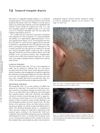 April 2012 in “Informa Healthcare eBooks”
 Temporal triangular alopecia is a lifelong condition with hairless patches on the side of the head that may be present from birth.

A woman with a rare hair loss condition developed skin cancer in the bald area.
July 2026 in “Cosmoderma” Trichoscopy can identify specific hair patterns in tinea capitis before and after treatment.
52 citations
,
April 2000 in “International Journal of Dermatology” Tinea capitis in Benghazi mainly affects children under 10, with Trichophyton violaceum as the leading cause.
5 citations
,
June 2016 in “JAMA Dermatology” People with hair loss should use strong sun protection to prevent scalp skin cancer.
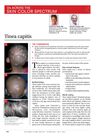 October 2022 in “The Journal of Family Practice”
 Tinea capitis is a scalp fungal infection in children that can cause hair loss, scaling, and other symptoms.