Search
for
Sort by
Research
210-240 / 1000+ resultsresearch “EFFECT OF JALUAKAVACHARAN IN MANAGEMENT OF INDRALUPTA WITH SPECIAL REFERENCE TO ALOPECIA AREATA-A CASE STUDY”
Ayurvedic treatment may help manage alopecia areata.
research 42736 Safety Assessments in the Multinational Phase 3 THRIVE-AA1 Trial with CTP-543 (Deuruxolitinib) in Adult Patients with Moderate to Severe Alopecia Areata
CTP-543 is generally safe for treating alopecia areata.
research Cytotoxicity of bendamustine, alone and in combination with novel agents, toward adult T-cell leukemia cells
Bendamustine combined with tucidinostat may effectively treat adult T-cell leukemia.

research Citrullination at the Inflammatory Skin Barrier
A potential treatment for atopic dermatitis could be to increase PADI1 expression to improve skin barrier function.
research Aceclofenac-induced erythema annulare centrifugum
A woman got a skin rash from taking aceclofenac, which went away after she stopped the drug.
research A case of unilateral congenital triangular alopecia
A 5-year-old boy was diagnosed with congenital triangular alopecia, a type of hair loss without skin changes, usually starting between ages 2-5, with no specific treatment.
research Fluridil, a Rationally Designed Topical Agent for Androgenetic Alopecia
Fluridil safely promotes hair growth in men with androgenetic alopecia.
research TON1 recruiting motif 21 positively regulates the flavonoid metabolic pathway at the translational level in Arabidopsis thaliana
TRM21 helps control flavonoid production and root hair growth in Arabidopsis thaliana.

research Alopecia secondary to severe discoid lupus responding to anifrolumab
Anifrolumab significantly improved skin lesions and hair regrowth in severe discoid lupus.

research Vitamin D and its Analogs in Treatment of Mild to Moderate Alopecia Areata: Systematic Review and Meta-Analysis.
Vitamin D3 helps treat mild to moderate alopecia areata, especially when combined with other treatments.
research Selective isomerization of α-pinene oxide to campholenic aldehyde by ionic liquid-supported indenyl-molybdenum(II)-bipyridine complexes
The process efficiently converts α-pinene oxide to campholenic aldehyde using a special catalyst, achieving high yields quickly.
research Fluridil, a Rationally Designed Topical Agent for Androgenetic Alopecia: First Clinical Experience
Fluridil safely promotes hair growth in men with androgenetic alopecia.
research CARI ONE Induces Anagen Phase of Telogenic Hair Follicles Through Regulation of β-Catenin, Stimulation of Dermal Papilla Cell Proliferation, and Melanogenesis
CARI ONE helps start hair growth and makes hair follicles bigger and more numerous.
research Triangular temporal alopecia: a rare case in adulthood
Triangular temporal alopecia can occur in adults and should be correctly identified to prevent misdiagnosis.
research Rare Earth Elements: therapeutic and diagnostic applications in modern medicine
Rare earth elements are crucial in medical imaging and cancer treatment.
research Study of the interaction between self-assembling peptide and mangiferin and in vitro release of mangiferin from in situ hydrogel
RADA16-I can effectively deliver and release mangiferin, improving its solubility and bioavailability.

research 583 Induction of type 17 collagen decreases ultraviolet b-induced cellular senescence in human htert/ker-ct keratinocytes
Increasing type 17 collagen reduces aging signs in skin cells caused by UV light.
research Alopecia areata incognito: A rare cause of hair loss in children
Alopecia areata incognito in children can be effectively treated with triamcinolone acetonide and supplements, leading to full hair regrowth.
research Higher concentrations of dithranol appear to induce hair growth even in severe alopecia areata
Higher concentrations of dithranol can help regrow hair in severe alopecia areata.
research FORMULATION AND EVALUATION OF TRIAMCINOLONE ACETONIDE SERUM WITH DERMA STAMP ASSISTED DELIVERY FOR THE MANAGEMENT OF ALOPECIA AREATA
The serum with microneedling effectively treats alopecia areata by enhancing drug delivery and is safe and patient-friendly.
research Hacia una oscuridad luminosa de las circunstancias
Cornifin-alpha/SPRR1 is increased in certain skin conditions and by specific treatments.
research 308-nm excimer laser therapy in alopecia areata
The 308-nm excimer laser helps hair regrowth in some alopecia areata cases but not all.
research AYURVEDIC MANAGEMENT OF INDRALUPTA (ALOPECIA AREATA) IN CHILDREN: A CASE STUDY
Ayurvedic treatment helped a 12-year-old boy regrow hair safely.
research Trichoadenoma of vulva: A rare case with rare site of presentation
A rare non-cancerous tumor that grows like hair was found in an unusual spot, the vulva.
research A case of refractory alopecia areata successfully treated by combining delgocitinib ointment with excimer laser
Combining delgocitinib ointment with excimer laser can effectively treat severe alopecia areata.
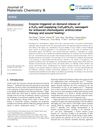
research Enzyme-triggered on-demand release of a H2O2-self-supplying CuO2@Fe3O4 nanoagent for enhanced chemodyamic antimicrobial therapy and wound healing
A new nanoagent effectively kills bacteria and speeds up wound healing.

research ApoBDs: a paradigm shift from cellular debris to therapeutic vehicles
ApoBDs, once seen as waste, are now viewed as potential tools for disease treatment and tissue repair.
research Cell observation method under near-living conditions by scanning electron microscopy
The method using ionic liquid improves observation of cell structures with less damage.
research Upadacitinib Therapy in Adolescent Severe Alopecia Areata: A Case Series and Narrative Review
Upadacitinib is effective and safe for treating severe Alopecia Areata in adolescents.