July 2024 in “International Journal of Molecular Sciences” The inhibitor DPP can promote hair growth.
 July 2024 in “Experimental Dermatology”
 AP collagen peptides help hair grow and improve hair health.
 December 2019 in “Fayoum University Medical Journal”
 People with Alopecia areata have higher levels of prostaglandin D2 in their blood and tissues.
2 citations
,
August 2025 in “Pharmaceutics” PN hydrates skin; PDRN heals and regenerates skin and hair.
 January 2024 in “Archives of Biological Sciences (Beograd)”
 AP collagen peptides may help hair grow better and become stronger.
PDGF signaling is crucial for cell development, wound healing, and fluid regulation in the body.
258 citations
,
July 2005 in “Journal of lipid research” DGAT1 enzyme helps make diacylglycerols, waxes, and retinyl esters.
 October 2025 in “Proceedings of the National Academy of Sciences”
 Phospholipids help plant proteins move by regulating receptor interactions.
 1 citations
,
February 2022 in “bioRxiv (Cold Spring Harbor Laboratory)”
1 citations
,
February 2022 in “bioRxiv (Cold Spring Harbor Laboratory)” A peptide from hair follicle stem cells promotes hair growth by activating specific skin cells.
November 2024 in “Journal of Investigative Dermatology” Adrenomedullin 2 stops cell growth and causes cell death in human hair follicles.
 22 citations
,
June 2012 in “Journal of Investigative Dermatology”
22 citations
,
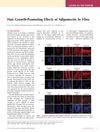
June 2012 in “Journal of Investigative Dermatology” Adiponectin may stimulate hair growth and could be a potential treatment for promoting hair growth.
1 citations
,
September 1986 in “Journal of the Forensic Science Society” Hair root sheaths can be used to accurately analyze genetic markers.
October 2012 in “Institutional Repositories DataBase (IRDB)” Stem cell treatment can effectively regrow hair.
75 citations
,
June 2007 in “Journal of Biological Chemistry” MT-DADMe-ImmA can selectively kill head and neck cancer cells without harming normal cells.
September 2025 in “Stem Cell Research & Therapy” TAZ boosts fat cell formation in goat stem cells by activating a specific signaling pathway.
 April 2016 in “Journal of Investigative Dermatology”
 A peptide known for reducing wrinkles also effectively inhibits an enzyme linked to skin inflammation and acne.
The enzyme Dgat1 is essential for healthy hair and skin by controlling retinoid levels.
26 citations
,
January 1992 in “Carcinogenesis” TPA strongly increases ODC activity in certain skin cells, potentially aiding tumor growth.
 1 citations
,
April 2016 in “Journal of Investigative Dermatology”
1 citations
,
April 2016 in “Journal of Investigative Dermatology” Prostaglandin D2 increases testosterone levels in skin cells through reactive oxygen species, not enzymes, which could lead to new hair loss treatments.
 2 citations
,
January 2013 in “International Journal of Dermatology”
2 citations
,
January 2013 in “International Journal of Dermatology” ALDOA levels drop in hair cells during hair loss.
19 citations
,
March 1975 in “British Journal of Dermatology” A new method accurately measures cyclic AMP levels in small skin and hair samples.
 12 citations
,
November 2003 in “Journal of the American Academy of Dermatology”
12 citations
,
November 2003 in “Journal of the American Academy of Dermatology” Topical diphencyprone helped regrow hair in mice and rats with a condition similar to human hair loss.
January 2026 in “Materialia” Porcine ADM scaffold helps hair growth in mice.
27 citations
,
July 2020 in “Stem Cells International” ADSC therapy is more effective and safer for treating photoaged skin than PRP.
7 citations
,
January 1971 in “Archives of Dermatological Research”  12 citations
,
June 2019 in “Psychoneuroendocrinology”
12 citations
,
June 2019 in “Psychoneuroendocrinology” Allopregnanolone is needed for certain brain processing issues caused by D1 dopamine receptor activation.
18 citations
,
December 2016 in “European journal of pharmacology” A new compound slows cancer cell growth and causes cell death by blocking cell cycle progression and increasing cell-damaging molecules.
147 citations
,
August 2005 in “The Plant Cell” The TIP1 gene is crucial for normal plant cell growth in Arabidopsis.
124 citations
,
November 2000 in “The journal of investigative dermatology/Journal of investigative dermatology” PAD3 plays a key role in hair and skin protein structure and may be linked to skin diseases.
2 citations
,
October 2023 in “Philosophical Transactions of the Royal Society B Biological Sciences” Different PADI isoforms help cells develop diverse functions.