6 citations
,
January 1988 in “PubMed” Swimming in pools with high copper can turn hair green, especially if hair is damaged.
 4 citations
,
August 2023 in “Italian Journal of Food Science”
4 citations
,
August 2023 in “Italian Journal of Food Science” Pretreatment methods can enhance bioactive content in lactogenic herbs.
4 citations
,
October 2007 in “PubMed” Polyquaternium-70 shampoo is best for reducing frizz.
3 citations
,
October 2018 in “Journal of Mind and Medical Sciences” Biological therapy boosts the immune system to effectively fight melanoma.
 1 citations
,
May 2026 in “Environmental Health Engineering and Management”
1 citations
,
May 2026 in “Environmental Health Engineering and Management” Sawdust can effectively remove thallium from water.
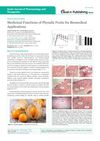 May 2021 in “Austin journal of pharmacology and therapeutics”
 Physalis fruits have medicinal properties that can help treat various diseases and have anti-inflammatory, antioxidant, antibacterial, and antitumor effects.
 August 2012 in “Journal of Evidence-Based Medicine”
 The issue discussed China's research contributions, systematic review improvements, and featured various medical studies and trials.
7 citations
,
June 2019 in “Coloration Technology” Translucent keratin films are better for testing hair dyes.
17 citations
,
September 2022 in “Biomaterials Research” The film-trigger applicator improves microneedle skin delivery and drug efficiency using simple finger force.
68 citations
,
February 2011 in “European Journal of Pharmaceutics and Biopharmaceutics” Keratin films from human hair can potentially replace human nail plates for drug testing.
January 2019 in “FarFar - Pharmacy Repository” Microemulsions improve adapalene's skin absorption for better acne treatment.
September 2025 in “Acta Biomaterialia” A new tissue adhesive helps wounds heal better by allowing more cells to enter.
 26 citations
,
March 2014 in “International journal of pharmaceutics”
26 citations
,
March 2014 in “International journal of pharmaceutics” Researchers created a skin treatment that could effectively deliver medication into hair follicles.
50 citations
,
December 2017 in “Nanoscale” Polymeric micelle nanocarriers deliver adapalene more effectively to hair follicles than commercial products.
January 2025 in “SSRN Electronic Journal” July 2019 in “Ferroelectrics” More human hair protein makes the films weaker and less clear.
November 2025 in “ACS Omega” The films can help heal wounds by promoting blood vessel growth.
 22 citations
,
September 2019 in “ACS omega”
22 citations
,
September 2019 in “ACS omega” The new nanocomposite films are stronger, protect against UV, speed up wound healing, and are antibacterial without being toxic.
42 citations
,
August 2016 in “Nanomedicine” The new adapalene formulation using TyroSpheres is more effective and less irritating for acne treatment.
 June 2026 in “Gümüşhane Üniversitesi Fen Bilimleri Enstitüsü Dergisi”
 PVA/agar films with Achillea millefolium essential oil are promising for wound dressings due to good strength and selective antibacterial effects.
28 citations
,
September 2023 in “International Journal of Biological Macromolecules” The new dressing speeds up wound healing better than current options.
 March 2025 in “Advanced Healthcare Materials”
 The dressing speeds up wound healing using sound waves without needing extra devices.
 3 citations
,
January 2015 in “Sen i Gakkaishi”
3 citations
,
January 2015 in “Sen i Gakkaishi” The new keratin film without KAPs stains better and could help study keratin functions.
3 citations
,
May 2012 in “Journal of Biological Macromolecules” Keratin film can effectively mimic human hair for testing hair damage.
13 citations
,
January 2024 in “Journal of Nanobiotechnology” The new wound dressing improves healing and tissue repair better than conventional dressings.
April 2017 in “DR-NTU (Nanyang Technological University)” A biodegradable system can deliver finasteride consistently, reducing the need for daily pills.
3 citations
,
December 2021 in “Materials today communications” A new film made from human hair supports skin cell growth better than collagen.
8 citations
,
November 2019 in “International Journal of Pharmaceutics” The method improves acne treatment by enhancing drug delivery and reducing skin irritation.
 10 citations
,
January 2012 in “Journal of Biological Macromolecules”
10 citations
,
January 2012 in “Journal of Biological Macromolecules” Keratin film can effectively replace human hair for testing hair damage.
 17 citations
,
June 2017 in “Journal of pharmaceutical sciences”
17 citations
,
June 2017 in “Journal of pharmaceutical sciences” Researchers developed a nanomedicine for acne treatment that delivers medication with less irritation and is non-irritating for oily skin.