 3 citations
,
August 2021 in “Research Square (Research Square)”
3 citations
,
August 2021 in “Research Square (Research Square)” The most common sign of aging at the gene level is more Ectodysplasin A2 Receptor (EDA2R) being made.
1 citations
,
January 2019 in “Zenodo (CERN European Organization for Nuclear Research)” Eclipta alba has unique stem, leaf, and root features, including air cavities and secretory structures.
7 citations
,
September 2024 in “PLANT PHYSIOLOGY” RALF22 is essential for root hair growth in response to fungal emissions in Arabidopsis.
June 2024 in “Current Developments in Nutrition” KeraGLO improves skin and hair health.
May 2025 in “Texas Digital Library (University of Texas)” Extracellular ATP promotes growth, while adenosine inhibits it in Arabidopsis plants.
 26 citations
,
June 2018 in “The journal of immunology/The Journal of immunology”
26 citations
,
June 2018 in “The journal of immunology/The Journal of immunology” AIRE-deficient rats developed severe autoimmune disease similar to APECED, useful for testing treatments.
66 citations
,
February 2013 in “PeerJ” Activating cannabinoid receptor 1 reduces certain keratin levels, potentially aiding psoriasis treatment.
3 citations
,
September 2025 in “Plant Signaling & Behavior” Apyrase enzymes control ATP levels in Arabidopsis root growth zones.
24 citations
,
May 2017 in “Annals of botany” Pathogenic Pseudomonas syringae bacteria stimulate early root hair growth in Arabidopsis plants.
 19 citations
,
January 2009 in “Journal of Young Pharmacists”
19 citations
,
January 2009 in “Journal of Young Pharmacists” Alcoholic extract of Eclipta alba may help treat allergies and is safe at high doses.
3 citations
,
July 2017 in “Journal of Investigative Dermatology” SSEA-4 can distinguish between eccrine and apocrine sweat gland ducts.
37 citations
,
December 2020 in “PLANT PHYSIOLOGY” A mutant FERONIA gene affects root hair growth at high temperatures.
109 citations
,
February 2018 in “CB/Current biology” ERULUS controls root hair growth by regulating cell wall composition and pectin activity.
612 citations
,
February 2004 in “Nature” OXI1 kinase is essential for plant defense and root hair growth in Arabidopsis.
3 citations
,
May 2025 in “Plant Cell & Environment” CLE14 peptide promotes root hair growth in Arabidopsis.
 January 2023 in “Frontiers in bioscience”
 Artemis protein may help control hair growth and health by influencing cell processes.
33 citations
,
February 2012 in “British Journal of Dermatology” Mutations in the p63 gene affect skin adhesion, barrier integrity, and hair growth.
January 2016 in “Texas ScholarWorks (Texas Digital Library)” DORN1 receptor affects eATP-induced stomatal changes but not eADP in Arabidopsis thaliana.
 2 citations
,
September 1980 in “Experientia”
2 citations
,
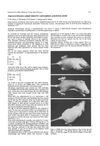
September 1980 in “Experientia” Polyethylene alanine caused hair loss in young lab animals but not in adults, with hair regrowth occurring within 20 days.
Defective protein folding due to a mutation is key in ANE syndrome.
7 citations
,
December 2023 in “International Journal of Molecular Sciences” Forsythiaside A helps protect cells and liver from damage by reducing oxidative stress and boosting antioxidants.
 December 2022 in “Frontiers in plant science”
 CCDC22 and CCDC93 are essential for root and root hair growth in Arabidopsis.
ANE syndrome is caused by a mutation in the RBM28 protein that disrupts ribosome assembly.
 5 citations
,
September 2022 in “Antioxidants”
5 citations
,
September 2022 in “Antioxidants” A substance from Caulerpa racemosa seaweed may protect against skin damage caused by air pollution by reducing oxidative stress and cell death.
 April 2026 in “Journal of Microbiology Biotechnology and Food Sciences”
 Carthamus caeruleus leaves are a good source of natural antioxidants and antibacterial agents.
March 2026 in “JID Innovations” Aire mutation reduces alopecia areata, while Notch4 mutation prevents it in mice.
 May 2017 in “bioRxiv (Cold Spring Harbor Laboratory)”
 The peach gene pCTG134 helps control the interaction between auxin and ethylene hormones during fruit ripening.
January 2012 in “Journal of Northwest A & F University” The Eda gene helps regulate the hair cycle in goats.
 February 2024 in “Archiv EuroMedica”
 Annurca apple extract may help with hair growth and prevent hair loss.
25 citations
,
May 2019 in “Cosmetics” 18-MEA and cationic surfactants can restore and maintain hair's hydrophobic nature, improving its beauty and feel.