1 citations
,
June 2025 in “Journal of Clinical Medicine” Frontal fibrosing alopecia often occurs after menopause, with delayed diagnosis and possible links to certain medications and conditions.
 7 citations
,
August 2018 in “The American Journal of Dermatopathology”
7 citations
,
August 2018 in “The American Journal of Dermatopathology” Researchers found a new early sign of Frontal Fibrosing Alopecia that could help avoid misdiagnosis.
 1 citations
,
July 2020 in “Benha Journal of Applied Sciences”
1 citations
,
July 2020 in “Benha Journal of Applied Sciences” Trichoscopy is useful for diagnosing Frontal Fibrosing Alopecia.
 20 citations
,
April 2011 in “British Journal of Dermatology”
20 citations
,
April 2011 in “British Journal of Dermatology” Reflectance confocal microscopy can tell apart white dots on the scalp as either sweat gland ducts or hair follicle openings.
 April 2023 in “World Journal Of Advanced Research and Reviews”
 Cosmetic products or emotional factors might contribute to Frontal Fibrosing Alopecia, and trichoscopy is useful for diagnosis.
 18 citations
,
June 2017 in “Journal of The American Academy of Dermatology”
18 citations
,
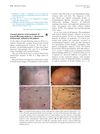
June 2017 in “Journal of The American Academy of Dermatology” Trichoscopy helps diagnose frontal fibrosing alopecia, even with unusual patterns.
November 2022 in “Journal of Investigative Dermatology” A new tool helps study hair follicle cells to develop better treatments for hair disorders.
 5 citations
,
February 2015 in “Dermatologica Sinica”
5 citations
,
February 2015 in “Dermatologica Sinica” Computer-aided imaging system helps measure balding area in female pattern hair loss.
 May 2019 in “Anais brasileiros de dermatologia/Anais Brasileiros de Dermatologia”
 Frontal fibrosing alopecia mostly affects postmenopausal women, with diagnosis often delayed by 3 years.
 1 citations
,
September 2021 in “CRC Press eBooks”
1 citations
,
September 2021 in “CRC Press eBooks” Frontal Fibrosing Alopecia is a hair loss condition mainly affecting postmenopausal women, with unclear causes and various clinical patterns.
June 2026 in “British Journal of Dermatology” Amivantamab treatment often causes skin issues that can affect quality of life and treatment continuation.
10 citations
,
January 2020 in “Royal Society Open Science” A new automated method accurately measures hair damage using microscopic images.
February 2025 in “Journal of the European Academy of Dermatology and Venereology” UVFD helps detect hair follicles in alopecia areata better than traditional methods.
August 2020 in “Benha Journal of Applied Sciences” Higher FABP4 levels may help diagnose androgenetic alopecia early.
 March 2026 in “Zenodo (CERN European Organization for Nuclear Research)”
 The N-K GM Series offers a new method to reduce aflatoxin poisoning and cancer, improving health and saving costs in affected regions.
 March 2023 in “Journal of Cosmetic Dermatology”
 A woman's progressive hair loss was correctly diagnosed as a rare condition called fibrosing alopecia in a pattern distribution after initially being mistaken for a more common type.
September 2023 in “JEADV Clinical Practice” Dermoscopy helps diagnose folliculotropic mycosis fungoides by identifying specific skin patterns.
29 citations
,
August 2011 in “PubMed” Polymeric pretreatments can significantly reduce hair breakage and damage from hot flat irons.
8 citations
,
January 2014 in “Indian Journal of Paediatric Dermatology” Congenital atrichia with papular lesions causes permanent hair loss and skin bumps from birth.
2 citations
,
June 2013 in “In Vitro Cellular & Developmental Biology - Animal” Melanocytes from human fetal hair follicles were successfully cultured, showing potential for hair disease research and clinical use.
Applying conditioner in the middle of a perm process reduces hair damage.
January 2012 in “Jounal of The Korean Society of cosmetology” Applying conditioner mid-treatment reduces hair damage during perms.
 33 citations
,
August 2013 in “British Journal of Dermatology”
33 citations
,
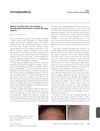
August 2013 in “British Journal of Dermatology” Lack of small, fine hair on the front hairline is a key sign of frontal fibrosing alopecia.
 October 2010 in “Reproductive Biomedicine Online”
 A new method can almost perfectly distinguish adenomyosis from similar conditions using blood tests.
 August 2021 in “Acta Haematologica Polonica”
 Folliculotropic mycosis fungoides has a worse prognosis than other types, with survival rates varying significantly based on subtype and organ involvement.
2 citations
,
July 2025 in “Scientific Reports” Acinetobacter strain A1-4-2 can safely clean water pollutants.
2 citations
,
August 2025 in “JAAD reviews.” Frontal fibrosing alopecia significantly affects men, often causing hair loss in eyebrows, beard, and sideburns.
 30 citations
,
December 2017 in “Journal of The American Academy of Dermatology”
30 citations
,
December 2017 in “Journal of The American Academy of Dermatology” New criteria for diagnosing frontal fibrosing alopecia include specific scalp and eyebrow hair loss as major factors and other hair loss areas and hair analysis as minor factors.
 2 citations
,
May 2025 in “Frontiers in Pharmacology”
2 citations
,
May 2025 in “Frontiers in Pharmacology” Aromatase inhibitors can cause skin issues, especially with anastrozole and exemestane, so monitoring is important.
20 citations
,
March 1975 in “Journal of steroid biochemistry/Journal of Steroid Biochemistry” The study concludes that a genetic mutation in TFM mice leads to reduced androgen receptor activity, affecting the body's response to male hormones.