9 citations
,
January 2009 in “Journal of the European Academy of Dermatology and Venereology” The cream effectively reduces excessive hair growth and related skin issues without side effects.
Genetic testing can help diagnose skin conditions but needs more research for full effectiveness.
 3 citations
,
February 2013 in “The Journal of Sexual Medicine”
3 citations
,
February 2013 in “The Journal of Sexual Medicine” Finasteride may cause lasting sexual side effects, but more research is needed.
1 citations
,
September 2024 in “Journal of the American Academy of Dermatology” Farudodstat may effectively treat alopecia areata without harmful side effects.
 May 2021 in “The FASEB Journal”
 The research gives new understanding on how human steroid 5α-reductases work and how drugs like finasteride inhibit them, which could help in creating new drugs.
Farudodstat may effectively treat alopecia areata by protecting hair follicles without harmful effects.
 August 2024 in “medRxiv (Cold Spring Harbor Laboratory)”
 Finasteride has various adverse effects, including sexual dysfunction and mental health issues, which vary by age and gender.
April 2026 in “Clinical and Translational Science” Tofacitinib effectively treats severe alopecia areata, improving hair regrowth and patient satisfaction.
 11 citations
,
January 2018 in “Acta dermato-venereologica”
11 citations
,
January 2018 in “Acta dermato-venereologica” Tofacitinib works better and is more tolerable for severe alopecia than conventional treatments and DPCP immunotherapy.
October 2021 in “European urology open science” 4 citations
,
January 2011 in “Dermatopathology” September 2025 in “Bioengineering” The framework helps predict adverse effects of blood thinners, improving drug selection for atrial fibrillation.
 October 2024 in “International Journal of Research in Dermatology”
 Tofacitinib is a promising and safe treatment for moderate to severe alopecia areata.
November 2013 in “Journal of clinical & experimental dermatology research” Dutasteride can help treat hair loss in both men and women.
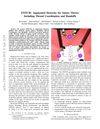 April 2024 in “arXiv (Cornell University)”
 STITCH improves suture accuracy and efficiency, especially with human help.
 August 2025 in “Editora Pasteur eBooks”
 Combining conventional and integrative treatments can help reduce hair loss and improve hair growth in women with androgenic alopecia.
 1 citations
,
July 2017 in “The Journal of Urology”
1 citations
,
July 2017 in “The Journal of Urology” Low-dose finasteride and dutasteride reduce PSA levels by 27.8% in men with male androgenetic alopecia.
 October 2015 in “Annals of Internal Medicine”
 Dutasteride, fesoterodine, and finasteride help older patients with urinary issues.
 61 citations
,
April 2014 in “The Journal of Steroid Biochemistry and Molecular Biology”
61 citations
,
April 2014 in “The Journal of Steroid Biochemistry and Molecular Biology” Finasteride affects brain and blood steroids, causing lasting sexual and emotional side effects.
February 2025 in “Journal of the European Academy of Dermatology and Venereology” Oral dutasteride is a recommended first treatment for frontal fibrosing alopecia.
3D-ultrasound can non-invasively detect and predict alopecia areata phases and outcomes.
23 citations
,
May 2017 in “Journal of the American Academy of Dermatology” FFA patients have fewer melanocytes and thinner skin compared to others.
 11 citations
,
October 1994 in “The Journal of Clinical Endocrinology and Metabolism”
11 citations
,
October 1994 in “The Journal of Clinical Endocrinology and Metabolism” Finasteride increases hair growth, prolongs hair cycle, and lowers dihydrotestosterone levels.
 77 citations
,
April 2009 in “British Journal of Dermatology”
77 citations
,
April 2009 in “British Journal of Dermatology” Aromatase gene variation may increase female hair loss risk.
 5 citations
,
July 2020 in “Journal of the American Academy of Dermatology”
5 citations
,
July 2020 in “Journal of the American Academy of Dermatology” Adding antihistamines to topical corticosteroid and cryotherapy may improve hair regrowth in alopecia areata patients.
 17 citations
,
June 1996 in “The Journal of Steroid Biochemistry and Molecular Biology”
17 citations
,
June 1996 in “The Journal of Steroid Biochemistry and Molecular Biology” FCE 28260 is a stronger and longer-lasting inhibitor of 5α-reductase than finasteride, which may make it a better treatment for certain medical conditions.
 7 citations
,
June 2020 in “Translational Andrology and Urology”
7 citations
,
June 2020 in “Translational Andrology and Urology” Finasteride for hair loss may cause lasting sexual, genitourinary, mental, and anti-androgenic side effects in young men.
 49 citations
,
December 2007 in “Journal of Cataract and Refractive Surgery”
49 citations
,
December 2007 in “Journal of Cataract and Refractive Surgery” Finasteride may cause floppy-iris syndrome during cataract surgery, so check patients' medical history.