 1 citations
,
September 2015 in “Clinics in Dermatology”
1 citations
,
September 2015 in “Clinics in Dermatology” The guide helps doctors diagnose hair problems by suggesting a thorough patient history, physical exams, and various diagnostic tools.
 February 2026 in “Frontiers in Medicine”
 Fibrosing alopecia starts earlier in Latin American men and often looks like common male pattern baldness.
December 2025 in “Egyptian Reviews for Medical and Health Sciences .” More lesions mean more severe alopecia areata.
November 2025 in “Cancers” Men with male pattern baldness may have a slightly higher risk of prostate cancer.
 July 2025 in “Berkala Ilmu Kesehatan Kulit dan Kelamin”
 Alopecia areata in children shows varied symptoms and may involve nails, needing further evaluation for other health issues.
 April 2025 in “Journal of Cosmetic Dermatology”
 Social media doesn't significantly influence treatment choices for hair loss, but better education on options is needed.
 December 2024 in “PubMed”
 A man with a rare disease experienced late hair whitening and loss, but hair color returned, suggesting a good outlook.
November 2024 in “International Journal of Women’s Dermatology” Frontal fibrosing alopecia in Bogotá mainly affects postmenopausal women, with possible links to hormonal changes and sunscreen use.
June 2024 in “British Journal of Dermatology” Dupilumab can both trigger and treat alopecia areata, often leading to hair regrowth.
June 2024 in “British Journal of Dermatology” Dupilumab can both cause and treat alopecia areata, with many patients experiencing hair regrowth.

Higher bad cholesterol levels are linked to more severe female pattern hair loss.
Adult acne significantly affects quality of life, highlighting the need for early treatment to prevent scarring and psychological stress.
 December 2023 in “PubMed”
 COVID-19 patients in Thailand typically started losing hair about 30 days after infection, with women experiencing more severe hair loss.
 August 2023 in “International journal of research in medical sciences”
 The serum is safe and helps treat premature greying of hair.
 August 2023 in “Clinical, Cosmetic and Investigational Dermatology”
 Different types of female pattern hair loss have unique characteristics and are associated with various health conditions.
 June 2023 in “British Journal of Dermatology”
 Baricitinib was effective and safe for severe hair loss treatment over 6 months.
 March 2023 in “PARIPEX INDIAN JOURNAL OF RESEARCH”
 Tofacitinib helped regrow hair in most patients with severe hair loss.
 January 2023 in “Research Square (Research Square)”
 Many patients experienced severe hair loss after COVID-19, especially older adults and women.
 January 2020 in “Medpulse International Journal of General Medicine/Medpulse International Journal of Medicine”
 Premature graying of hair is often linked with other health issues, but treatment with biotin, zinc, and calcium pantothenate is not very effective.
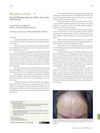 May 2019 in “Anais brasileiros de dermatologia/Anais Brasileiros de Dermatologia”
 Frontal fibrosing alopecia mostly affects postmenopausal women, with diagnosis often delayed by 3 years.

Tinea capitis in adults often leads to misdiagnosis or delayed diagnosis due to atypical symptoms, requiring careful examination for proper treatment.
 June 2006 in “Annales de Dermatologie et de Vénéréologie”
 Tranexamic acid effectively reduced swelling episodes in a girl with a rare form of hereditary angioneurotic edema.
April 2004 in “Medisch-Farmaceutische Mededelingen” Finasteride may help reduce prostate cancer risk.
January 2001 in “대한피부과학회지” Hormone levels in women with androgenetic alopecia are similar to those without the condition.
 October 1988 in “Pediatric research”
 Certain maturity signs appear before and after the first release of sperm in boys.
November 2020 in “Дерматовенерология, косметология” The M-type is the most common form of male hair loss, and the BASP-classification is easy for different medical professionals to use.
April 2014 in “The FASEB Journal” Women with androgenetic alopecia often have other symptoms of high androgen levels, requiring further hormone testing.
 April 2012 in “The Journal of Urology”
 Early baldness increases prostate cancer risk, radiotherapy and surgery have similar second cancer rates, and ALA may reduce prostate cancer risk.
 391 citations
,
January 2010 in “Journal of The American Academy of Dermatology”
391 citations
,
January 2010 in “Journal of The American Academy of Dermatology” Half of people with Alopecia Areata may see hair regrowth within a year without treatment, but recovery is unpredictable.
 139 citations
,
June 2003 in “Journal of Investigative Dermatology Symposium Proceedings”
139 citations
,
June 2003 in “Journal of Investigative Dermatology Symposium Proceedings” Androgenetic alopecia in women needs more research and better management strategies.