 40 citations
,
June 2009 in “Journal of Cutaneous Pathology”
40 citations
,
June 2009 in “Journal of Cutaneous Pathology” AGA patients have fewer hairs and smaller follicles; T:V ratio above 4:1 may indicate AGA.
The treatment showed promising hair regrowth in advanced-stage hair loss.
10 citations
,
November 2009 in “Pigment cell & melanoma research” The document concludes that MGRN1 affects mouse fur color by interfering with a receptor's signaling, but its full role in the body is still unknown.
Acupuncture and herbal treatments effectively reduced hair loss in androgenetic alopecia.
 February 2025 in “Journal of the American Academy of Dermatology”
 People with androgenetic alopecia may have a higher risk of peripheral venous disorders.
 48 citations
,
January 2011 in “Hormone Research in Paediatrics”
48 citations
,
January 2011 in “Hormone Research in Paediatrics” The conclusion is that genetic changes in the glucocorticoid receptor can lead to conditions affecting stress response, immunity, and metabolism, requiring personalized treatment.
 2 citations
,
January 2019 in “Annals of Dermatology”
2 citations
,
January 2019 in “Annals of Dermatology” Certain gene variations in EGF and EGFR may increase the risk of alopecia areata in Koreans.
November 2025 in “OPAL (Open@LaTrobe) (La Trobe University)” Tectona grandis leaves may help treat hair loss and inflammation.
 74 citations
,
July 2010 in “The Journal of Clinical Endocrinology & Metabolism”
74 citations
,
July 2010 in “The Journal of Clinical Endocrinology & Metabolism” Treatment of acromegaly can improve women's reproductive health issues caused by hormonal imbalances or tumors.
 18 citations
,
July 2016 in “Medicine”
18 citations
,
July 2016 in “Medicine” Wnt/β-catenin and TGF-β pathways affect hair loss, and activating Wnt/β-catenin could be a potential treatment.
CAG repeat numbers in the AR gene likely don't affect male pattern baldness in Korean men.
 51 citations
,
January 2012 in “Annals of Dermatology”
51 citations
,
January 2012 in “Annals of Dermatology” Asian hair loss differs from Europeans; consider individual needs and psychological well-being for treatment.
 January 2026 in “Figshare”
 ASLNC168501 may help restore hair growth in androgenetic alopecia by improving hair follicle stem cell function.
6 citations
,
April 2016 in “Australasian journal of dermatology” Renal transplant patients on tacrolimus and sirolimus may develop acne keloidalis nuchae.
 1 citations
,
January 2025 in “American Journal of Translational Research”
1 citations
,
January 2025 in “American Journal of Translational Research” PPARα agonists may help treat alopecia areata by reducing inflammation.
December 2021 in “Biomarkers” Men with early baldness have similar heart risk factors as others, but certain proteins are linked to higher heart disease risk.
 7 citations
,
January 2015 in “Case reports in endocrinology”
7 citations
,
January 2015 in “Case reports in endocrinology” The document concludes that HAIR-AN syndrome should be considered when a patient shows severe hyperandrogenism and insulin resistance after excluding tumors.
 September 2022 in “Anais Brasileiros de Dermatologia”
 Dermoscopy helped diagnose a rare skin disease which slightly improved with treatment.
55 citations
,
October 2015 in “Journal of Investigative Dermatology” Alopecia areata is linked to immune-related genes, suggesting JAK inhibitors as a potential treatment.
October 2025 in “Contribuciones a las Ciencias Sociales” Alopecia in transgender individuals on hormone therapy can worsen emotional distress and affect self-esteem.
April 2007 in “Linchuang pifuke zazhi” TGF-β1 and 2 may play a role in hair loss in AGA.
June 2025 in “American Journal of Dermatopathology” Granulomatous Alopecia Areata is rare and may be caused by hair antigens or follicle destruction.
26 citations
,
September 2013 in “Journal of Dermatological Science” Serum granulysin levels can indicate the activity and prognosis of alopecia areata.
 May 2017 in “DOAJ (DOAJ: Directory of Open Access Journals)”
 Using GnRHa agonists helps diagnose and treat ovarian hyperthecosis when surgery isn't possible.
 11 citations
,
September 2013 in “Journal of the Egyptian Women's Dermatologic Society (Print)”
11 citations
,
September 2013 in “Journal of the Egyptian Women's Dermatologic Society (Print)” Various treatments exist for hair loss, but more research is needed for better options.
 November 2015 in “Springer eBooks”
 Hair loss treated with minoxidil, finasteride, laser/light, hair transplant, and scalp prostheses; more research needed for skin of color.
July 2026 in “Journal of the American Academy of Dermatology” Androgenetic alopecia is not linked to higher heart disease risk.
 5 citations
,
September 2013 in “The Journal of Dermatology”
5 citations
,
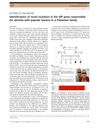
September 2013 in “The Journal of Dermatology” Researchers found a new mutation in the HR gene causing hair loss and skin bumps in a Pakistani family.
January 2016 in “Texas ScholarWorks (Texas Digital Library)” DORN1 receptor affects eATP-induced stomatal changes but not eADP in Arabidopsis thaliana.
 August 2014 in “Journal of clinical & experimental dermatology research”
 Platelet-released growth factors can treat hair loss by activating hair follicle stem cells, blocking certain pathways, and controlling inflammation and fibrosis.