 81 citations
,
February 2019 in “Experimental & Molecular Medicine”
81 citations
,
February 2019 in “Experimental & Molecular Medicine” PAK4 is crucial in cancer progression, brain development, and could be a therapeutic target, especially through the PAK4-CREB axis.
 2 citations
,
December 2022 in “bioRxiv (Cold Spring Harbor Laboratory)”
2 citations
,
December 2022 in “bioRxiv (Cold Spring Harbor Laboratory)” miR-29 is a key factor that accelerates aging.
3 citations
,
July 2022 in “Brain and Behavior” The HtrA1L364P mutation causes brain dysfunction and blood vessel damage.
 33 citations
,
September 2014 in “Reproductive Biology and Endocrinology”
33 citations
,
September 2014 in “Reproductive Biology and Endocrinology” High afamin levels are linked to metabolic syndrome and may predict its development in women with insulin resistance.
11 citations
,
November 2023 in “Journal of Advanced Research” Activating ALDH2 can boost hair growth.
5 citations
,
January 2015 in “Case reports in medicine” A baby was diagnosed with IFAP syndrome due to a new genetic mutation, showing severe skin and developmental issues.
 5 citations
,
March 2023 in “Archives of dermatological research”
5 citations
,
March 2023 in “Archives of dermatological research” Increased HIF-1α is linked to the inflammation and severity of hidradenitis suppurativa, suggesting treatments that lower HIF-1α could help.
 35 citations
,
January 2013 in “The Journal of experimental medicine/The journal of experimental medicine”
35 citations
,
January 2013 in “The Journal of experimental medicine/The journal of experimental medicine” CD98hc's role in skin health decreases with age.
Defective protein folding due to a mutation is key in ANE syndrome.
 26 citations
,
December 2020 in “Nature metabolism”
26 citations
,
December 2020 in “Nature metabolism” Rapamycin treatment helps with mitochondrial disease by reducing PKC levels.

A new compound from Royoporus badius activates immune cells and induces inflammatory responses.
3 citations
,
September 2024 in “Journal of Microbiology and Biotechnology” Human placenta extract reduces inflammation and symptoms in atopic dermatitis.
10 citations
,
August 1998 in “Journal of Investigative Dermatology” 12 citations
,
June 2025 in “Gut Microbes” BroadAMP-GPT effectively creates antimicrobial peptides to fight drug-resistant bacteria.
 1 citations
,
September 2023 in “Applied sciences (Basel)”
1 citations
,
September 2023 in “Applied sciences (Basel)” Ishige sinicola extract may help prevent muscle atrophy through its antioxidant and anti-inflammatory effects.
2 citations
,
December 2024 in “eLife” JAK inhibition reduces autoimmune issues in Down syndrome.
14 citations
,
May 2016 in “International Journal of Molecular Sciences” PP2Acα is essential for proper hair and skin development.
 20 citations
,
August 2014 in “PloS one”
20 citations
,
August 2014 in “PloS one” MED1 affects skin wound healing differently in young and old mice.
MIR135b affects wound healing by targeting genes, and PDRN may help heal wounds by altering this pathway.
CRISPR gene editing reduces harmful molecules in cells from Emery–Dreifuss Muscular Dystrophy patients.
IL-18 signaling helps mature Tregs move into the thymus.
75 citations
,
June 2007 in “Journal of Biological Chemistry” MT-DADMe-ImmA can selectively kill head and neck cancer cells without harming normal cells.
 31 citations
,
May 2021 in “Journal of endocrinological investigation”
31 citations
,
May 2021 in “Journal of endocrinological investigation” APS-1 in Italy shows diverse AIRE mutations and various autoimmune issues.
19 citations
,
February 2013 in “Archives of Dermatological Research”  July 2023 in “Письма в Вавиловский журнал генетики и селекции”
 Extracellular nucleic acids help start inflammation needed for tissue repair, but must be properly regulated.
July 2017 in “OPAL (Open@LaTrobe) (La Trobe University)” High-throughput LC-MS screening is effective for finding new autotaxin inhibitors for asthma treatment.
 April 2026 in “Clinical Journal of Gastroenterology”
 Upadacitinib can cause hypersensitivity that worsens ulcerative colitis symptoms.
35 citations
,
December 2020 in “International Journal of Molecular Sciences” Mast cells likely promote skin scarring and fibrosis, but their exact role is still unclear.
 33 citations
,
April 2020 in “Journal of Clinical Investigation”
33 citations
,
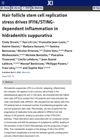
April 2020 in “Journal of Clinical Investigation” Stress in hair follicle stem cells causes inflammation in a chronic skin condition through a specific immune response pathway.
 April 2018 in “Journal of Investigative Dermatology”
 Both Th1 and Th2 immune responses are increased in alopecia areata, with Th2 response more strongly linked to how severe the disease is.