1 citations
,
September 2010 in “UEF eRepo (University of Eastern Finland)” Androgen receptors help prostate cancer cells grow and resist drugs.
22 citations
,
July 1998 in “Journal of Investigative Dermatology” The 4C32 gene may help in mouse skin development and differentiation.
 February 2020 in “Definitions”
 KRT72 gene helps form hair.
 1 citations
,
November 2018 in “bioRxiv (Cold Spring Harbor Laboratory)”
1 citations
,
November 2018 in “bioRxiv (Cold Spring Harbor Laboratory)” Signals from skin cells controlled by Rac proteins help turn certain precursor cells into white fat cells.
 January 2025 in “Nature Communications”
 CPK1 helps root hair growth in Arabidopsis by activating channels for calcium signaling.
 92 citations
,
January 2012 in “International Journal of Biological Sciences”
92 citations
,
January 2012 in “International Journal of Biological Sciences” The document introduced a new naming system for keratin-associated proteins to improve clarity and communication across species.
10 citations
,
May 2017 in “Wound Repair and Regeneration” Overexpression of ALK2 in hair follicles disrupts skin development and slows wound healing.
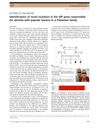 5 citations
,
September 2013 in “The Journal of Dermatology”
5 citations
,
September 2013 in “The Journal of Dermatology” Researchers found a new mutation in the HR gene causing hair loss and skin bumps in a Pakistani family.

Inhibiting AP-1 changes skin tumor types and affects tumor cell identity.
 1 citations
,
July 2023 in “Nature communications”
1 citations
,
July 2023 in “Nature communications” MOF controls key genes for skin development by regulating mitochondrial and ciliary functions.
 August 2022 in “bioRxiv (Cold Spring Harbor Laboratory)”
 Mouse touch-sensitive nerve cells adjust their connections based on competition with other similar cells.
 9 citations
,
October 2014 in “Experimental and Clinical Endocrinology & Diabetes”
9 citations
,
October 2014 in “Experimental and Clinical Endocrinology & Diabetes” Knuckle Acanthosis Nigricans is common in Latin American youth and may indicate early insulin resistance, especially in those with normal weight.
December 2023 in “bioRxiv (Cold Spring Harbor Laboratory)” Actin filaments help stabilize and integrate cell membranes during transfer.
15 citations
,
February 2000 in “Journal of Cutaneous Pathology” The arrector pili muscle attaches to the extracellular matrix using α5β1 integrin and connects muscle cells using α1β1 integrin.
2 citations
,
September 2020 in “bioRxiv (Cold Spring Harbor Laboratory)” The laser system helps study brain cell functions by precisely removing specific cells and observing changes.

Inhibiting AP-1 changes skin tumor types and affects tumor cell identity.
8 citations
,
February 2025 in “Cell Systems” Engineered bacteria can deliver antioxidants to protect skin.
 41 citations
,
April 2016 in “Journal of experimental botany”
41 citations
,
April 2016 in “Journal of experimental botany” RACB in barley is crucial for cell polarity and nucleus positioning, aiding fungal infection.
 1 citations
,
March 2004 in “Journal of the American Academy of Dermatology”
1 citations
,
March 2004 in “Journal of the American Academy of Dermatology” Certain genes are linked to the risk of developing Alopecia Areata.
51 citations
,
January 2007 in “The journal of investigative dermatology/Journal of investigative dermatology” Scientists discovered a unique hair protein, KAP24.1, with a special structure, found only in the upper part of hair cuticles.
20 citations
,
October 2005 in “Archives of Dermatological Research” 114 citations
,
July 2003 in “PubMed” Lack of KSR1 stops certain skin tumors in mice.
53 citations
,
June 2005 in “The journal of investigative dermatology/Journal of investigative dermatology” KAP genes show significant genetic variability, but its impact on hair traits is unclear.
May 2023 in “International journal of molecular sciences” The ABCA4 gene protects hair follicle stem cells from toxic vitamin A byproducts.
 4 citations
,
July 2012 in “Genesis”
4 citations
,
July 2012 in “Genesis” The Megsin-Cre transgene is a new tool for genetic manipulation in the skin and upper digestive tract.
January 2026 in “PLoS Biology” ARHGEF3 is essential for proper hair follicle development in mice.
 26 citations
,
June 2018 in “The journal of immunology/The Journal of immunology”
26 citations
,
June 2018 in “The journal of immunology/The Journal of immunology” AIRE-deficient rats developed severe autoimmune disease similar to APECED, useful for testing treatments.
5 citations
,
December 2020 in “Gene” ANXA1 influences hair growth in mice through the EGF signaling pathway.
4 citations
,
October 2021 in “Journal of Clinical Medicine” Carriers of a specific gene mutation have subtle skin changes without visible symptoms.
 April 2019 in “Journal of Investigative Dermatology”
 BRG1 is essential for skin cells to move and heal wounds properly.